



The US Army says that its special battalion focused on drone warfare and lessons from Ukraine was always meant to be a temporary experiment, not a lasting element of the force.
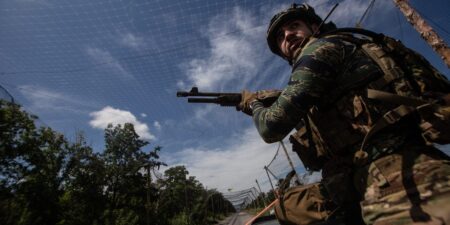
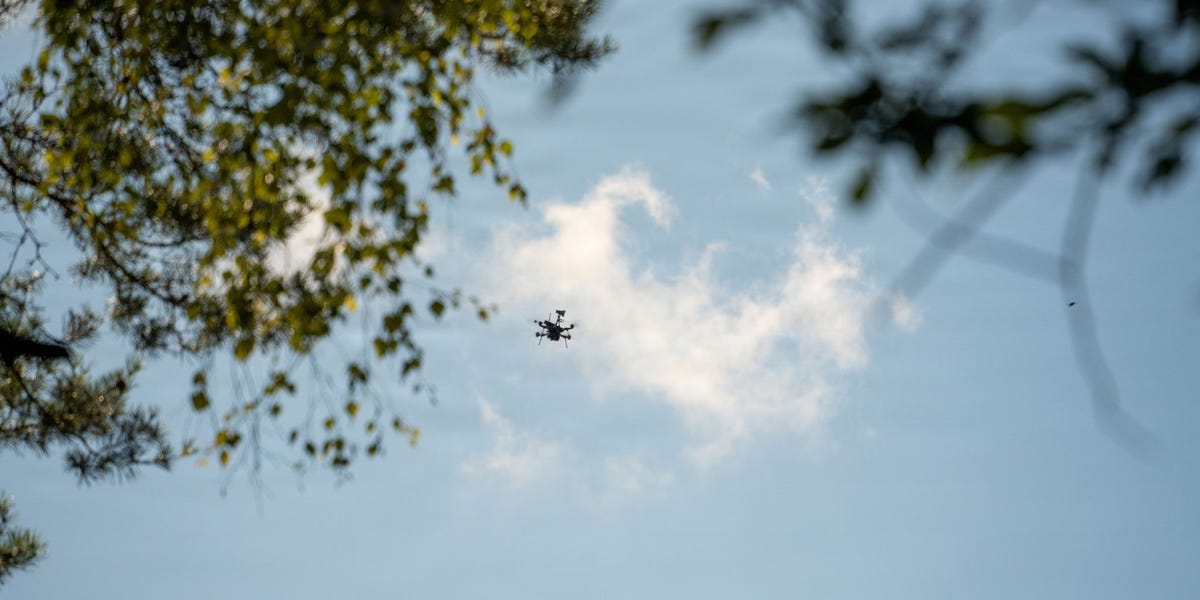
The Unmanned Assault Battalion was created last fall as an experimental unit in the 173rd Airborne Brigade specializing in drone tactics. The 3rd Battalion of the 504th Parachute Infantry Regiment was tasked with testing uncrewed systems and developing battlefield lessons the Army could apply more broadly.
When news broke last month that the service intended to phase out the battalion’s drone-focused mission and return it to airborne infantry, with a focus on traditional warfighting, the move prompted questions about why the Army was ending the experiment and concerns about its wider approach to drone warfare.
At an Army modernization media roundtable on Wednesday, Army officials said that the shift had been planned from the beginning and presented how they intend to spread lessons on uncrewed aerial systems across the service.
“They were never flagged to be a permanent centralized drone unit,” Alex Miller, the Army’s chief technology officer, told reporters.
“In fact, we pushed back on having something like a drone corps since its inception because our theory of the case is, if you centralize that in one place, what you lose is the ability to actually scale that learning and send that out to the rest of the Army,” he added.
The plan, Miller said, was for the battalion to test uncrewed technologies and learn tactics in the six to seven months before they received their full infantry battalion equipment. Then, the Army would disseminate those takeaways across the service and the troops from the battalion would return to their role as airborne infantry.
When The Wall Street Journal first reported the change, an Army spokesperson said the service was committed to “drone dominance” but did not comment on future plans. The Journal reported that no end date was specified when the battalion’s drone role was established.
At the time, an Army spokesperson told Business Insider the unit’s findings would inform force design and future experimentation.
Want more Business Insider in your news feed?
Add BI in Google so our reporting is easier to find when you’re searching for what matters.
The reporting on the plans to phase out the battalion’s drone mission raised concerns among defense analysts and lawmakers, who questioned what the decision signaled about the Army’s commitment to drone warfare, the service’s willingness to learn from Ukraine’s warfighting experiences, and broader Pentagon priorities for uncrewed capabilities.
“We have deep concerns that eliminating this specialized drone unit will limit our ability to learn from allies, particularly the Ukrainian Armed Forces, and hinder our efforts to modernize drone warfare at the speed necessary to compete on the modern battlefield,” US lawmakers wrote in a recent letter to Army leadership.
The letter added that “this specialized unit was a prudent response in a moment when the character of warfare is changing faster than a conventional formation’s ability to adapt.”
The Army didn’t explain publicly that the drone mission was always intended as a short-term experiment when the planned change first drew criticism weeks ago, but officials said Wednesday they wanted to clarify.
“We’re sort of combating this narrative that we set something new up, and then we killed that new thing, and we’re going to sacrifice it at the altar of technology,” Miller said. “That’s just not true.”
He argued that spreading lessons across the Army rather than concentrating drone expertise in a permanent unit better fits the goal of making uncrewed systems a routine part of how the larger force fights.
“When we engage with the Ukrainians and we engage with their leadership, it was less a drone corps and was more of one platoon per company, one company per battalion, which looked an awful lot like how we were actually setting up our tactical UAS platoons as a formation anyway,” he said.
The Army rejected the idea that ending the battalion’s drone-focused mission represents a step backward in its efforts to integrate uncrewed capabilities.
“We are not slowing down on drones or autonomous systems, and we are not walking away from them,” Miller said.
Other officials, likewise, said that drone capabilities are continuing to spread across formations regardless.
“We are employing unmanned aircraft systems at all levels,” said Brent Ingraham, the assistant secretary of the Army for acquisitions, logistics, and technology, adding that “while there was an experimental drone battalion, we are scaling that capability across the entire Army.”
Moving forward, the Army says it has several methods for sharing drone lessons and tips, including a Combined Arms Services platform that acts as a central repository for lessons from different soldiers and units.
Read the full article here