



The US Army has merged two formations into a new Pacific-focused command built to move fast, operate with limited support, and effectively bring drones, electronic warfare, and long-range fires into a future fight.
The command, shaped by years of experimentation, including drills with regional allies, is meant to give the Army a more self-contained force for complex operations across the Pacific.
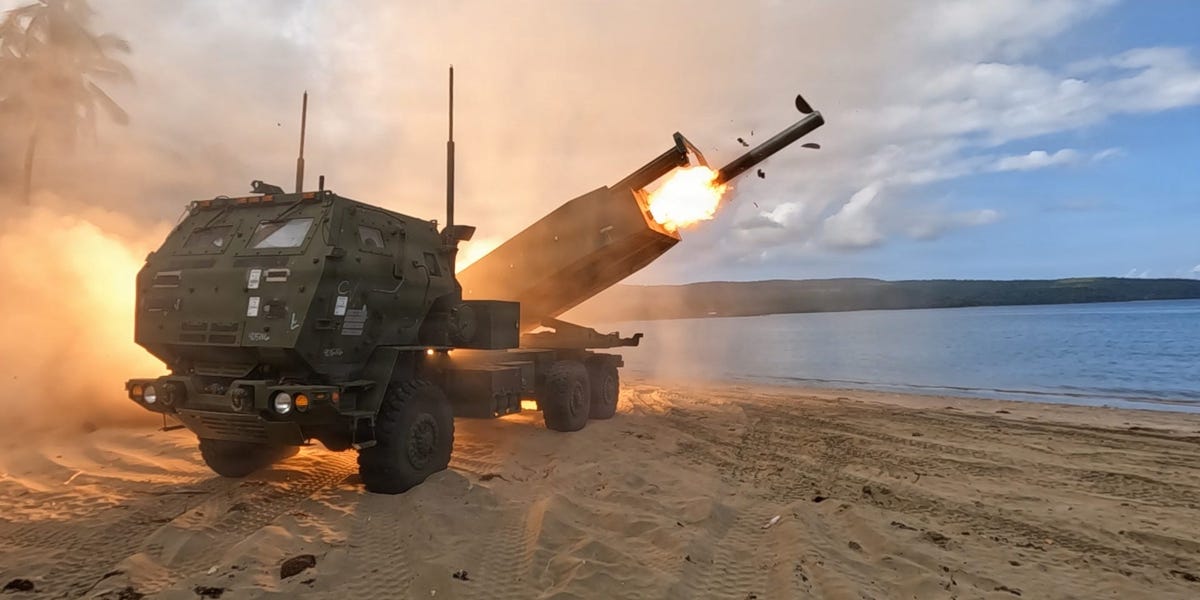
Army officials announced the establishment of the service’s new Multi-Domain Command-Pacific last week, a one-of-a-kind command combining the service’s 7th Infantry Division and 1st Multi-Domain Task Force into a new force that brings together traditional maneuver capabilities and weapons across domains like cyber, electronic warfare, space, and long-range fires.
The command, headquartered at Joint Base Lewis-McChord in Washington, is composed of around 12,000 soldiers, 7th ID’s Stryker brigades, which are mechanized infantry forces, and the Multi-Domain Task Force’s capabilities. Army officials said the merger would enhance the Army’s ability to fight in denied or degraded environments.
Maj. Gen. Bernard Harrington, who leads the new command, shared in a release that the merger brings together the “operational endurance, flexibility, and protection” of Stryker formations with the “long-range sensing and precision fires” of the Multi-Domain Task Force.
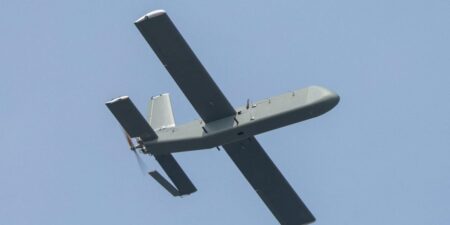
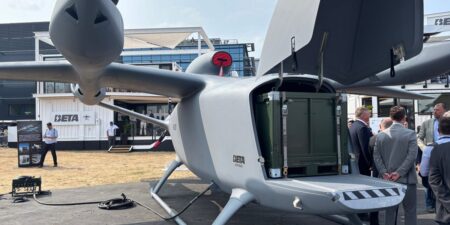
“Through our emerging cross domain contact layer concept, our division will employ capabilities such as unmanned surface vessels; long-range, one-way attack drones; and launched effects to penetrate the adversary’s anti-access/area-denial network,” he said.
The new command “allows us to see, sense, make sense, affect, protect, and sustain a force forward in the Pacific region,” Gen. Ronald P. Clark, commander of US Army Pacific, told reporters last week during a media roundtable discussion.
Under this framework, conventional units in the 7th ID would be enabled by the multi-domain weapons of the task force, and in turn could protect and move those weapons, officials said.
The Army put the concept to the test during Balikatan 2026, a large-scale exercise led by the US and the Philippines, and then officially activated the command last week.
During Balikatan, which ended last month, “we used Army watercraft for sustainment, we utilized our unmanned systems,” Harrington shared with reporters. “We networked them all together and really provided those multi-domain effects in a real theater environment as a rehearsal of concept.”
The Army’s new Multi-Domain Command-Pacific also draws on lessons from the Ukraine war and other conflicts, where drones have been used for long-range intelligence, surveillance, and reconnaissance (ISR) and strikes.
Officials said that they wanted forces to be able to employ a large mass of drones that could overwhelm enemy systems. The Army and US military more broadly have been working on integrating a variety of drones into Pacific warfighting.
The integrated task force “is sensing at those very long ranges,” Harrington said, explaining that “it is passing that data to shooters to be able to engage at those very long ranges, and it is all doing that on behalf of the theater Army.”
Essential to that effort is the Army’s cross domain contact layer, which connects ISR capabilities, artificial intelligence, and electronic warfare into a continuous sensor network that, particularly in the vast Pacific region, can help the Army spot potential threats at greater distances and determine the best way to respond.
The Multi-Domain Command-Pacific change comes amid broader transformation efforts across the Army focused on new technologies and weapons, as well as integrating AI to prepare forces for wars where speed will be a priority, soldiers may be overwhelmed with data from sensors, and critical systems could be consistently denied or degraded.
Read the full article here