





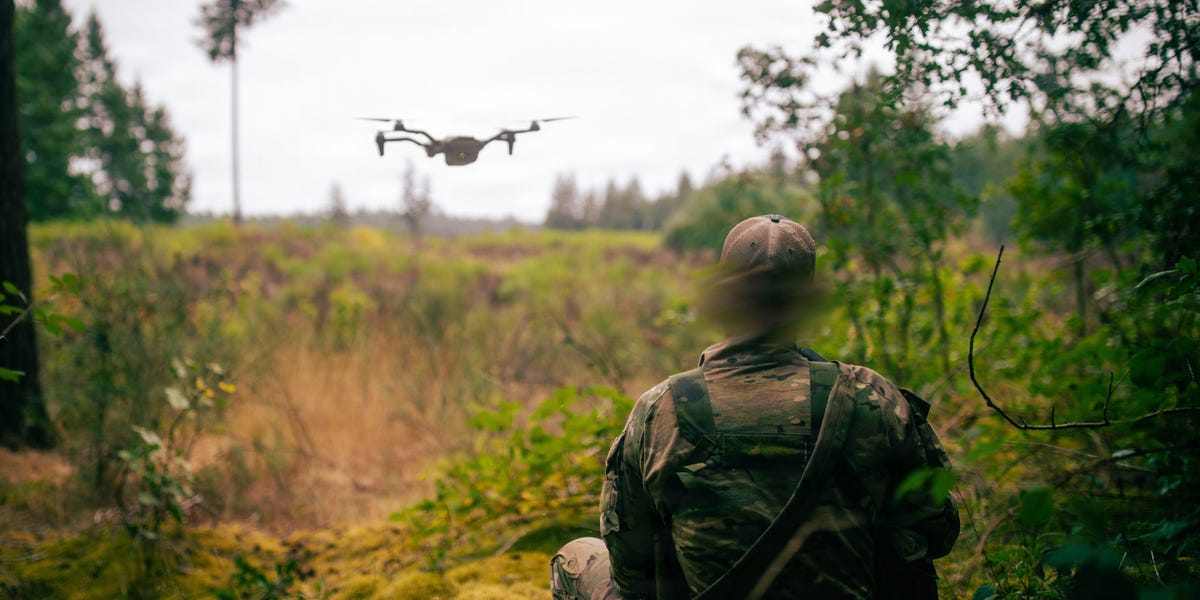
US soldiers are experimenting with a growing number of new technologies, particularly drones, but Army leaders say that there is a limit to how much troops can take on at once and still keep their focus on training for war.
The Army is pushing to deploy thousands of drones across its formations over the coming years, but officials caution that giving soldiers new systems too late in the training cycle distracts them. A 180-day requirement is designed to give them time to master the tech before trying it in warfighting exercises.
“We’ve established a temporal threshold 180 days out where we have to give them that equipment then, so that they have sufficient time at home station to integrate that,” Lt. Gen. James Isenhower, commander of the Army’s Combined Arms Command, told reporters last week.
Isenhower said the rule came about after the realization that soldiers were feeling the exhausting push and pull of training and experimentation, with the service asking troops to learn unfamiliar technology while simultaneously preparing for a fight.
“We’ve had a couple of examples in the recent past where we’ve given new technology to units just as they were entering what we call the box, where they’re conducting their force-on-force operations,” he said. “We’ve realized the reality is we, I think, owe them more time so they can integrate that equipment and focus on fighting the enemy as opposed to what, often times, is a focus on simply trying to understand the equipment.”
Part of the challenge with drones, in particular, has been getting them into soldiers’ hands long enough for them to be adequately trained on them. Troops have begun working with uncrewed systems in basic training, part of a broader push to expose soldiers to drone warfare early on in their careers.
“At this point, you would be hard-pressed to find an Army squad who has not had a drone in their formation and trained with it,” said Col. Gregory Merkl, the Army’s director of drone dominance. “The challenge is to take that equipment and turn it into real capability; it takes reps and sets. So we’re trying to make those types of interactions more regular.”
At Project Convergence Capstone in July, Army soldiers and international partners and allies gathered at Fort Irwin in California to experiment with new systems, including drones, while conducting a large-scale force-on-force fight for regular training.
Some soldiers at the exercise told Business Insider they’d been working with their drones through courses prior to the exercise, receiving validations on specific systems.
But there was another element to the drone testing and use during the exercise. Soldiers weren’t pushing systems to see what broke them at high temperatures or after long distances because they wanted to keep the drones operational so they could get more practice with them. Instead of using them like they might during a fight, they held back.
The Army has relied on soldier feedback in its decision-making about whether certain drones are useful and how they should be used.
“We rely on feedback from the soldier first. The ultimate arbiter for me of an effective piece of technology is the soldiers’ confidence in that technology and whether or not it’s helping them perform their mission,” Isenhower said.
Want more Business Insider in your news feed?
Add BI in Google so our reporting is easier to find when you’re searching for what matters.
The Army’s ongoing approach to integrating drones across its formations also includes figuring out how lessons on drone warfare will be disseminated and implemented. Last month, news broke that the service was phasing out its Unmanned Assault Battalion, an experimental unit in the 173rd Airborne Brigade specializing in drone tactics. The Army says that was the plan all along.
The move raised questions on why the Army was ending the experiment and concerns about its wider approach to drone warfare. Officials said spreading drone lessons across the Army instead of centralizing them in one permanent unit better fits the goal of preparing soldiers for future wars.
Read the full article here