



Kevin Dietsch/Getty Images
- President Donald Trump is reshaping Washington, DC, from the White House to federal buildings.
- His $400 million White House ballroom plan has sparked legal battles and backlash.
- A proposed 250-foot triumphal arch celebrating America’s anniversary would be the world’s largest.
A new ballroom, a 250-foot arch, a memorial garden, and now, a UFC fighting ring: During his second term, President Donald Trump is leaving an increasingly visible mark on Washington, DC, from department name changes to 30-foot-tall banners of his portrait.
To commemorate his 80th birthday and America’s 250th anniversary, the president has now erected a ginormous, eight-sided fighting cage on the White House South Lawn in collaboration with the UFC, which will host a primetime event outside the executive mansion on Sunday.
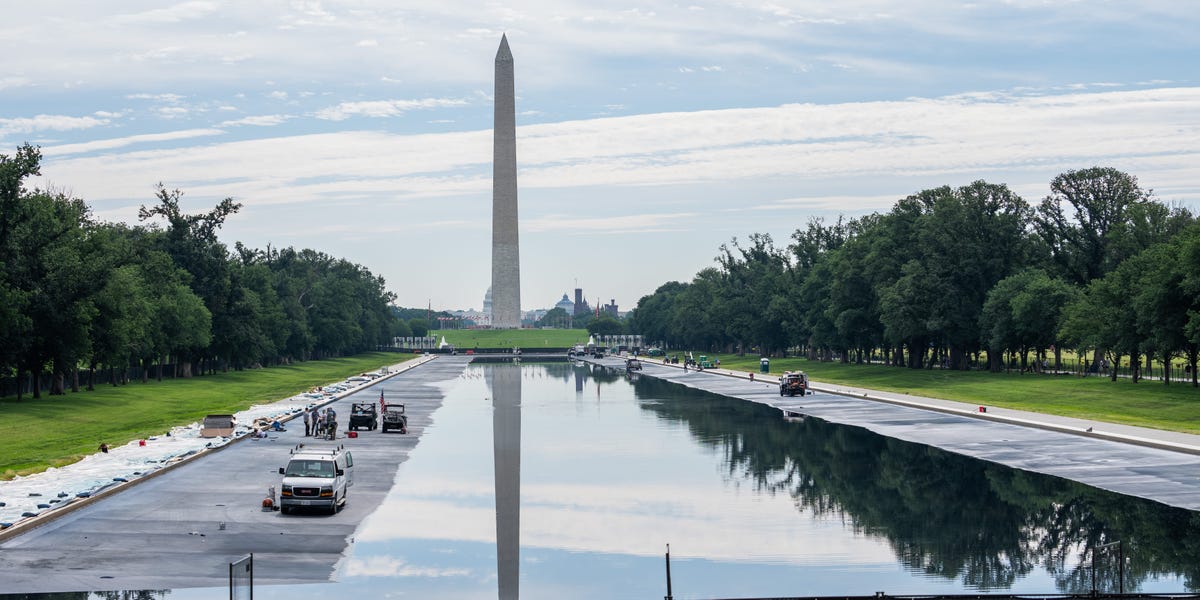
The Trump administration’s renovation of the Lincoln Memorial Reflecting Pool was also completed this week. The $14.8 million project included sealing and painting the bottom of the pool “American flag blue.”
They’re the latest on Trump’s long list of changes to America’s capital. Reasons given for the projects include government efficiency, beautifying the city, and marking America’s 250th birthday.
While many remain ongoing or in legal limbo, the changes the president has already made to the White House and its surrounding areas have altered the face of the nation’s capital.
See some of the ways in which Trump has remodeled the White House, US government buildings, and beyond during his second term.

Kayla Bartkowski/Getty Images
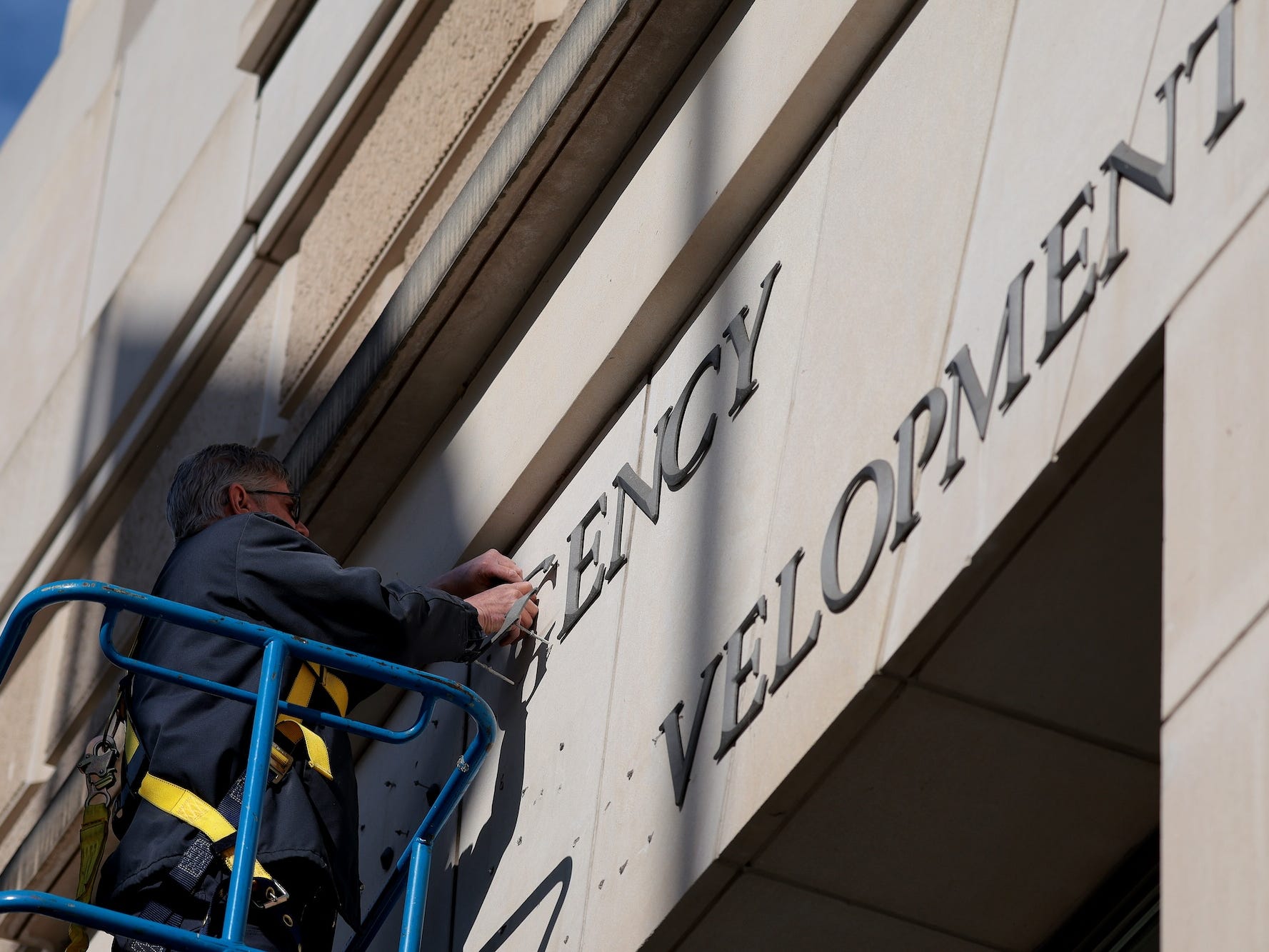
Shortly after taking office, Trump’s Department of Government Efficiency spearheaded a sweeping dismantling of the US Agency for International Development, or USAID.
The department froze the agency’s foreign aid, slashed its staff and programs, and ultimately moved to dismantle much of the agency’s operations and shift remaining functions to the State Department.
Former presidents Barack Obama and George W. Bush joined critics in condemning the move, with Obama calling it a “travesty.”
Administration officials framed it as a cost-cutting and accountability effort, with Secretary of State Marco Rubio saying USAID had “strayed from its original mission” and that “the gains were too few and the costs were too high” around the time of its effective shuttering.
The agency, founded in 1961 to counter the influence of the Soviet Union during the Cold War, was housed in the Ronald Reagan Building and International Trade Center in DC, alongside other government agencies.
Following the agency’s formal folding into the State Department on July 1, 2025, its staff, offices, and signage were removed from the building that once housed it.

Chip Somodevilla/Getty Images
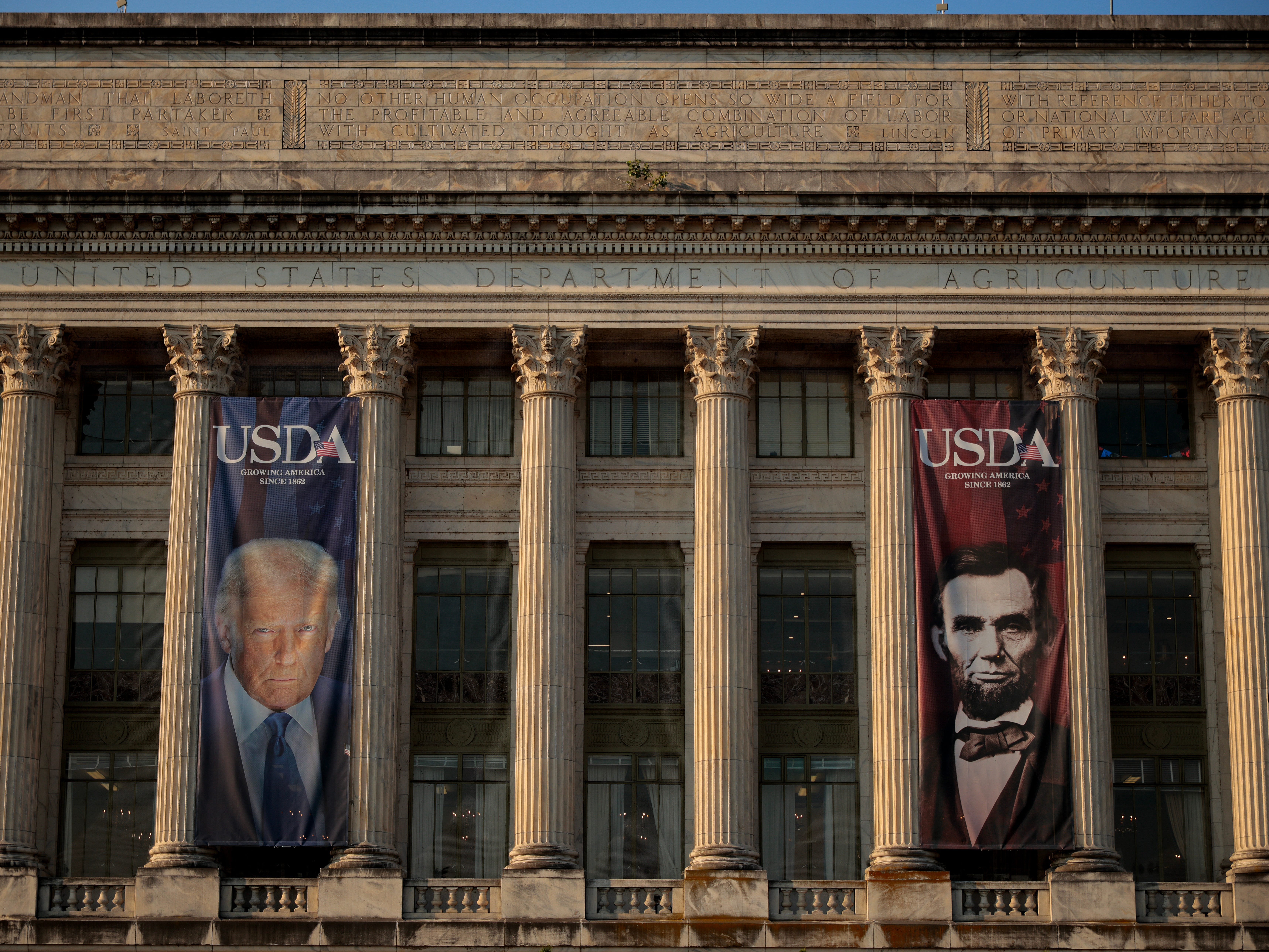
By the first spring of his second term, Trump’s portrait started appearing on government buildings, with the first being the US Department of Agriculture building, the Jamie L. Whitten Building, in the National Mall.
The 31-foot-tall banners, which were installed to honor USDA’s 163rd birthday, cost the department an estimated $16,400, the Washingtonian reported.
They “acknowledge the vision and leadership of USDA’s founder, Abraham Lincoln, and the best advocate of America’s farmers and ranchers, President Trump,” USDA’s then-director of communications, Seth W. Christensen, told The Washington Post in May 2025.
There is little modern precedent for the banners, which raised concerns about the politicization of federal buildings. Instead, the norm is for presidential portraits to be displayed inside government buildings and updated between administrations.

Ken CEDENO / AFP
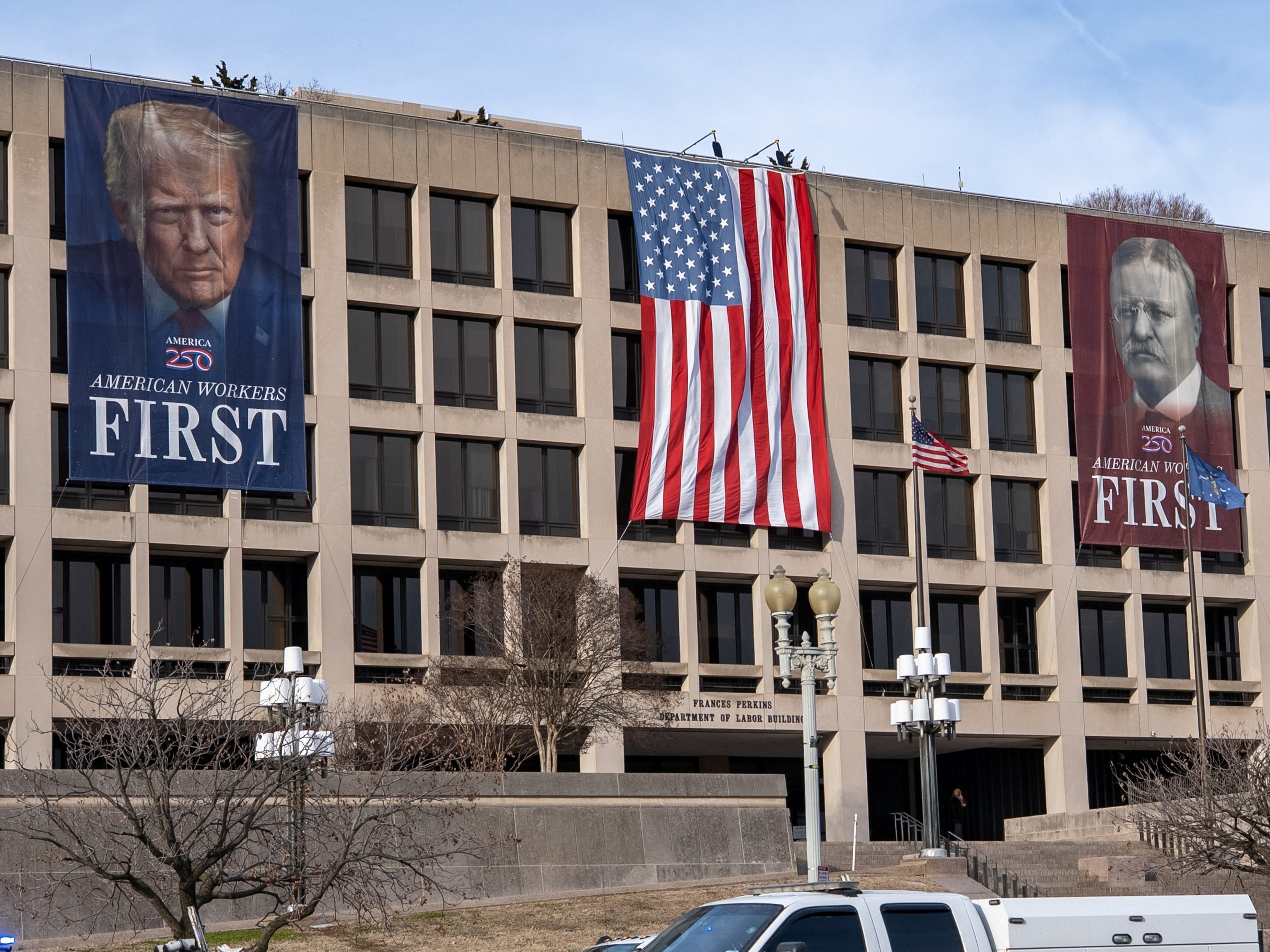
In August, the US Department of Labor debuted its own Trump banners, initially to commemorate Labor Day but kept up throughout the nation’s 250th anniversary celebrations after receiving a “tremendous positive response,” a department spokesperson told The New York Times.
The Department of Labor’s banners read “American Workers First” and depict the president alongside Theodore Roosevelt, who helped lay the groundwork for the modern Labor Department.
A September report by Sen. Adam Schiff of California also mentioned that the US Department of Health and Human Services had solicited 88-foot-tall banners promoting health secretary Robert F. Kennedy Jr’s “Make America Healthy Again” slogan for an estimated cost of $33,726.

Anadolu/Anadolu via Getty Images
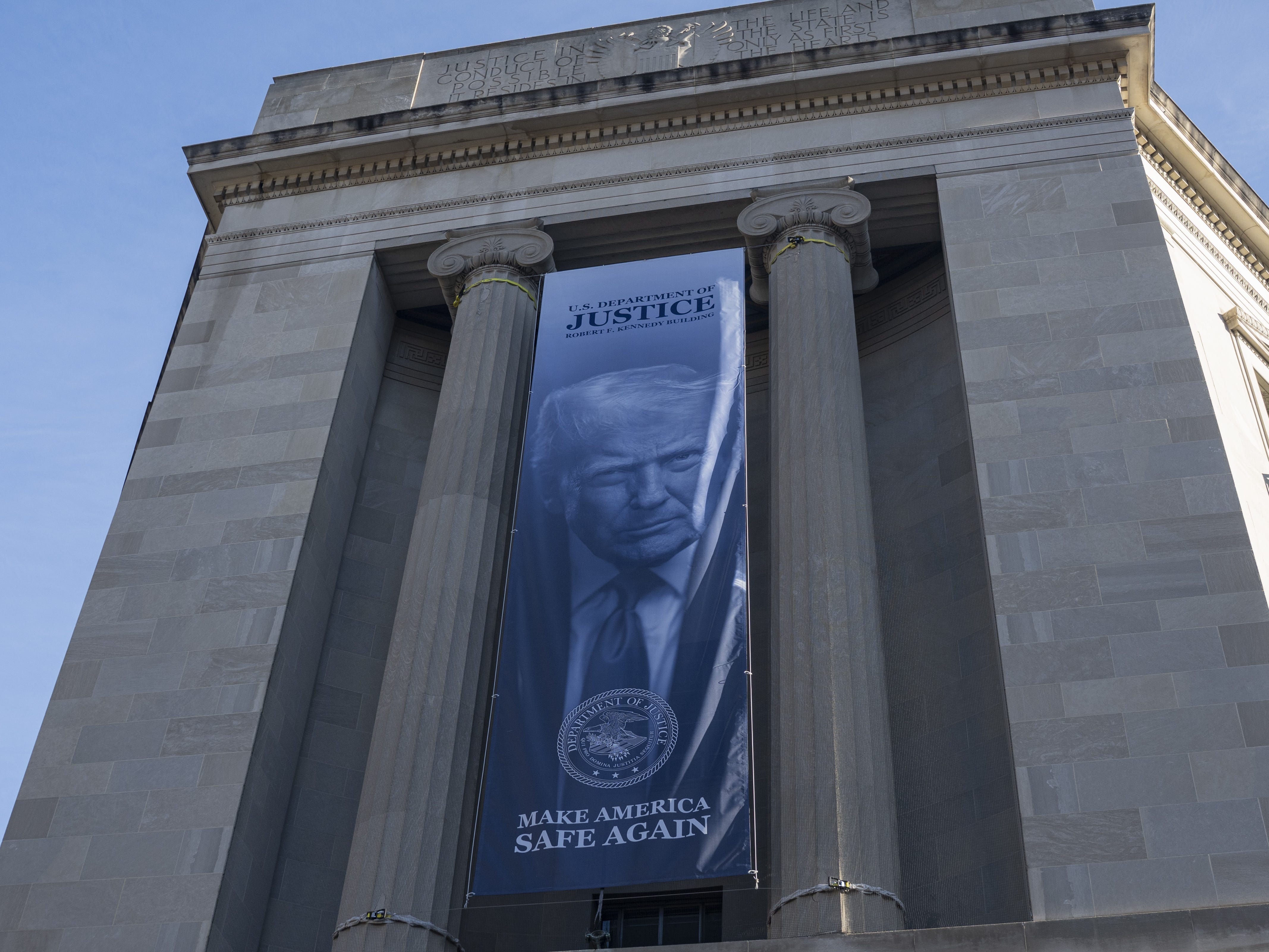
The latest federal department to showcase the president’s portrait is the Department of Justice, which has traditionally operated somewhat independently of the White House to curb political influence.
The banner, hung in February, features the president’s portrait and reads “Make America Safe Again.”
Among its critics, Gov. Gavin Newsom called the display “beyond parody,” while New Jersey Sen. Andy Kim wrote on X, “The Department of Justice is supposed to work for and represent you, not him.”
A DOJ spokesperson said, “We are proud at this Department of Justice to celebrate 250 years of our great country and our historic work to make America safe again at President Trump’s direction.”

Marvin Joseph/The Washington Post
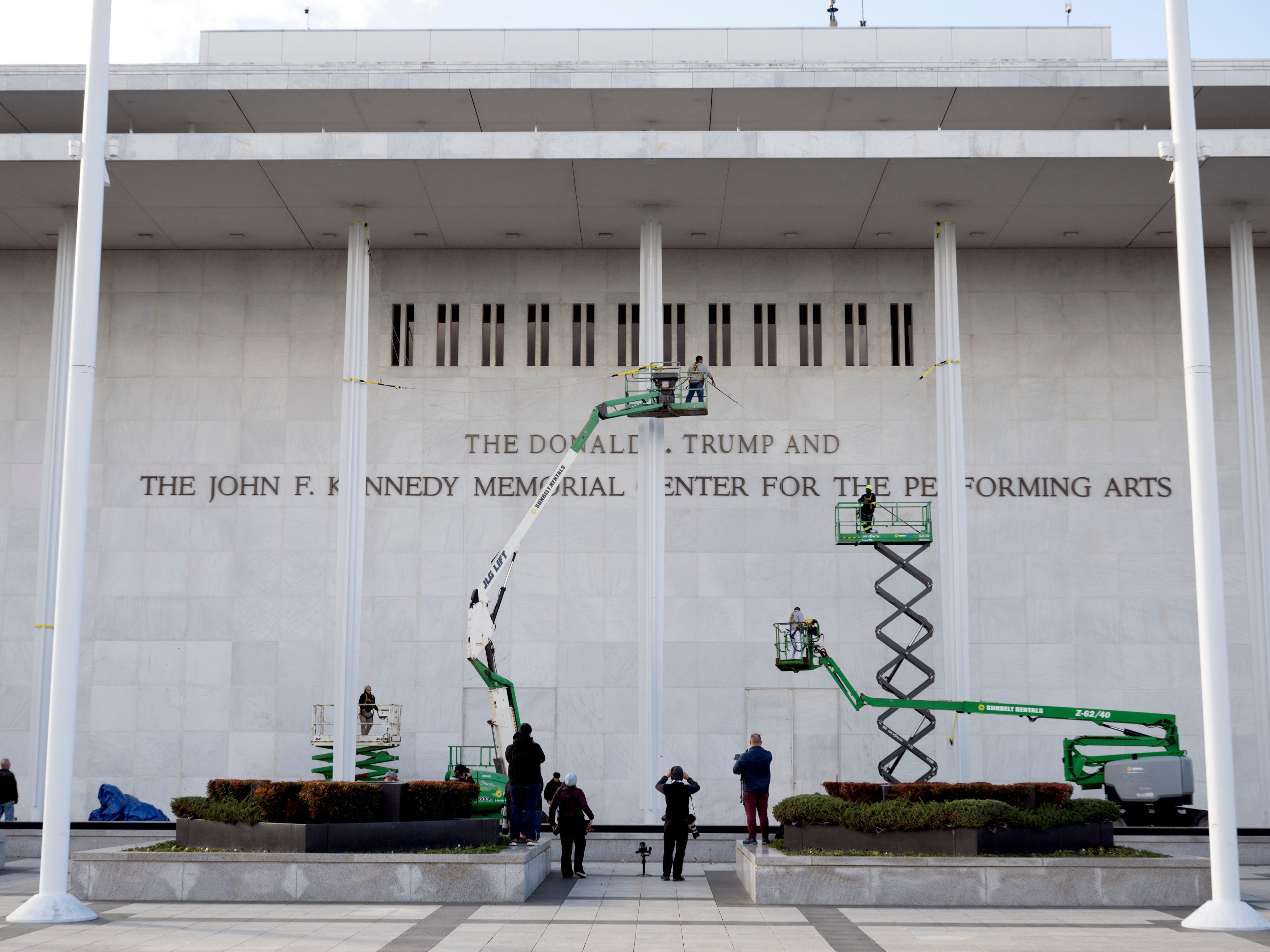
In December, the John F. Kennedy Memorial Center for the Performing Arts was renamed by its board to the Donald J. Trump and the John F. Kennedy Memorial Center for the Performing Arts.
The name change came after a unanimous vote by the center’s board of trustees, which was largely reshaped by the president.
“I was honored by [the renaming],” Trump said in the days following the name change. “Its board, it’s a very distinguished board, most distinguished people in the country. And I was surprised by it.”
Renaming the center, created by Congress as a memorial to US President John F. Kennedy, requires congressional approval. The board’s decision to rename it faced criticism at the time, including from some members of the Kennedy family. Some performers canceled booked appearances in the center, while legal battles emerged as Democratic members of Congress seek to block the name change.
In March, the center announced it would undergo renovations starting this summer, during which it would temporarily pause operations, with work expected to last two years.
But on May 29, a federal judge ruled that Trump’s name had been added illegally to the center and blocked the planned summer closure.
A spokesperson for the Kennedy Center said that the administration would be “complying with the court’s order while evaluating all legal options to preserve this revitalization and recognize President Trump’s leadership,” the Associated Press reported.

Anna Moneymaker/Getty Images
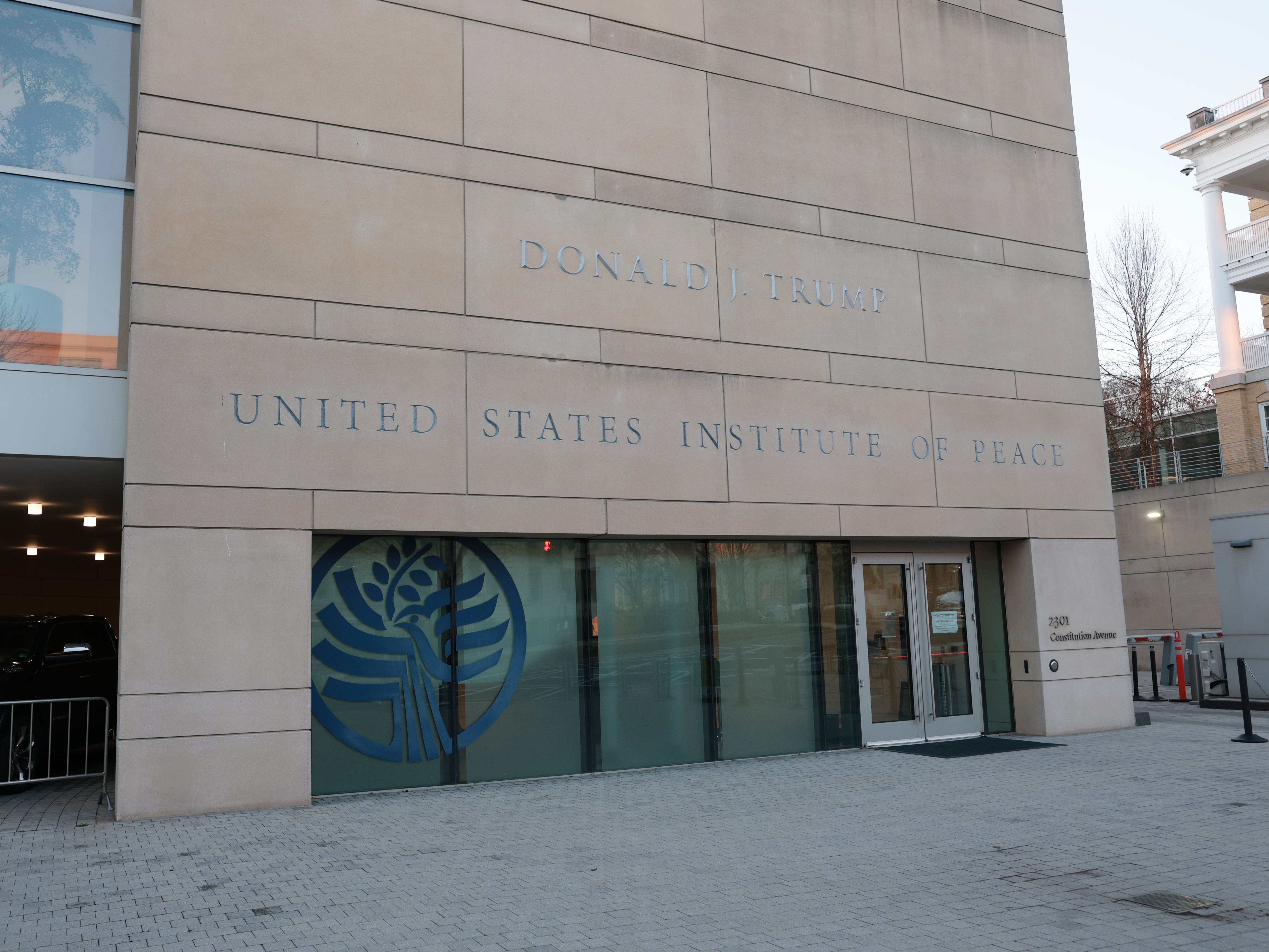
The US Institute of Peace was another DC institution that saw Trump’s name added to it.
The Congress-funded, nonprofit think tank was renamed by the administration in a State Department announcement that described Trump as “the greatest dealmaker in our nation’s history,” per a social media announcement.
“Marco named it after me,” the president said at a Board of Peace meeting in February, referring to Secretary of State Marco Rubio. “I had nothing to do with it, I swear I didn’t. I swear. I had no idea.”
Rubio showed his support on X, posting, “President Trump will be remembered by history as the President of Peace. It’s time our State Department display that.”

Andrew Harnik/Getty Images
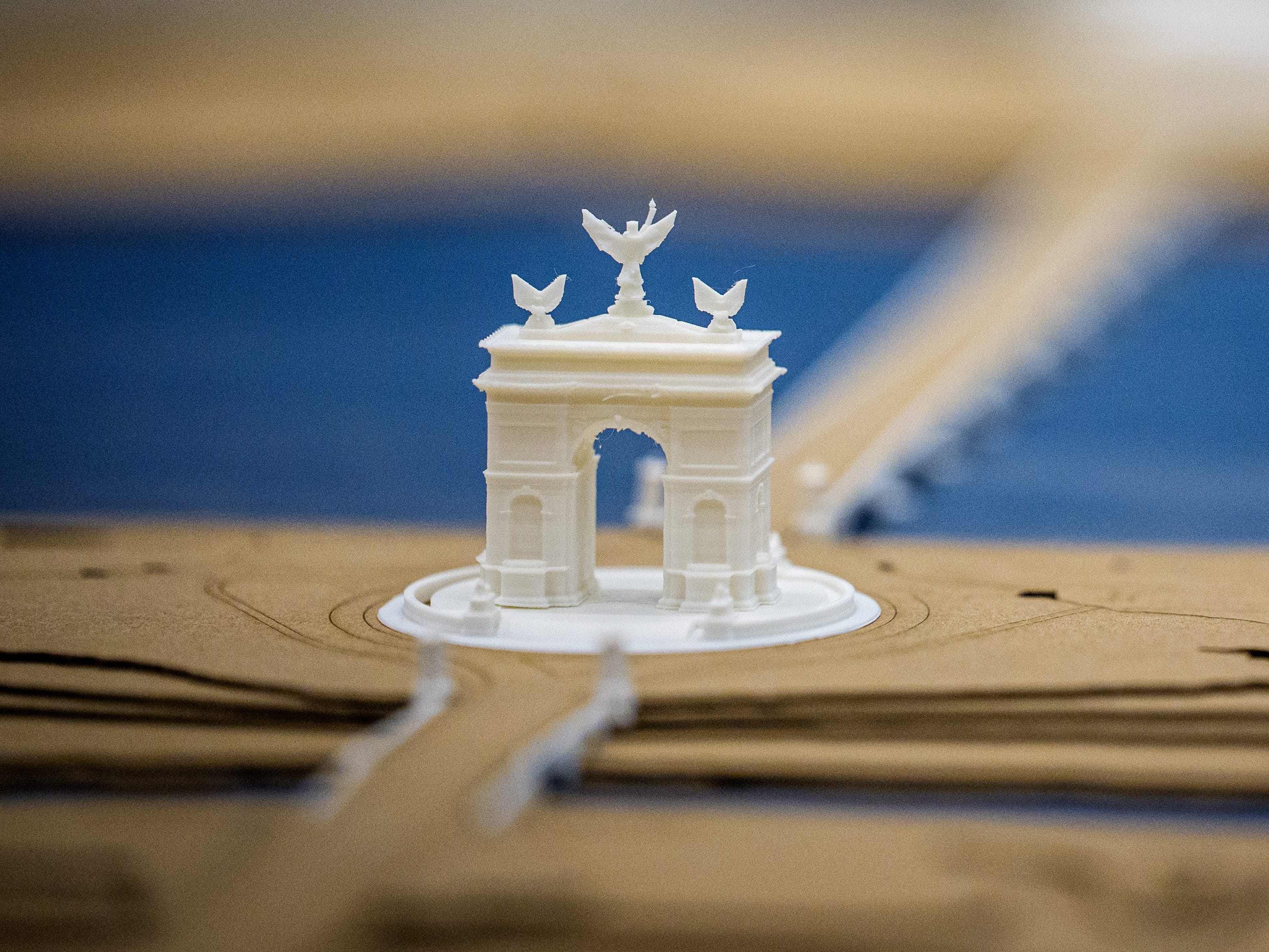
In October, Trump first proposed the building of a monumental arch, dubbed the “Independence Arch,” to commemorate America’s 250th anniversary.
The arch, proposed to be 250 feet tall, would sit across the Potomac River from the Lincoln Memorial on the Memorial Circle roundabout near Arlington National Cemetery.
While construction on the arch has not yet begun, surveying of the land plot has started, even amid an ongoing lawsuit in which a group of Vietnam veterans sued to block the administration from building the monument.
The group argued that the structure “would dishonor their military and foreign service and the legacy of their comrades and other veterans buried at Arlington National Cemetery,” per the lawsuit.
In response to a legal challenge from congressional Democrats, a White House spokesperson told The Washington Post of the structure, “It will enhance the visitor experience at Arlington National Cemetery for veterans, the families of the fallen, and all Americans alike, serving as a visual reminder of the noble sacrifices borne by so many American heroes throughout our 250 year history so we can enjoy our freedoms today,”
In May, the Trump-appointed US Commission of Fine Arts approved the arch’s design, partly clearing the way for its construction.
The approved revised design for the arch — which some have nicknamed “Arc de Trump” — features a figure reminiscent of Lady Liberty atop the structure, gilded eagles, gold-lettering inscriptions, and a 360-degree observation deck open to visitors.
The arch, which would be nearly half as tall as the Washington Monument obelisk, would dwarf France’s historic Arc de Triomphe, the world’s most famous triumphal arch, and be the tallest triumphal arch in the world.
A preliminary assessment by the National Park Service, released on June 8, estimated that the project would require year-round, 20-hour-a-day construction to be completed within a three-year timeframe.

Bloomberg/Getty Images
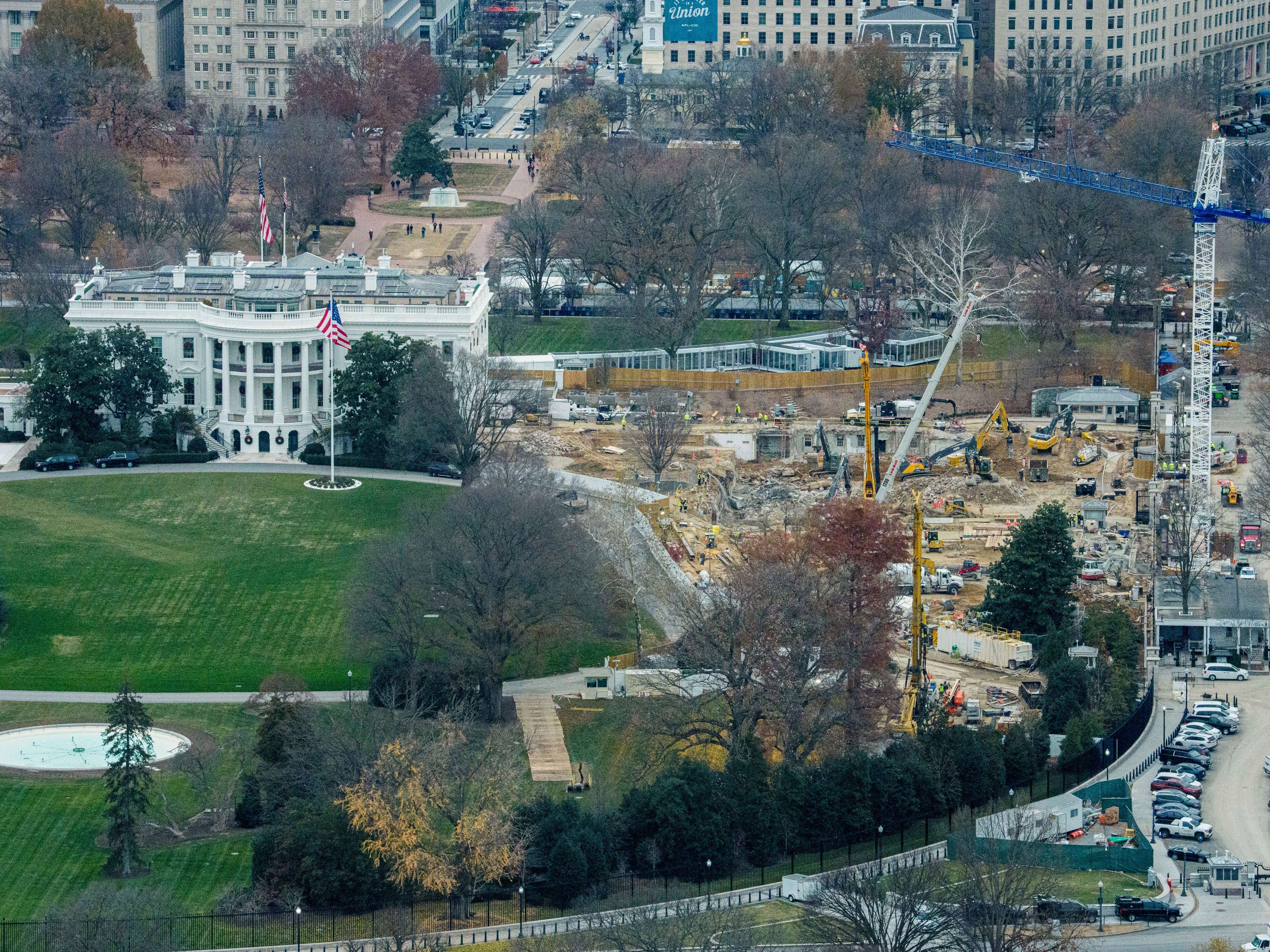
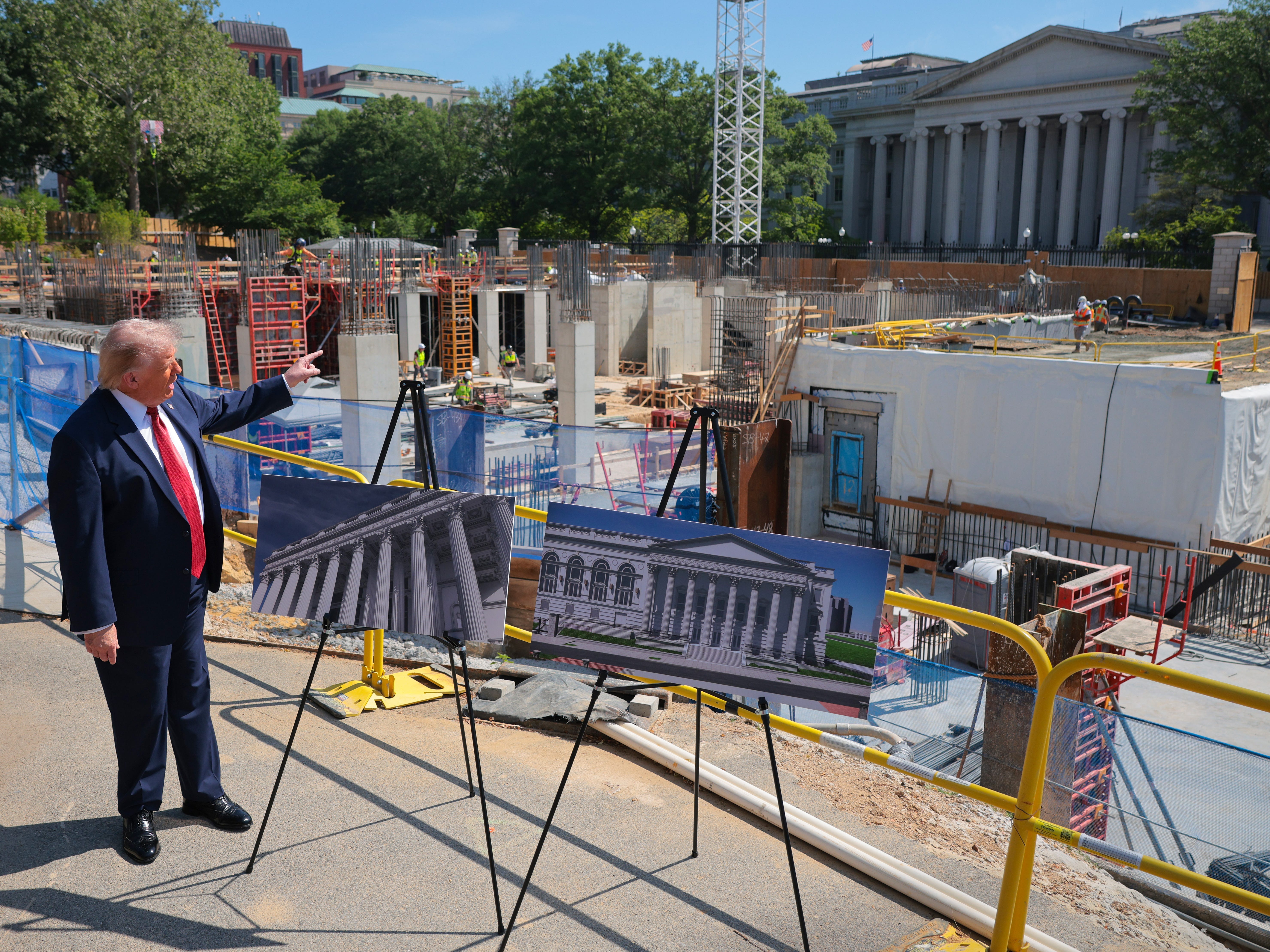
In October 2025, the White House’s East Wing was demolished, leaving only rubble behind and clearing the way for the president’s 90,000-square-foot, $400 million ballroom project.
Previously, the largest event space in the White House was the East Room, which had a capacity of around 200 people. For larger events, tents were erected on the South Lawn.
“For more than 150 years, every President has dreamt about having a Ballroom at the White House to accommodate people for grand parties, State Visits, etc.,” Trump wrote on Truth Social in October. “I am honored to be the first President to finally get this much-needed project underway — with zero cost to the American Taxpayer!”
The president has said the project will be funded by private donors, including Big Tech companies and wealthy individuals.
The demolition of the wing, originally added in the early 20th century and expanded in 1942, altered the facade of the president’s mansion and forced the relocation of the first lady’s staff offices.
It was met with criticism from preservationists, who said the president needed to obtain congressional approval for the project.
“It’s not his house. It’s your house. And he’s destroying it,” former Secretary of State and presidential candidate Hillary Clinton wrote on X after photos of the demolition emerged.
Trump has defended the project by pointing to past presidents’ renovations, expansions, and modernizations of the White House, and by emphasizing the ballroom’s importance for hosting large events. The administration has also dismissed criticism of the construction as “manufactured outrage.”

Chip Somodevilla/Getty Images
The ballroom will be the largest change Trump has made to the White House — others include Rose Garden renovations, new marble floors, and gold embellishments. The new ballroom will also impede the South Lawn’s historic driveway, making it no longer circular.
The project was temporarily blocked by a federal judge on March 31, who ruled that the president must seek congressional approval before proceeding with the renovation.
A federal appeals court later paused the judge’s order, allowing construction to continue while the case proceeds.
As of May, the ballroom construction is projected to be completed by September 2028, the president told reporters.

ANDREW CABALLERO-REYNOLDS / AFP
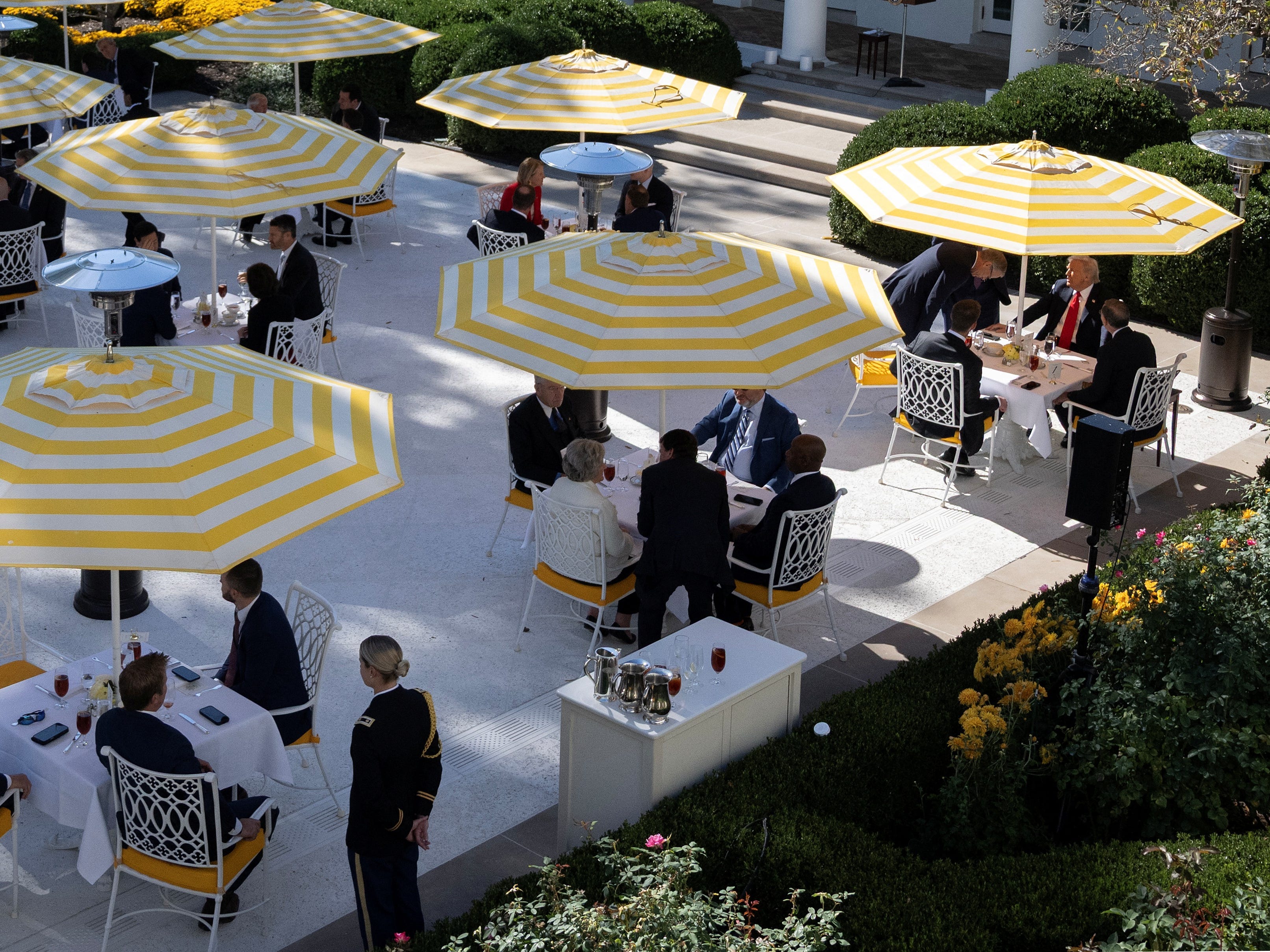
In July 2025, the president renovated the White House’s Rose Garden, which is often used for press conferences and larger gatherings.
The renovation paved over the grass with light-colored stone while keeping the garden’s namesake rose bushes, citing the foot traffic during events as the main reason for the project.
It wasn’t the first time the Rose Garden had changed looks, as it famously did under the Kennedy administration, when roses, magnolia trees, and other perennial and annual flowers were added.
In 2020, Melania Trump oversaw a garden renovation that included the addition of limestone walkways along the open lawn.

Tasos Katopodis/Getty Images
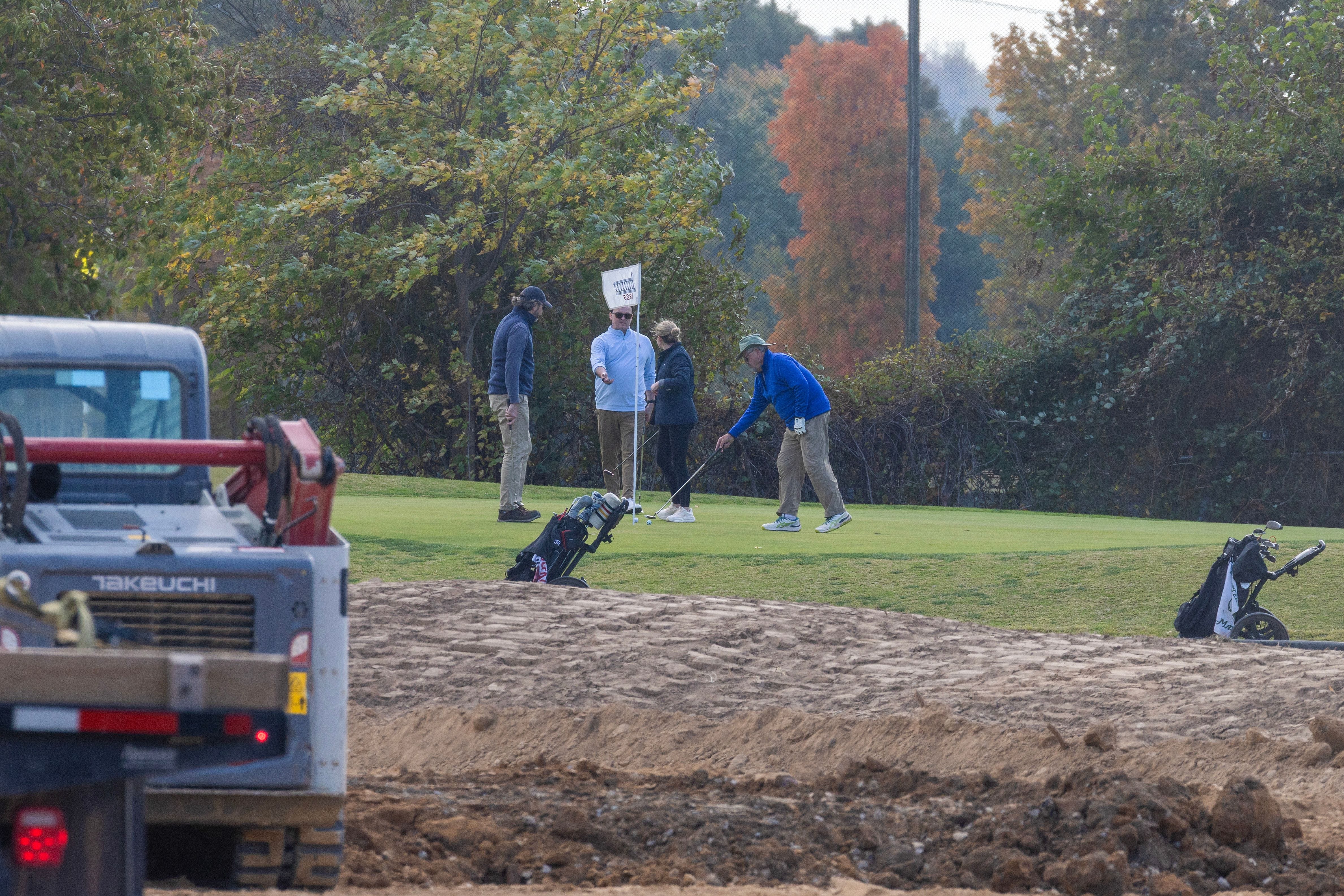
Also on the riverside, alongside the Potomac River, is the East Potomac Golf Links, a public golf course that the president has also set his eye on for a potential takeover.
In December 2025, the Trump administration issued the National Links Trust — a nonprofit that operates and maintains public golf courses in Washington, DC, under a 50-year lease with the National Park Service — with a termination notice, The Athletic reported.
The National Links Trust said it was “devastated” by the decision, saying it “has consistently complied with all lease obligations as we work to ensure the brightest possible future for public golf in DC.”
Of Trump’s involvement with public golf courses, White House spokesperson Taylor Rogers told Golf Digest, “As a private citizen, President Trump built some of the greatest golf courses in the world, and he is now extending his unmatched design skills and excellent eye for detail to D.C.’s public golf courses.”
In May, the Trump administration and the National Links Trust reached a deal keeping the nonprofit in charge of DC’s three municipal golf courses while clearing the way for the renovations at East Potomac, Golf Digest reported.
During the demolition of the White House East Wing and the construction of the new ballroom, locals have reported that the park has been turned into a dump for construction rubble and debris.
A lawsuit filed in February sought to restrict Trump’s takeover of the golf courses. It said that dumping the rubble on the course grounds is “unlawful and possibly hazardous” due to the possible presence of asbestos.
Testing results later released by the National Park Service found that the debris dumped on the fields contained harmful chemicals like lead, chromium, PCBs, pesticides, and petroleum byproducts.

The Washington Post/The Washington Post via Getty Images
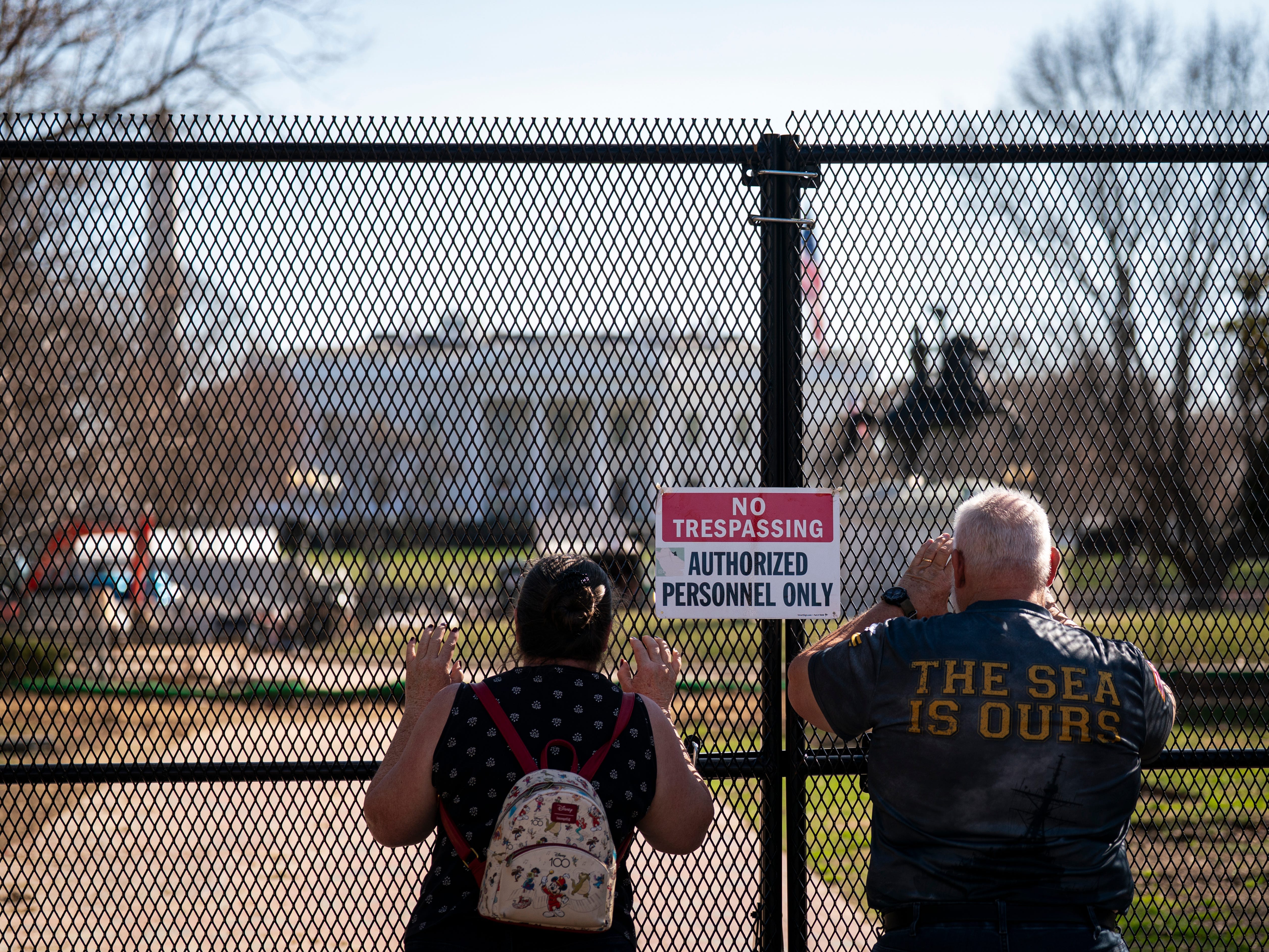
Lafayette Square, a 7-acre public park directly north of the White House, has also seen changes during the second Trump administration.
The park is a popular attraction for visitors thanks to its views of the People’s House, but in recent months it has undergone a makeover.
In late January, the Washington Post reported that the park had been fenced off as part of an improvement project and that it had been designated a National Historic Landmark since 1970.
The work, initially expected to last through May, will focus on fixing fountains, sprinklers, benches, and curbs. It is part of a broader initiative undertaken by the National Park Service to “beautify,” restore, and upgrade public parks in the nation’s capital.
The New York Times also reported that the president was interested in replacing the park’s brick walkways with granite to prevent protesters from removing bricks and throwing them.
By April 21, local news outlet DC News Now reported that the park’s fountain was back in operation.

Marlena Sloss/The Washington Post via Getty Images
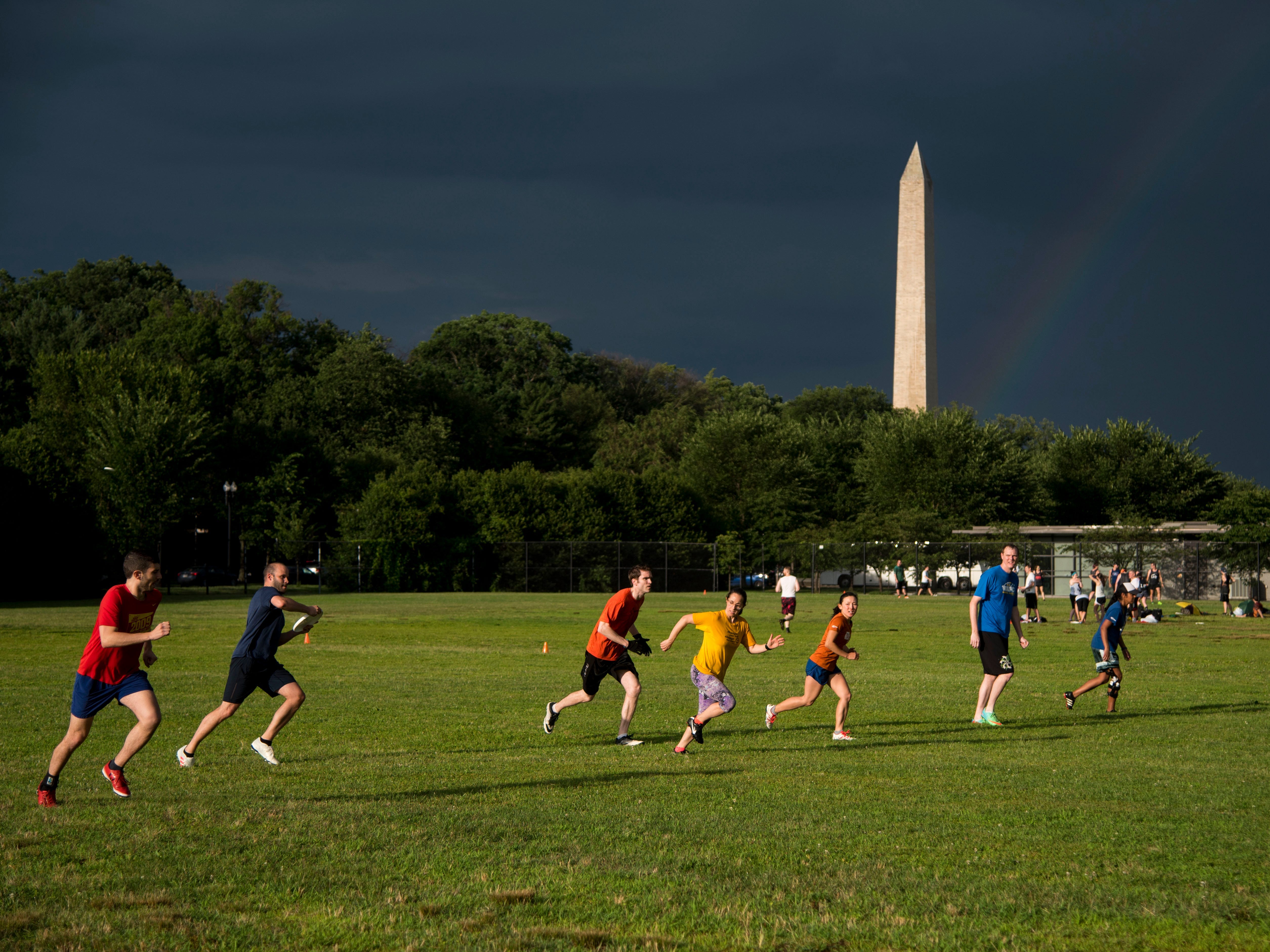
West Potomac Park, located just west of the Jefferson Memorial along the Potomac River, serves as a public multipurpose field, where locals often organize sports and other events.
Trump’s Garden of Heroes, a planned 250-statue monument commemorating American icons, is another of the president’s many projects around Washington, DC.
In May, the president announced that the riverside park would soon be the location of the Garden of Heroes, despite lingering questions about project approval, timeline, and costs.
Trump described the existing park as a “totally BARREN field of Prime Waterfront Real Estate along our Mighty Potomac River” on a post on Truth Social.

Vantor/Handout via REUTERS
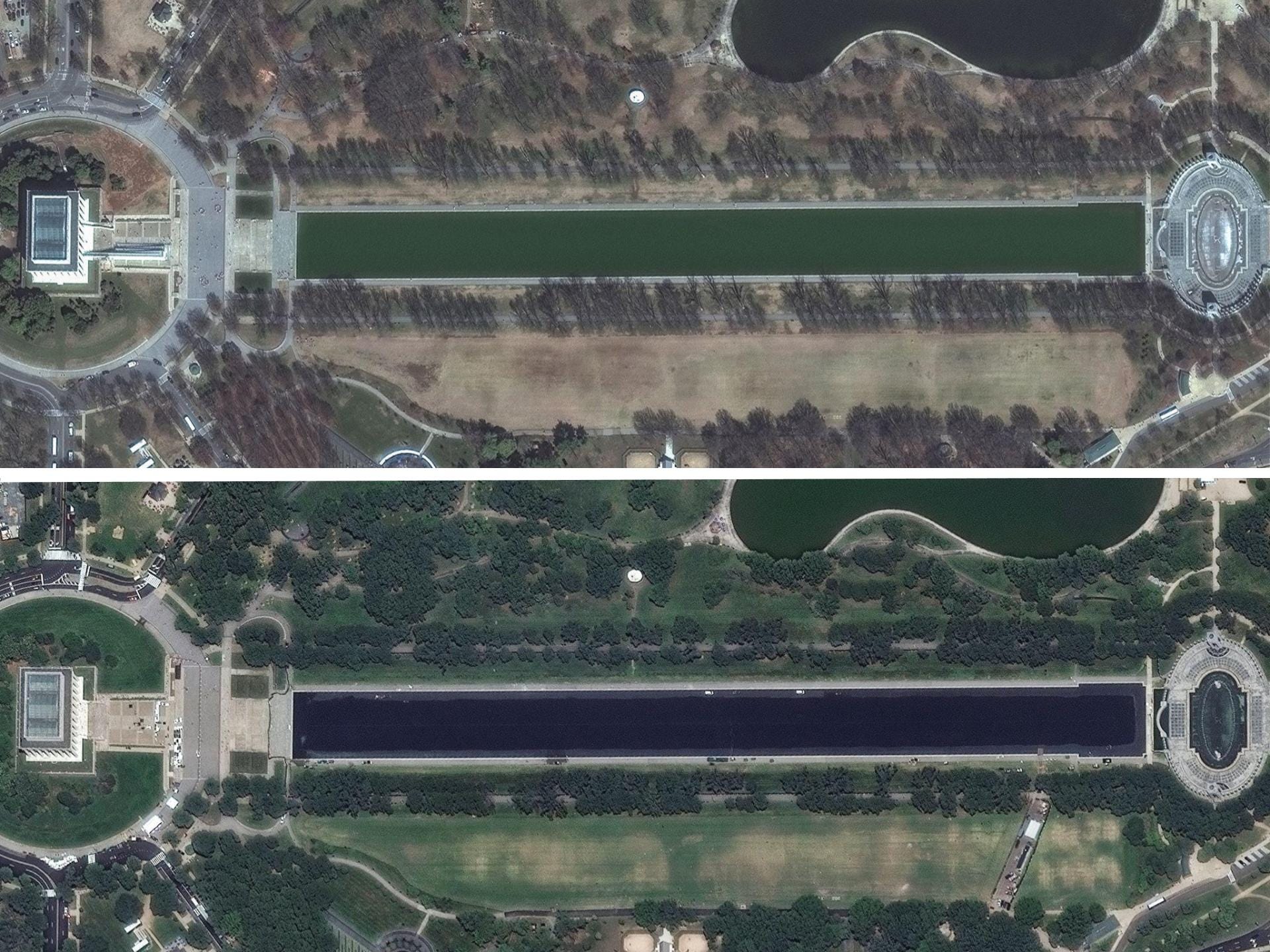
In April, the Lincoln Memorial Reflecting Pool, which stretches between the Lincoln Memorial and the World War II Memorial, started undergoing a makeover that was completed in June.
The renovation involved resurfacing the pool, which has long had leaks and algae blooms, with a waterproof compound and painting the formerly gray pool an “American flag blue,” as the president described the color.
The administration defended the renovation as an expedited repair ahead of America’s 250th anniversary celebrations, with a Department of the Interior spokesperson saying that the blue surface “will enhance the visitor experience by making the pool reflect the grand Lincoln Memorial and Washington Monument.”
There have been questions about the cost and process of the project, reportedly awarded under a no-bid contract. The Cultural Landscape Foundation, a DC-based preservation nonprofit, sued the administration days after the project began, alleging that the renovation was conducted without completing the proper reviews required under federal preservation law.
The renovation, initially described as a $1.8 million project, was later reported by The Associated Press to cost at least $14.8 million in contracts.
An Interior Department spokesperson told the Times that the higher price tag “reflects the effort necessary to expedite the timeline of completing the leak prevention coating project — more people, more materials, more equipment, and longer hours ahead of our 250th.”
By June, the project was complete, and the updated color could be seen in satellite images (above).

Kevin Dietsch/Getty Images
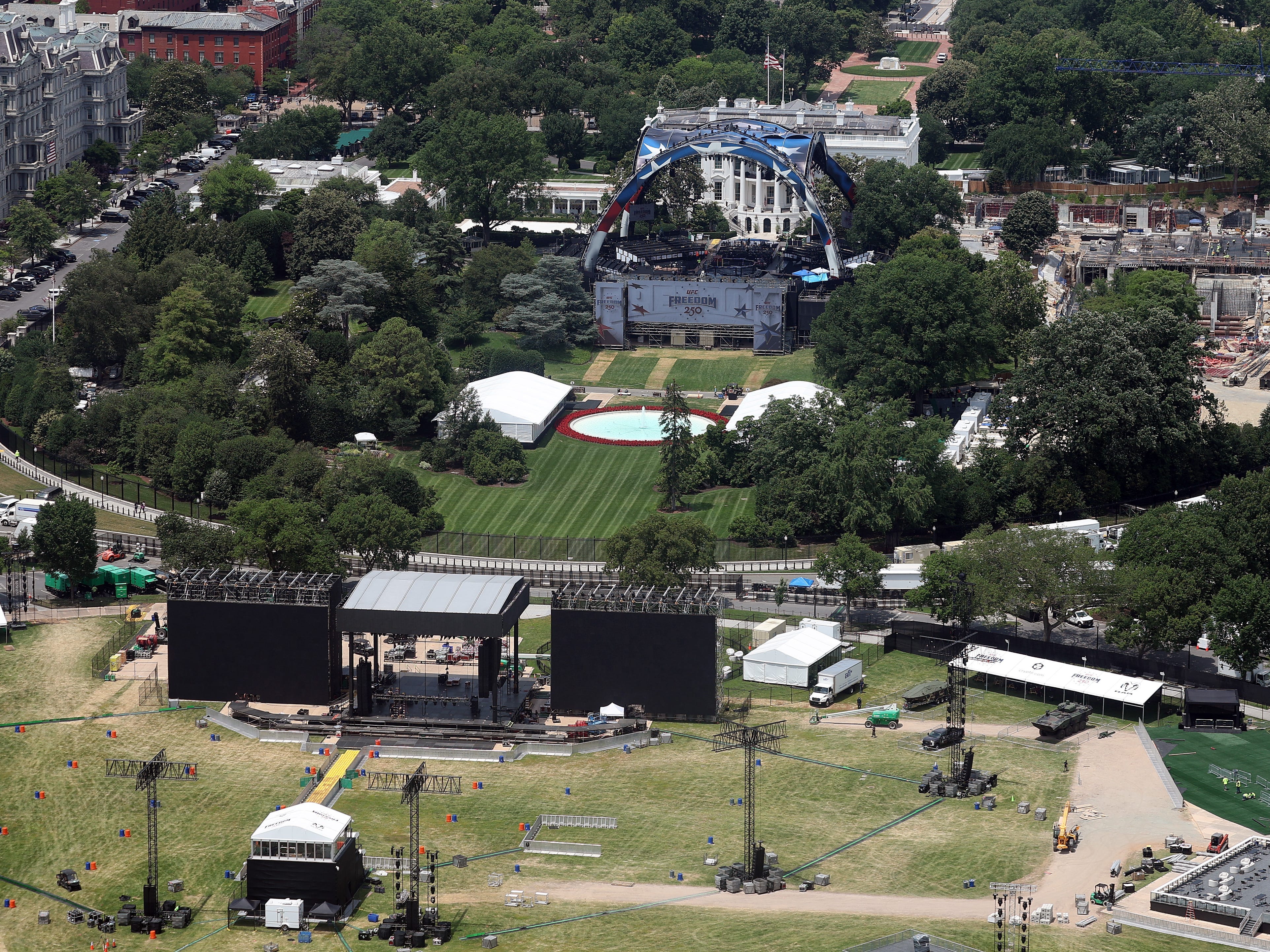
A 4,000-seat arena was erected on the White House South Lawn for a UFC fighting event. The structure was built to host the “UFC Freedom 250” event on June 14, commemorating the nation’s 250th anniversary and Trump’s 80th birthday.
The 30-foot-wide, 600-ton steel cage features a 92-foot canopy — nicknamed “The Claw” — covering the fighting octagon ring.
An additional stage with large screens was also built in the adjacent Ellipse, a park south of the White House, where over 120,000 members of the public are expected to attend, organizers said. That’s on top of the anticipated 4,000 spectators surrounding the ring, which will include at least 1,200 active-duty members of the armed forces as well as administration officials and other VIP guests.
A lawsuit filed by two Virginia residents against the National Park Service sought to block the event, alleging the administration’s use of the South Lawn was unlawfully authorized by the agency.
Over $60 million has been spent by UFC and affiliated groups on funding the event and building the structure. The National Park Service court filing added that seven federal agencies, including the Department of Homeland Security, had also “allocated significant resources and manpower.”
Trump later compared the fighting cage to France’s Eiffel Tower, which was constructed as a temporary installation for the 1889 World’s Fair and has remained in place since.
“We’re building something in front of the White House that’s quite attractive to a lot of people,” the president said on a video posted to his TikTok account. “And I’m looking at it, and maybe we’ll never ever take it down.”
Read the full article here