





It’s sleek, Swedish, relatively affordable, and designed for efficiency. Oh, and the color scheme? Yellow and blue.
No, it’s not Ikea. It’s Neko Health — the three-year-old healthcare brainchild of Spotify cofounder Daniel Ek — a new annual go-to longevity checkup for skin cancer, heart health, and more.
Up and running in Stockholm since 2023 and London since 2024, the clinic is opening its doors in the US this week, with a first location in New York City’s SoHo.
Already, 25,000 people have joined a waitlist in New York, and Neko plans to open more US locations soon, with their second set for Miami this fall.
Business Insider got a complimentary sneak preview of the Neko scan ahead of the launch on Thursday.
It’s slick and high-tech, includes at least 20-30 minutes of quality time with a doctor, and comes with a transparent $499 out-of-pocket price tag.
Was it cool? Yes. Was it quick? Sure. Do I have notes? A few.
What Neko delivers is not that different from what’s covered at a free, preventive annual doctor’s exam. It’s the engaging, tech-forward experience that makes Neko a product over 100,000 Europeans have already decided is worth the extra expense.
A fancy, tech-forward way to check on your heart, skin, and body shape
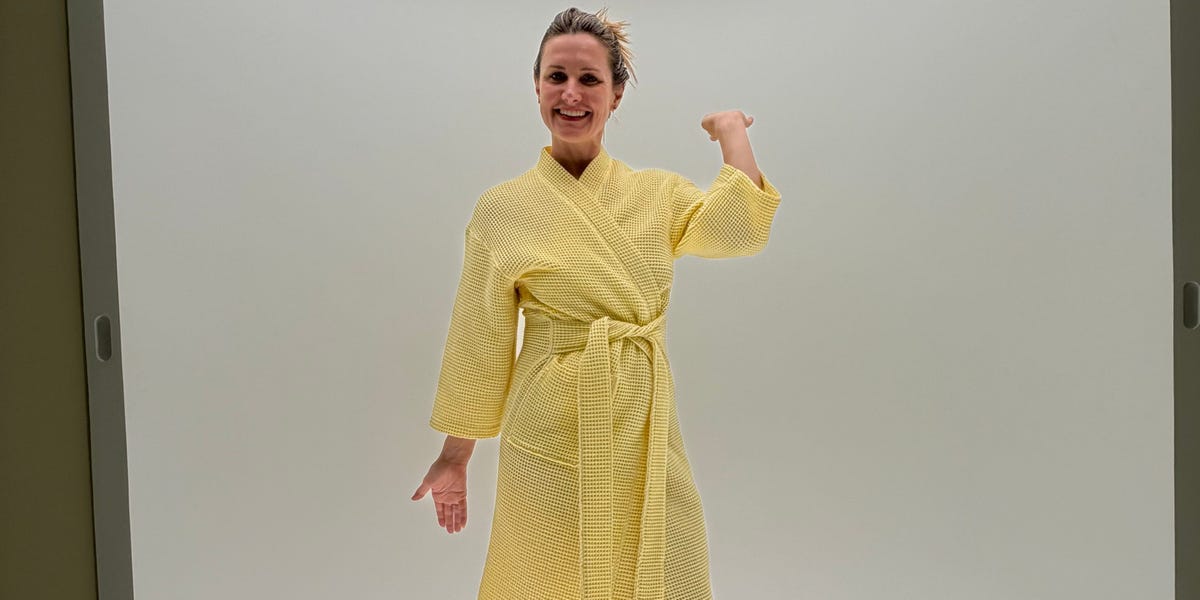
When I stepped into Neko’s New York clinic, I felt like I was entering some kind of high-end boutique for your body — complete with a soft yellow robe, satin hair tie, and foamy blue slippers.
Want more Business Insider in your news feed?
Add BI in Google so our reporting is easier to find when you’re searching for what matters.
The check-up started with Neko’s flagship body scan, which collects thousands of pictures of your naked body to survey for skin cancer and provides some information on your body fat distribution.
After you’re back in your robe and lying down on a very comfy exam table, a technician takes blood pressure readings, cuffing not just one arm, but all four of your limbs, to assess how well blood is flowing through your arteries.
Then there’s some rapid bloodwork for cholesterol, blood sugar, and more, a grip strength test, EKG measurements for heart health, and an eye pressure exam.
Most of these are diagnostics you could have had done at a decent primary care office, and they would not have cost anything close to $499. (Under the Affordable Care Act, annual preventive checkups are free, as long as you stay in-network.)
The key difference is that Neko promises your results will be delivered in under an hour and presented to you in an unrushed, data-heavy, easy-to-digest conversation with a doctor after you’ve been examined.
No need for prior authorization to order labs, or doctors’ offices chasing down patients to discuss concerning results. It’s one-stop shopping for health.
That consumer-focused approach is critical, said Zen Chu, the faculty director of MIT’s healthcare ventures course, who is not affiliated with Neko Health. It can make patients more receptive to a doctor’s advice and more engaged with their own health.
“That’s what we’ve been teaching for 15 years,” Chu said. “We need to redesign these experiences in healthcare, and those are enormous, multibillion-dollar opportunities, even when you’re not changing the underlying technologies.”
The visit summary includes charts forecasting your future health, and (what I considered) horrifying, aggressively accurate mockups of your current body shape, showing every curve and ripple on your frame. It’s all meant to compel people into lifestyle changes that can prevent some of the most common chronic health issues later in life, including heart disease and diabetes.
As someone with a family history of melanoma, the skin scan may have been the most valuable part of my Neko visit. Skin scanning for cancer is important, and it can be hard to keep track of how your own moles are evolving over time.
About a week and a half after my scan, a representative from Neko called to say that one of the moles on my torso warranted further investigation by a dermatologist. Fewer than 1 in 10 Neko customers are referred out to an external provider for some follow-up, and apparently, I’m one of those few.
If it turns out that Neko can more easily connect me with a dermatology appointment and cut the typical monthslong wait for a time slot, that’s arguably worth it for me, though it’s a pricey way to get skin cancer screening, which typically ranges from free to under $100 with insurance.
The Neko scan is way more fun than going to the doctor
Neko gets a few simple things right that “normal” primary care could learn from. First and foremost: the clear focus on a beautifully designed product that can propel people into meaningful action.
According to Neko’s recent “year three” report, based on results from 80,000 people, members who scan themselves annually at Neko tend to make meaningful improvements to their heart health, lowering blood pressure, improving cholesterol, and stabilizing blood sugar.
The check isn’t meant to replace traditional hospital care — only 1% of Neko customers identify something life-threatening like a serious heart issue or late-stage skin cancer hiding out in their body.
My Neko provider’s biggest concern was my “elevated blood pressure” — I don’t normally have high blood pressure, so he said it was probably just “white coat syndrome,” or doctor’s-office nerves, and that I should redo my reading later.
My verdict: I could find better ways to spend $500 on my health
If I had $500 extra to spend on my health, I’d probably skip Neko and get a gym membership first, then consider a DEXA scan (dual-energy X-ray absorptiometry) to track my body composition in finer detail.
If I was worried about cancer, I’d go for a full-body MRI to get a better picture of what’s going on inside me.
“Cash pay care is one of the biggest trends coming in American healthcare over the next decade, and Neko is one of many examples of that,” Chu said.
Neko’s scan is a lot of fun, but for anyone who’s already somewhat aware of their health and wellness, it remains a little too basic.
Read the full article here