



Soccer players and fans have criticized one very American addition to the World Cup: commercial breaks.
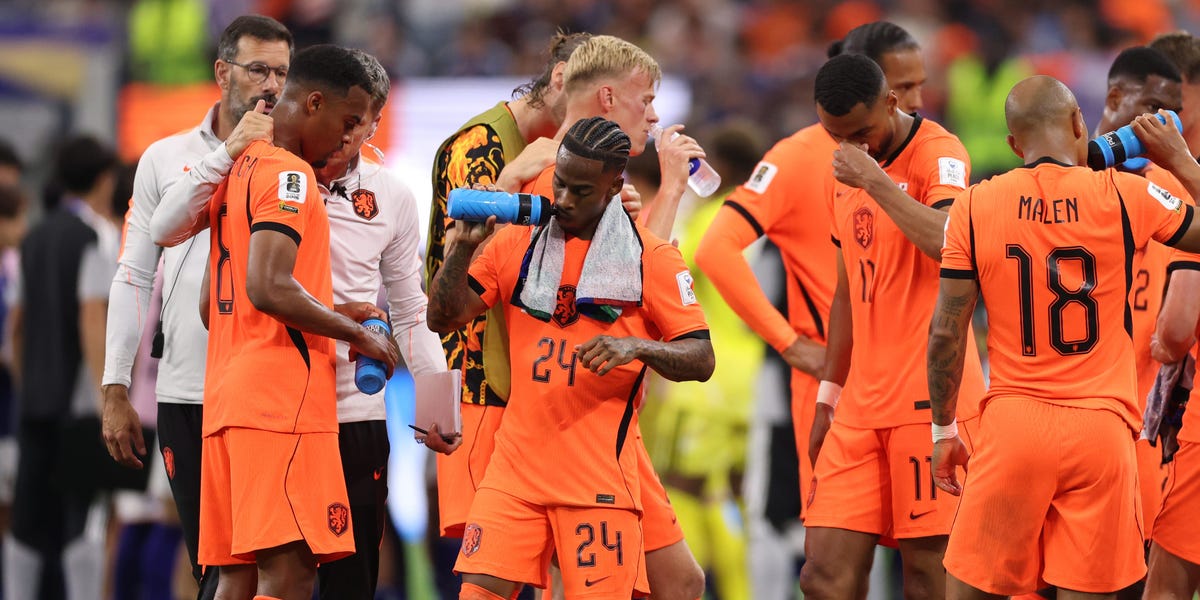
A soccer game usually consists of two 45-minute halves. However, for this year’s tournament, FIFA has introduced mandatory “hydration breaks” halfway through each half.
Essentially, it feels more like a game of four quarters — like basketball, hockey, or American football.
Virgil van Dijk, the Netherlands captain, spoke about the change after his team drew 2-2 with Japan on Sunday.
“Hydration breaks are a bit interesting,” he said in a press conference. “Every time going to commercial is a bit … Not really that I like it.”
When it announced the breaks last December, FIFA said it is prioritizing “player welfare” with the three-minute breaks during North America’s hot summer weather, but some broadcasters have taken the opportunity to show more commercials.
“I just think it’s another way of getting adverts into it from an American point of view,” Ian Wright, a former England striker, said on ITV.
During the first World Cup game, Fox, one of the broadcasters of the event, didn’t return to the live action until 10 seconds after play had resumed following a hydration break, although FIFA said broadcasters must return from commercials 30 seconds before play restarts, The Guardian reported.
Even for networks that don’t cut away to commercials, such as the BBC, as in all the games it broadcasts, viewers can still see screens in the stadium promoting Powerade, which is the official sports drink partner of the World Cup.
While commercials and timeouts may be common in American sports, soccer is known for its free-flowing action. The breaks also give teams the chance to regroup and receive tactical instructions from coaches.
“For me, it’s a coaching break more than a cooling break, so to me it’s very important,” Belgium coach Rudi Garcia said in a press conference. “Maybe if we are in a good moment, in a good flow, maybe it can interrupt, so this also we will see.”
The weather isn’t always particularly hot, either. For example, there was still a hydration break after 10 p.m. when Scotland played Haiti in Massachusetts on Saturday. Plus, the Netherlands-Japan game took place at the air-conditioned AT&T Stadium.
“If it’s really hot, obviously it would be good to put them in,” van Dijk said. “But I think you have to look at it in every game, separately, in my opinion.”
FIFA did not immediately respond to a request for comment.
Read the full article here