




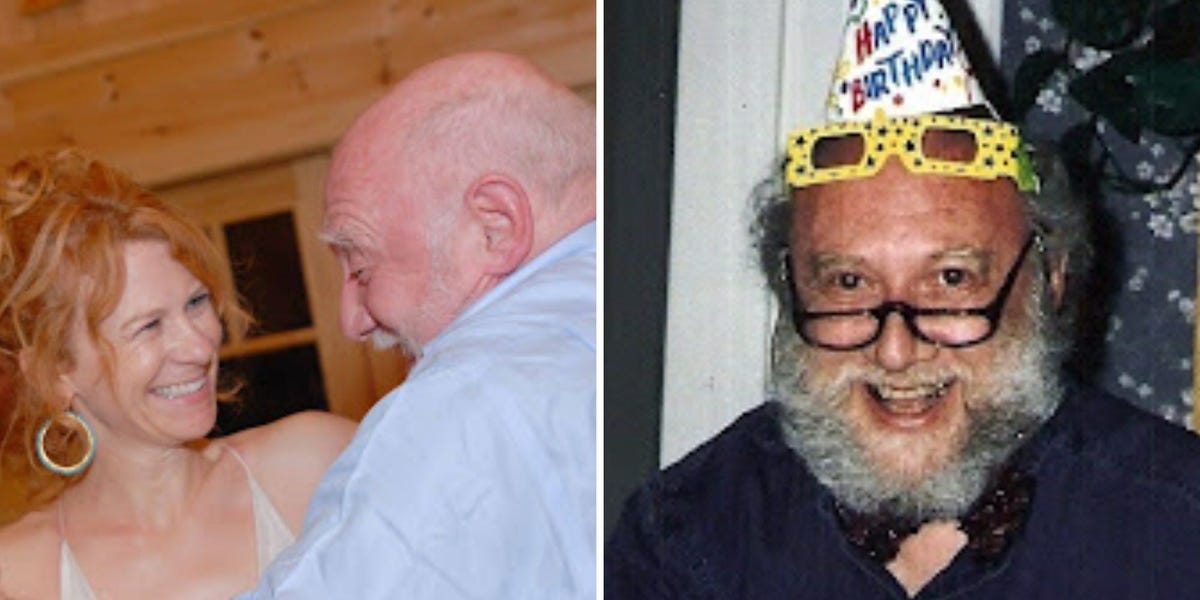
The day my father died, it was a Monday, early morning. Normally, I would have been driving my daughter to school, but she was home with a badly injured foot. My uncle called and said, “Now I have to tell you that your father crossed over earlier this morning.”
This was a call I expected. Dad had been sick, in and out of the hospital, for eight months. It started with simple heart stent surgery and progressed to his major organs shutting down. He was 87.
I was very close to my Dad. Probably closer than most fathers and daughters. And although we lived on opposite sides of the country, we talked a lot and texted often, and I always felt the strength of our connection, whether near or far.
I took my daughter to the movies
After receiving the news, all I wanted to do was sit in a dark room and emotionally eat. But I had to parent; my daughter was home. So I said to her, “Let’s go to the movies.” Dark room? Check. Emotionally eating popcorn with extra butter and a whole bag of Sour Patch Kids? Check. Plus, I got to sit quietly and process while my daughter enjoyed a movie.
It seemed like the perfect solution. Even my Dad would’ve been pleased. He was quite the gregarious trickster who loved celebrating life and being loud. To some, a movie might have seemed like disrespect or avoidance, but it got me through that horrible day.
It’s been three months since my Dad passed, and during that time my husband and I have bought and sold a house, moved across town, continued parenting our 9-year-old, and I’ve been caring for my special needs brother from afar. Needless to say, that’s a lot, and I feel I haven’t actually grieved yet. I’ve shed tears, yes, and taken photographs to honor the photographer in him, but I honestly have not had the time to dedicate to a grieving process like I think I should.
Grief makes me tired
I also had no idea how physically tired grief can make you. I was knocked out, lying on the couch or in bed, when I should’ve been packing. I become even more forgetful than my menopausal brain already allows, and I could not take care of the simplest tasks. It felt daunting. I couldn’t even muster the energy to send a quick email.
I’ve since joined a grief group and learned that, indeed, grieving commonly includes fatigue, a scattered brain, lack of sleep, lashing out, confusion, the inability to do things as well as you used to, and lack of appetite. My fuse definitely shortened. I felt resentful that I had to continue helping my family get things done, but I couldn’t complete my own. And all I could eat was Saag Paneer, an Indian dish of spinach and cheese, that I’ve since named “Sad Paneer.”
I find myself saying things he would say
I’m aching to have a piece of my Dad nearby, and I hope to get a piece of jewelry made with some of his ashes incorporated into it. That might sound macabre, but it would comfort me.
This first brush with major grief is not what I expected. My grieving feels strange because I don’t have any immediate family to reminisce with: my mother has Dementia and does not remember him, and my brother has mental health issues and did not have a similar relationship to Dad as I did.
I wondered how my Dad would visit me from the beyond. Would he appear in rainbows or butterflies or dimes on the ground? The answer took me by surprise: he has come to me in song. That week he died, I heard so many of his obscure favorite songs pop up in the car or a cafe.
He’s also visited me through my own mouth: I find myself saying things he always used to say that only I know and haven’t thought about in decades. Things like, “Pig for sale!” when he was playing and carrying me around the house on his shoulder, or “Shake it, don’t break it!” when dancing, or “Are you cruisin’ for a bruisin’?” when teasing each other.
In fact, my Dad picked the song we danced to at my wedding 18 years ago. My uncle sent me a framed photograph that I had given my Dad as a present of that moment. It shows us dancing, smiles overflowing. I’d had the frame engraved with the song he chose, “I Hope You Dance,” and when I saw that, I lost it. It was as if he were sending me a message in the most poignant way. I will always dance, Poppa, I promise.
Read the full article here