






The US Air Force is showing interest in camouflage netting that can deceive the enemy and protect troops and equipment from thermal imaging at an air base in Germany.
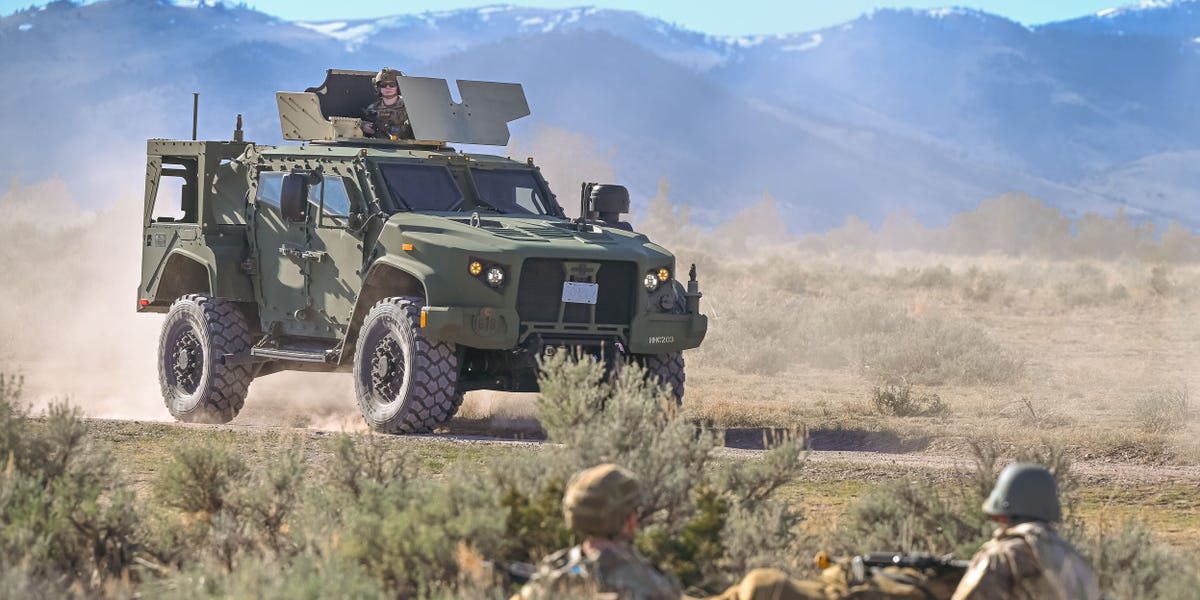
A pre-solicitation document posted to the government’s contracting website last week ahead of an anticipated contract opportunity shows the service seeking 30 large, lightweight nets. Each must be big enough to cover a Joint Light Tactical Vehicle, the military’s replacement for the aging High Mobility Multipurpose Wheeled Vehicle commonly known as a Humvee.
According to the document, the nets must protect troops and equipment from mid-wave infrared and long-wave infrared signatures, which are different ways objects give off heat, such as a recently used engine that remains hot to the touch, or the human body’s natural warmth even at rest.
Though not outlined in the pre-solicitation notice, nets like these could also help protect other systems from detection.
The Marine Corps’ Marine Air Defense Integration System, or MADIS, for instance, is a short-range, ground-based air defense system mounted on JLTVs that can shoot down both drones and crewed aircraft. The Corps has also been pursuing thermal defense technology for Marines; it recently announced that it was searching for a cloak designed to reduce heat detection.
The Air Force notice also specifies an interest in using “nanotechnology or advanced composites,” reflecting a push to make even basic items more effective against increasingly sensitive modern sensors. The term nanotechnology can refer to fabrics or coatings engineered at the nanoscale to control how heat is absorbed, spread, and emitted.
Along with thermal protection, the netting the Air Force expressed interest in must also blend into the surrounding environment to reduce visibility to other sensors, with reversible green and woodland patterns.
The military has been seeking improved camouflage netting that can mask heat signatures for years, and some similar nets already exist — but the effort has taken on new urgency as drones and airborne sensor surveillance have become increasingly pervasive in conflicts like the war in Ukraine.
Recent drone attacks targeting US troops in the Middle East, including the attack that killed six soldiers in Kuwait in March, have underscored significant gaps in US air defense and force protection against drones, which present a range of challenges on the battlefield and beyond.
Read the full article here