





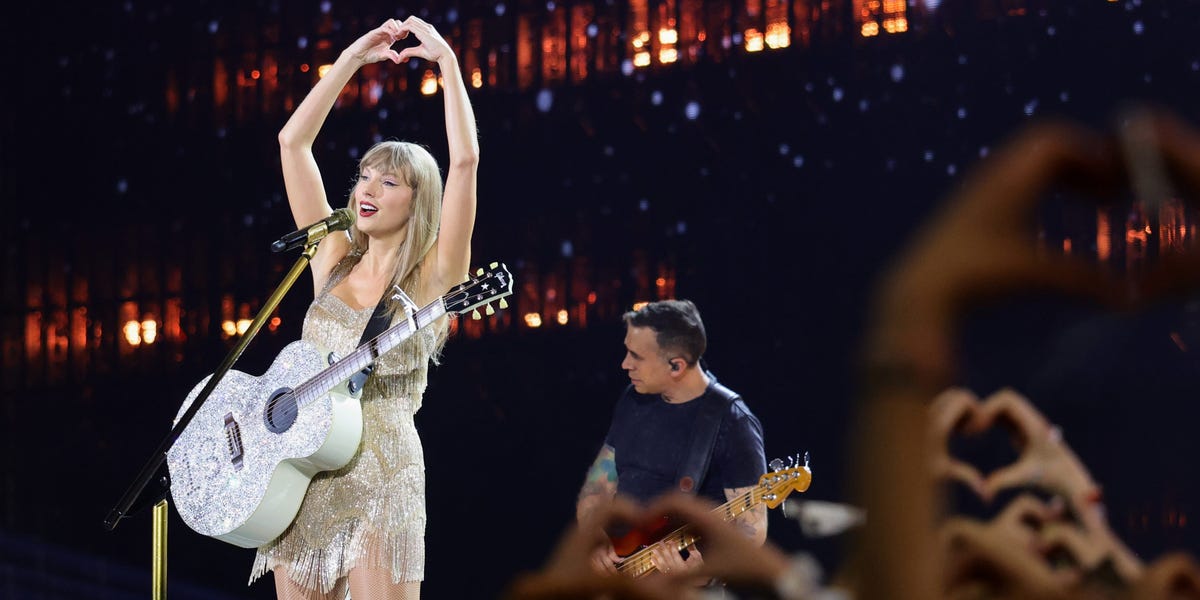
As the Fourth of July weekend approaches, America’s 250th birthday is being overshadowed by another major world event: Taylor Swift and Travis Kelce’s wedding.
The couple’s rumored nuptials have been dominating the media ecosystem, and it seems like no one is immune to the breathless speculation: CNN and TMZ are trading reports about the event’s hefty price tag; The New York Times has anonymous sources weighing in on the fancy dress code; Page Six claims to have an exact schedule of events down to the half-hour, and everyone is on the lookout for Swift’s famous pals flocking to New York City for the big day.
Swift and Kelce are reportedly even constructing a massive castle inside the venue — a fairy tale built exactly to their liking, ensconced in the bustle of Manhattan. It’s the perfect metaphor for Swift’s brand as the everygirl with big dreams and an even bigger wallet.
But while it may be tempting to brush off the Swift-Kelce wedding hype as grist for the celebrity gossip mill, there’s a deeper reason this particular life event is creating such a hubbub.
Swift has spent 20 years consciously crafting a love story (wink wink) and casting herself as the relatable heroine in her art and public persona. The answer to why any of us care about the rumored nuptials of a stranger is simple: Because she told us to.
Swift is nothing if not a persuasive storyteller
Ever since she was a tween, lyrical soul-bearing has been Swift’s specialty. Whether she was delivering tragic goodbyes and scorching kiss-offs like “Cold As You” and “Should’ve Said No” or casting a crush as a Shakespearean love affair in “Love Story,” her grandiose specificity has worked to make Swifties feel closer to her personal wins and milestones.
While it’s not accurate to say that Swift exclusively writes songs about romance and relationships (listen to “The Last Great American Dynasty,” “Marjorie,” or “Father Figure” for a taste of her range), her tireless quest for true love is the dominant theme throughout her discography, from “Mine” to “Delicate” to, finally, “The Fate of Ophelia.”
Every time Callie publishes a story, you’ll get an alert straight to your inbox!
Stay connected to Callie and get more of their work as it publishes.
In public, Swift has meticulously nurtured fans’ interest in this narrative, carefully controlling the glimpses they get into her romantic life via paparazzi shots and embedding Easter eggs in her lyrics and music videos to reward eagle-eyed fans who want to better understand the life of their favorite singer-songwriter.
After all that, it’s understandable that we might feel particularly invested in — even entitled to — the details of Swift’s long-awaited happily ever after.
“It’s like watching your best friend from high school finally get her happy ending after you’ve seen her date every bozo under the sun,” Beth Booker, a longtime PR professional, told me when Swift got engaged.
Every fairy tale needs an audience
Unlike some of Swift’s previous paramours, Kelce seems to enjoy the spotlight that comes with Swift’s success, and the couple hasn’t been shy about broadcasting the details of their picture-perfect love story to the world. After all, their relationship only began because Kelce publicly professed his interest in Swift on his podcast, setting the scene for her to be flattered, courted, and swept off her feet — just like her imaginary Juliet.
“This is sort of what I’ve been writing songs about wanting to happen to me since I was a teenager,” Swift later admitted, while Kelce also credited her lyrics for providing him with a blueprint: “I was sitting there at the Eras Tour, listening to every single one of those songs, like, ‘I know what she wants me to do.'”
Swift brought this saga full circle with “The Life of a Showgirl,” her most recent album, which she wrote while dating Kelce and released shortly after their engagement.
In works that preceded “Showgirl,” like “Evermore” and “Midnights,” Swift portrayed marriage in a skeptical, often tragic light, and distanced herself from what she described as “that 1950s shit they want from me.”
In the 2022 music video for “Bejeweled,” Swift had her “evil stepmommy” (played by Laura Dern) poke fun at women who value diamond rings above everything: “I simply adore a proposal! The single most defining thing a lady could hope to achieve in her lifetime, the prize of all prizes!”
But in the broader story Swift is writing in real time, those are revealed to be chapters in which the heroine’s faith is tested. Her soulmate was always waiting patiently on the other side of her doubt, undeterred, ready and willing to win her heart.
Whether that’s how it actually happened is hardly relevant; through Swift’s music, Kelce’s Romeo-esque plot twist is cemented in pop culture.
In “Eldest Daughter,” the fifth track on “Showgirl,” Swift is forced to admit that she was trying to play it cool before, feigning disinterest to protect herself from another letdown. Enter Kelce, in a flurry of Ferris wheels, kisses, and lilacs: “When I said I don’t believe in marriage,” she sings, “That was a lie.”
Read the full article here