






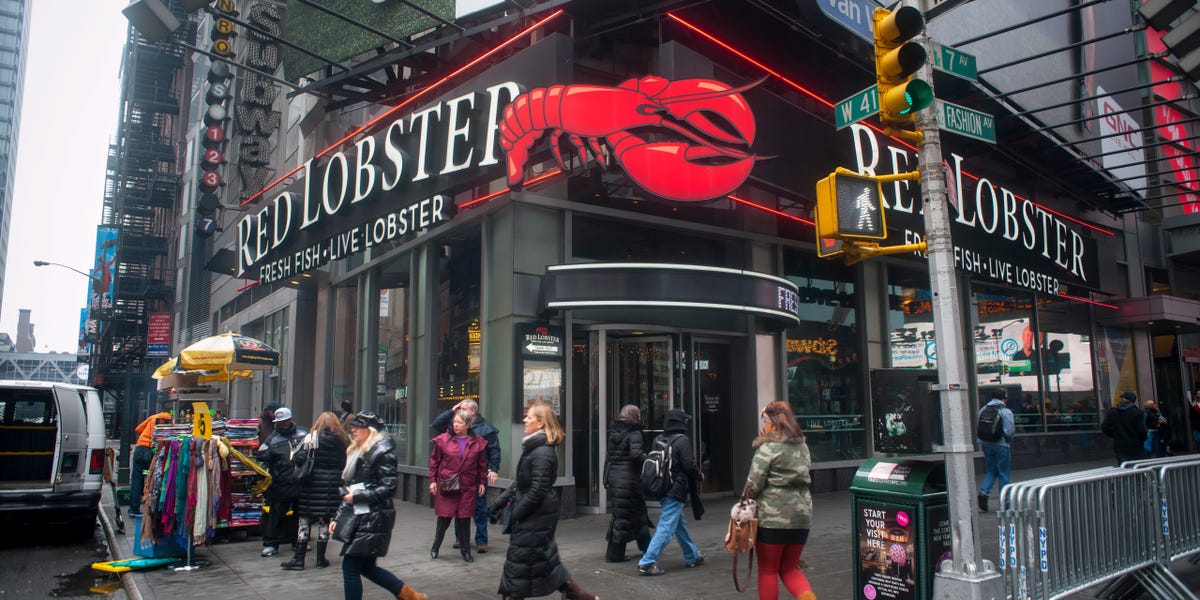
When I visited Red Lobster’s Times Square location in March for the first time since the chain’s bankruptcy filing, I came away with an unexpected conclusion: Red Lobster is getting better.
Inside, servers bustled between a few packed tables carrying steaming Cheddar Bay biscuits, shrimp platters, and seafood pasta dishes. The food was tastier, the portions were big, and the chain finally seemed to understand what customers wanted: quality food and exciting new menu offerings that felt worth coming back for.
Still, despite these promising updates under new CEO Damola Adamolekun, the sprawling restaurant felt noticeably quiet for Times Square during the lunch rush. As I stood inside the multi-level dining room, I was struck by the challenge restaurants this large must face.
This week, Red Lobster announced the Times Square flagship, which has occupied one of Manhattan’s most famous corners for 23 years since its opening in 2003, will permanently close on June 14.
In some ways, the closure highlights a strange reality: Red Lobster itself appears to be in better shape than the Times Square restaurant that once symbolized the brand’s success.
Since filing for bankruptcy in 2024, Red Lobster has appointed Adamolekun, revamped its menu, exited Chapter 11 protection, and has begun seeing encouraging sales gains. Adamolekun told The Wall Street Journal in February that sales were up 10% year over year.
Yet, even as the chain gains momentum in a challenging casual-dining market, one of its most iconic locations has become harder to justify.
Every time Erin publishes a story, you’ll get an alert straight to your inbox!
Stay connected to Erin and get more of their work as it publishes.
After visiting, I understand why Red Lobster decided to close its Times Square location
During multiple visits to Red Lobster’s Times Square location over the past year, I found the restaurant surprisingly easy to miss, even though I knew exactly where I was headed. Construction scaffolding obscured much of the exterior, including its illuminated sign, making it difficult to spot in one of the world’s busiest tourist areas.
According to Red Lobster, those visibility issues ultimately contributed to the restaurant’s closure.
“Extensive and prolonged construction at 5 Times Square has significantly impacted access, visibility, and foot traffic, making continued operations at this location economically unsustainable,” a spokesperson told Business Insider.
“The building’s publicly reported transition into a residential tower also means the location does not have a viable long-term runway for a high-volume restaurant,” the statement continued.
The size of the flagship, which spans multiple floors and can accommodate up to 400 diners, also feels increasingly challenging in an era when many restaurant chains are focusing on efficiency, smaller restaurants, and expanding into takeout and delivery.
A Times Square flagship location can serve as a billboard for a brand, but when many seats sit empty, the scale can work against the brand’s reputation, making it look unpopular. Hospitality experts also note that oversize dining rooms can create a less intimate, buzzy atmosphere.
For a company clawing its way back from bankruptcy, maintaining such a massive location likely became harder to rationalize, no matter how iconic the address.
Despite indications of a comeback, Red Lobster faces rough seas
Americans are dining out less frequently as inflation continues to strain household budgets, while food and labor costs remain elevated across the restaurant industry. For Red Lobster, that means its comeback is unfolding amid a challenging market.
The chain is also still shrinking its restaurant footprint.
Fortune reported that Red Lobster operates roughly 550 restaurants, down from roughly 700 locations a few years ago. It likely won’t stop there: Adamolekun told The Wall Street Journal in February that Red Lobster is continuing to examine leases, close underperforming locations, and update the chain’s remaining ones to represent a more modern brand identity.
The Times Square closure doesn’t necessarily signal that Red Lobster’s turnaround is failing. Instead, it may reflect a company making tough decisions about which parts of its business still make sense in 2026, and not being afraid to trim the fat.
In fact, Adamolekun told WSJ that the chain is still open to expanding in underrepresented regions of the country, including upstate New York and New England.
Still, the chain’s turnaround is far from complete. Bloomberg reported in March that Red Lobster posted a net loss in 2025, with sales falling at least 20% below pre-bankruptcy levels.
“Unless the chain can reduce its rent or exit those unprofitable restaurants, many of the people say, the turnaround seems doomed to fail,” Bloomberg’s Eliza Ronalds-Hannon and Anders Melin wrote.
“Even in the best of times, turning around a chain like Red Lobster isn’t easy,” David Henkes, a senior principal at restaurant industry researcher Technomic, told Bloomberg. “They could be doing everything right, but it’s still a tough time for casual dining.”
A spokesperson for Red Lobster told Business Insider that the chain “remains focused on strengthening the business, investing in the guest experience, and building momentum across the system.”
Red Lobster said it will continue operating restaurants throughout the New York metro area and plans to maintain its marketing investments in the region through the end of the year.
“Times Square has been an important chapter in Red Lobster’s history, and we are grateful to the team members and guests who have made this restaurant special over the years,” the chain said.
The lights may be going out on Red Lobster’s most famous location, but whether that signals the start of a new chapter or another setback remains to be seen.
Read the full article here