





This as-told-to essay is based on a conversation with Jason Belmonte. It has been edited for length and clarity.
My career in professional bowling began before I was born, on a rainy day with some bored relatives. My parents had family visiting the small town where we all still live. It was the mid-80s, and bowling was just becoming a thing in bigger cities like Sydney.
It was pouring rain during the visit, so the visitors asked if our town had a bowling alley. We didn’t, and my parents had never been bowling, but as the visitor explained the game, they thought it sounded like a great business idea.
They put all their savings behind it, then asked my paternal grandparents to do the same. The bowling center opened right around the time I was born.
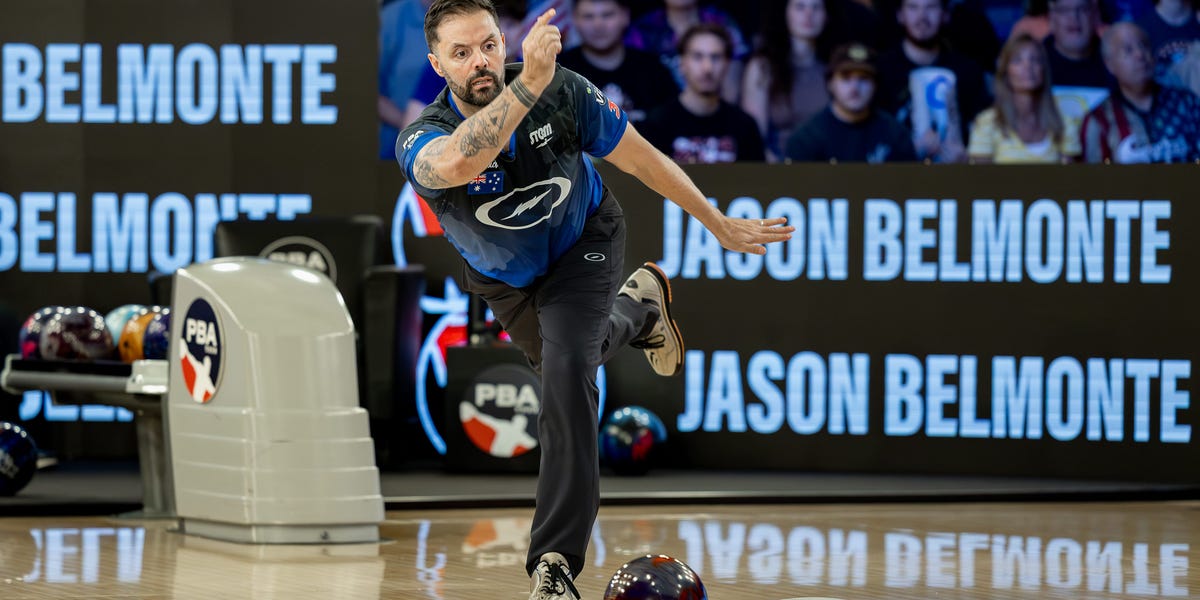
My parents and grandparents worked every shift, so naturally, I was there too. Once I was old enough to walk, the bowling ball became my babysitter. My parents would set me up with a lane, and — according to family stories — I would only stop for lunch and a nap. That’s where I developed my unique two-handed bowling approach. I was so small that I needed both hands to throw the ball.
I won a $16,000 bonus when I was 16
By the time I was 16, I was on my state’s youth team. At an event, two other boys on the team mentioned they were going to competitions in Singapore and Malaysia. I had no idea there were tournaments outside my little area, but when they asked me to join them, I did.
During that first trip, I bowled a perfect game. That came with a $16,000 bonus prize. On the flight home, I realized that I had just made more than I could make working at my parents’ bowling alley or my other job, Blockbuster Video. Bowling could be my career.
I started buying round-the-world economy tickets for about $2,000, and used that to get to four or more different competitions in Asia and Europe. It was expensive, but if I won — which I often did — I could come home with $30,000 in prize money. On my most lucrative trip, I won $100,000 in a four-week period.
Competing professionally is the best rush
I was making lots of money and enjoying the amateur circuit. But the Professional Bowlers’ Association, based in the US, was like Mount Everest to me. I was a big fish in a small pond, but PBA tournaments were the ocean.
When the PBA commissioner reached out to invite me to two tournaments, I had to say yes. I was beaten, badly. But the commissioner convinced me I had the skills; I just needed more experience. I stuck with it and won my 8th tournament. Since then, I’ve won 32 PBA titles.
Even after 18 years, nothing can give me the same rush as competing in the PBA. Going pro allowed me to make more money (from winnings and sponsorships) and stop chasing tournaments around the world. At the time, my wife and I were ready to start a family, and today we have four kids, so time at home is important.
I’m thinking about what comes after my bowling career
I sometimes think about the Butterfly Effect in my life. If my relatives hadn’t visited on a rainy weekend and planted the idea of starting a bowling center, would I still be a professional bowler? I don’t know, but I’m incredibly grateful that they asked a simple question.
Bowling has made me a millionaire and changed my family’s lives. My grandparents — who immigrated to Australia with nothing — were able to experience the abundance they had never known before, thanks to the bowling center’s success.
The legacy isn’t just financial. When I walk around my town, everyone speaks so highly of my mom and dad, and the impact they’ve had on the community. That’s the legacy I want to have for the bowling community: not only to be a great bowler, but to leave the sport better overall.
My parents eventually owned three bowling centers. They’ve since sold two, because they’re ready to retire. They don’t want to sell the original center to anyone but me. I don’t want them to either — yet I’m still so fueled by competition. That’s led to some touchy conversations lately.
I’ve signed contracts for the next three years, but after that, it’s time to think very seriously about what comes next.
Read the full article here