






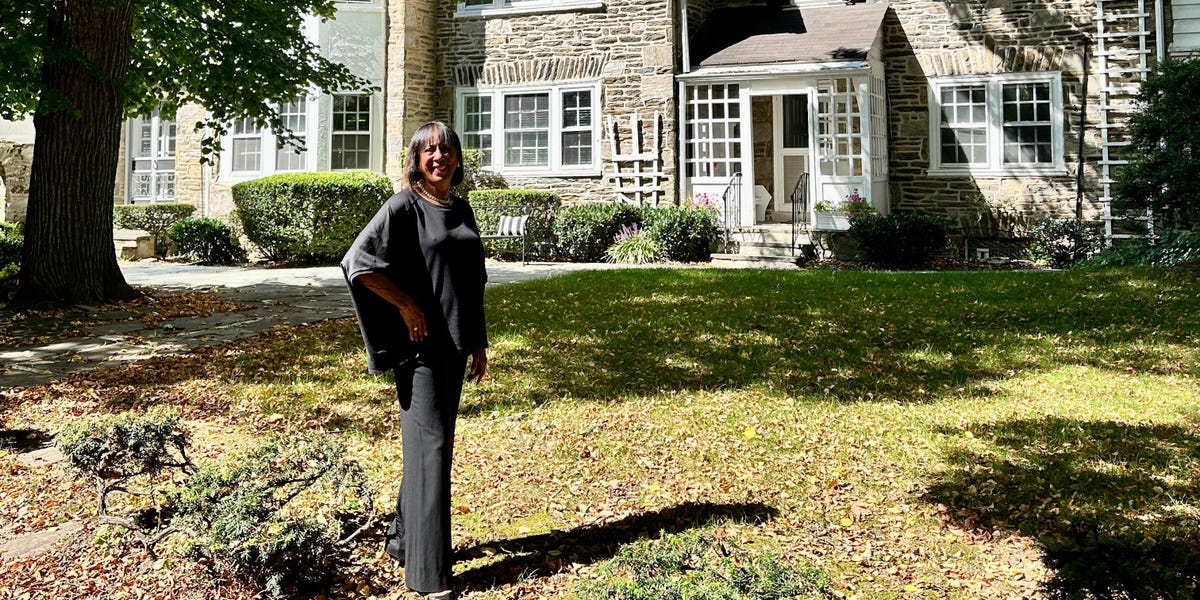
This story is based on an interview with Scheryl W. Glanton, 74, a real estate agent from Philadelphia. It has been edited for length and clarity.
It was getting frustrating. Despite at least 20 showings of my listing in suburban Philadelphia, no one made an offer.
We put the 5,100-square-foot Tudor-style property, built in 1925, on the market in April 2026. I hoped it would sell relatively quickly for the $1m asking price. It was an estate sale, the area had good schools, and the neighborhood was highly sought after.
However, whenever I asked the buyers’ agents why their clients weren’t interested, they said the same thing: “It’s too much house.”
They said the seven-bedroom, five-and-a-half-bathroom home was too large for one family, regardless of whether they were planning to have more kids.
I decided to market it as a multigenerational home
Everything else — such as its long history, a third-of-an-acre plot, stone walls, and light interior — made it a beautiful option.
Four months went by, and there was no movement. Then, in August, I had what can only be described as an “aha moment.”
The three-story house had two distinct wings and included two sitting rooms on the second floor, two en-suite bedrooms, and a Jack-and-Jill bathroom. It also had two separate entrances, two staircases, and a four-car garage.
The place struck me as being perfectly set up for multi-generational living.
If I wanted a sale, I needed to lower the price to $875K and pivot.
Want more Business Insider in your news feed?
Add BI in Google so our reporting is easier to find when you’re searching for what matters.
So I repositioned the listing. This time, I marketed it toward young parents and grandparents who wanted to be under the same roof with privacy, too.
I got offers immediately
Within a day, I got two offers from multigenerational families, with one on hold in case they fell through.
The successful buyers, who are paying close to the asking price, were a couple from Los Angeles, their two children, and their aging parents from Indiana.
They’d decided to settle in Philadelphia because of a job move, a big relocation for everybody.
After seven-and-a-half years as a real estate agent, I’ve realized every property is different to me, and every house is personal. It’s reinforced my belief that people want to live how they want to live.
It has nothing to do with the house, as much as the lifestyle. I always focus on that.
There is definitely a trend in the US toward three — or even four — generations living together, whether in a compound, the same house, a duplex, or a triplex.
It might be connected to affordability, but I specialize in luxury real estate. Something else is going on.
As people get older, what choices do they make about living? One of the most important concerns these days is childcare and eldercare. Multi-generational living can be the sweet spot.
There’s clearly a market. As the old saying goes, it’s the market that speaks.
Read the full article here