










FIRST ON FOX: The origins of a fraud-fighting technology now used by one of the world’s largest insurers trace back to a deadly insider attack during the Iraq War.
Clearspeed founder Alex Martin was serving in the Marine Corps when his close friend, Capt. Warren Frank, was killed by an Iraqi soldier who turned his weapon on American forces during a joint patrol.
The Iraqi had passed coalition vetting procedures.
“Warren met his future wife at my house,” Martin recalled to FOX Business. “Learning he’d been killed by an al Qaeda infiltrator we’d brought into his formation, it shook me. I couldn’t accept that insider attack as inevitable.”
TRUMP URGES IMMEDIATE RATE CUTS AMID IRAN CONFLICT
So-called “green-on-blue” attacks, in which supposedly vetted local forces turned on coalition troops, became one of the global war on terror’s most vexing threats. Between 2008 and 2017, such incidents killed more than 150 coalition service members in Afghanistan alone.
“I became obsessed with our vetting process and realized our traditional playbook simply couldn’t keep pace with the operational tempo, language barriers and risks of counterinsurgency warfare,” Martin said.
His solution was to flip the model and quickly establish trust for the majority who posed no threat, while focusing expert scrutiny on the small fraction requiring deeper review.
After leaving active duty, Martin partnered with Stanford professor Charles Holloway to develop a voice-based vetting tool designed to quickly assess risk across languages and high-stakes environments.
The company’s first major customer was U.S. Special Operations Command. In 2018, Clearspeed screened 715 Afghan commando recruits in less than 20 hours, a process that would normally take months. Several individuals flagged as high-risk later deserted.
The success attracted investment from retired Gen. David Petraeus, the former CIA director and commander of U.S. forces in Iraq and Afghanistan. The company has since raised $110 million and counts the Department of Defense and U.S. intelligence agencies among its customers.
Now, the technology is being used beyond the battlefield.
Insurance giant Allianz recently disclosed it identified more than £92.6 million (about $115 million) in fraudulent claims during the first half of 2025, with executives crediting voice-screening technology from San Diego-based Clearspeed as central to its fraud detection strategy.
Clearspeed is a voice-based vetting platform originally developed for U.S. military use. During an automated phone call, individuals answer a short series of yes-or-no questions while the system analyzes vocal characteristics in real time.
It flags potential risk indicators for human review, allowing low-risk respondents to move through quickly while directing additional scrutiny to higher-risk cases.
“We needed to make our organization a really hostile place for people to try to commit fraud,” Allianz Chief Claims Officer Matt Cox said at an industry conference in London, according to InsurancePOST.
“Technologies such as Clearspeed have given us the opportunity, for the first time, to dial up that disruption.”


The move comes as insurers face what analysts describe as an escalating “arms race” with fraudsters, many of whom now use artificial intelligence and digital tools to perpetrate fraud. A Deloitte study predicted generative AI could help drive U.S. fraud losses as high as $40 billion next year.
The growing commercial adoption has also drawn attention in Washington.
Clearspeed has been engaging policymakers about deploying the technology to combat benefits fraud and strengthen screening processes, according to people familiar with the discussions. The company spent about $272,500 on federal lobbying in 2025, according to data compiled by OpenSecrets.
The push comes amid growing political pressure to crack down on fraud in federal programs. In January, the administration announced a new Department of Justice division focused on national fraud enforcement targeting fraud against federal programs and private citizens.
ORACLE BRACES FOR MASSIVE LAYOFFS AMID AI CASH CRUNCH
Rep. Pat Harrigan, R-N.C., a former Army Green Beret who served in Afghanistan, said his combat experience shapes how he evaluates emerging technologies.
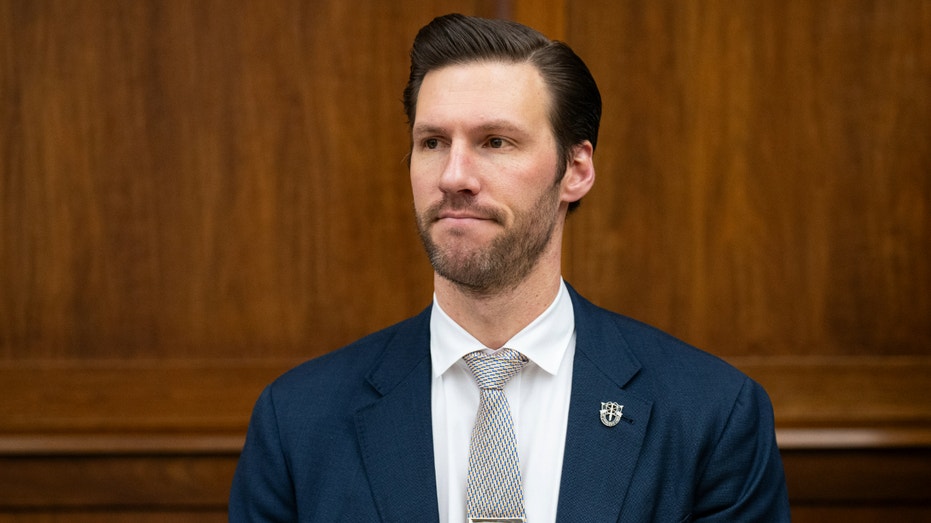
“During my time in the Special Forces, I saw firsthand how advanced technology saves lives and gives us a decisive edge,” Harrigan told FOX Business. “My priority in Congress is making sure we identify the most effective tools and put them to work for our troops and taxpayers.”
Harrigan said he has met with Clearspeed and is exploring ways the technology could help protect warfighters and reduce fraud.
“The fact that the world’s largest insurer turned to American military technology to solve its fraud problem tells you everything about how powerful these tools are,” he said.
“If they can help Allianz identify nearly $100 million in fraud, imagine what they could do for the American people, whether that’s cracking down on benefits fraud, vetting visa applicants or securing our border.”
Rep. Russell Fry, R-S.C., said technology that strengthens fraud detection and vetting could play a role in broader border security efforts.
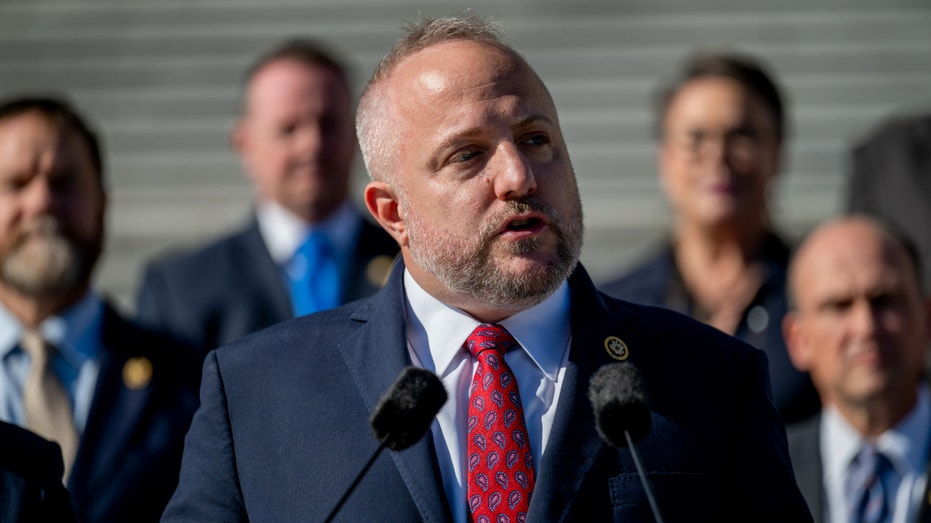
“As President Trump continues delivering on his promise to make America safe again, we must ensure law enforcement has access to the most reliable and efficient tools available,” Fry told FOX Business.
“Technologies like this could help combat fraud at our border, strengthen visa vetting and keep our country secure.”
CLICK HERE TO READ MORE FROM FOX BUSINESS
For Martin, the growing interest from insurers and policymakers represents a continuation of a mission that began years ago on the battlefield.
“We built this because lives were on the line,” he said. “Putting that same technology to work protecting taxpayers and making our country safer is exactly the mission we’re here to serve.”
Read the full article here


