





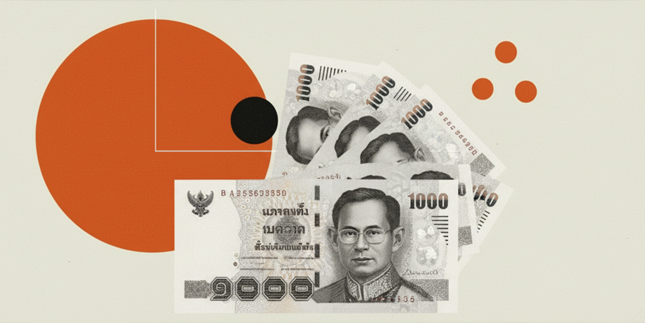
Lloyd Chan at MUFG argues that Thai Baht (THB) weakness, despite lower Oil prices, reflects its low-yield profile and the Bank of Thailand’s (BoT) growth-focused stance, which limits tightening scope. Rising United States (US) yields have flipped Thai portfolio flows into net outflows, reinforcing depreciation pressures and leaving the baht underperforming other regional currencies versus the US Dollar (USD).
Baht weighed by yields and outflows
“For the Thai baht, recent weakness despite lower oil prices highlights a decoupling from easing terms-of-trade pressures.”
“Instead, the baht is now being weighed down by its low-yield profile and the Bank of Thailand’s growth-focused policy stance, which limits the scope for monetary policy tightening.”
“Rising US yields have triggered a shift toward net foreign portfolio outflows from Thailand ($379mn net foreign outflows in June vs. $680mn net inflows in May), despite easing pressures from lower oil prices, reinforcing depreciation pressures and explaining the baht’s underperformance.”
(This article was created with the help of an Artificial Intelligence tool and reviewed by an editor.)
Read the full article here