



This as-told-to essay is based on a conversation with Rich Ruohonen. It has been edited for length and clarity.
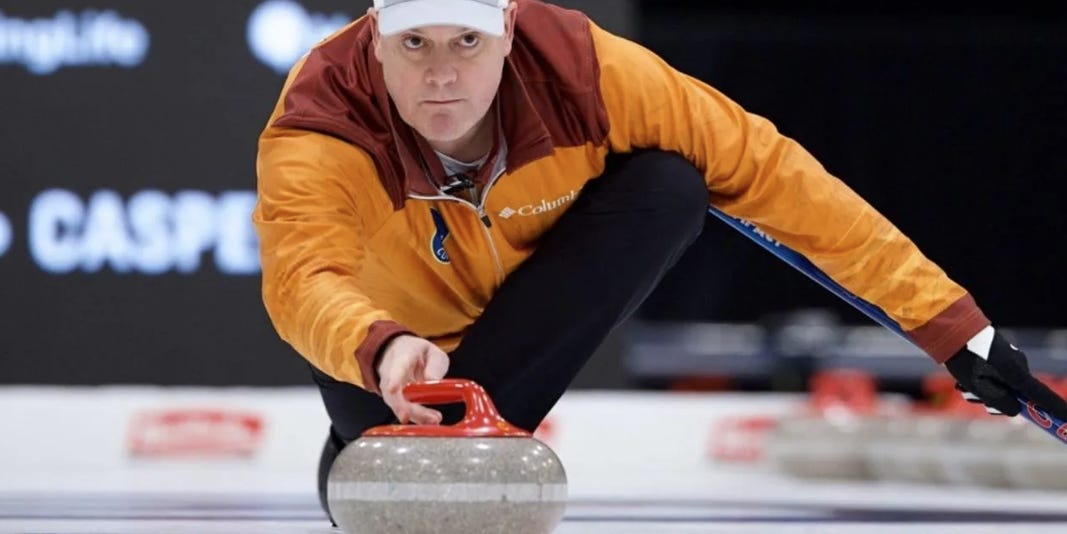
I started curling when I was about 12 years old. My dad taught my brother and me. Curling was a demonstration sport back then. I played in college and in law school, but not at a level close to what I play now. I’ve been playing pretty competitively for the last 25 years.
I made my first men’s national championship team in 1998 and then again in 2001. I’ve been to the last 21 out of 23 national championships; I won two of them. I’ve also been in Olympic trials. But the 2026 Olympics were my first Olympics. I was the alternate on the US men’s curling team.
I am the oldest US Olympian ever to compete.
It’s unusual to have a day job as an Olympian
I’m a lawyer and a competitive curler. Most global athletes are paid by their governments to compete in curling, bobsledding, etc. Their only job is to train for the World Championships, which happen every year, and the Olympics, which occur every four years. They might get a salary, have their expenses paid, and get to keep any winnings.
Unfortunately, in the US, that’s not how it works. It’s one of the disadvantages of being a US athlete. It makes it difficult to train full-time. We do get a small stipend, but many US athletes have side jobs.
I have to work training into my day job
My schedule is complicated. On a week when I am not preparing for a competition, I’m at the gym four days a week, leaving my house at 5:15 a.m. to drive 30 miles to the training facility. I’m there at 6 a.m. and train until 7:30 a.m., then jump in the shower and rush to work. I work from 8 a.m. to 6 p.m., sometimes longer. I go home and sometimes work again.
I play in a Tuesday night league during the season. I also “throw rocks,” what we call practice in curling, several nights a week. I’ll often throw on Saturdays and Sundays, two to four hours a day. Every waking moment between those sessions, I’m working, including the weekends, to get caught up at my day job.
When I’m on the road, I’m still putting in 40 hours or more of work. It’s not easy. It’s not that I don’t have any fun, but it’s a lot of work. I don’t sleep a lot.
Curling at this level is a major commitment. There has been a lot of sacrifice, including from my wife, who stayed home because I wasn’t there and who had to do more of the stuff with the kids, who are 21 and 24 now.
While the Olympics might be over, I’m still curling
I’m playing in the senior World Championship in April. I am sure I am the only guy to ever go to the senior World Championship and the Olympics in the same year. We are hoping to win gold this year. I also do a lot of charity curling, such as for the Lupus Foundation. People raise money to play with me as their skip.
There’s already been some interest in me playing in the 2030 Olympics, but it’s hard to say yes. It’s been a huge commitment for 25 years. Even though I’d be in an alternate role again in 2030, I’m still required to do all the practices and attend everything. These other curlers are in their 20s; I’m twice their age. I haven’t fully decided. I’m still throwing well enough to keep playing, and I feel good about playing at this level. But it is harder to get up in the morning with my knees cracking all the time. I also think of how nice it would be to go to Mexico in the winter instead of Calgary.
Read the full article here