




This interview is based on a conversation with Glen Wagner, 68, a retired pastor from Chicago. who now runs an executive coaching firm. It has been edited for length and clarity.
When I was about 7 years old, I tried out for a kids’ football team, and it felt like a really big deal.
All my friends were joining, and I thought I’d make the grade because I was a good player. But at the weigh-in, I was told I was a pound and a half too heavy and couldn’t play.
Afterward, my dad took me to a hot dog stand to comfort me. I learned at an early age that food can be a helpful drug to deal with your emotions.
I tried lots of different diets
I loved processed foods like pizza and ate far too much, too often. I didn’t say no to anything, whether it was burgers, steaks, potatoes, or vegetables. I’d be eating up to 8,000 calories a day.
I’d try different diets, and they’d work, at least for a while. I’ve gained and lost about 100 pounds at least four times in my life.
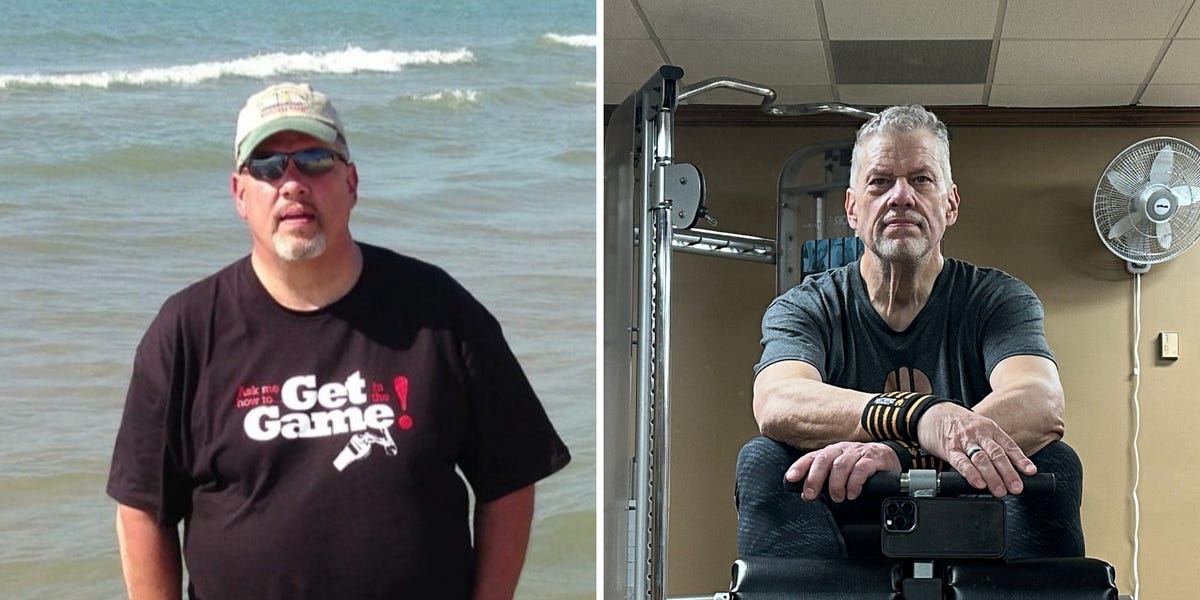
In 2004, at 6ft 2in tall, I weighed 440 pounds. I had high blood pressure and high cholesterol. My doctor told me that I had to do something, so I underwent gastric bypass surgery that took me down to about 330 pounds.
My stomach was smaller, but I later switched from having two glasses of wine a week to drinking four bottles of wine a night, six nights a week.
Things came to a head in May 2015 when my wife, Kathy, became so worried that she intervened. I was a pastor at the time, and she talked to my co-senior pastors.
I accepted the challenge to get sober
They said they would walk with me if I did something to change my situation. If I didn’t, they said, I could no longer be a pastor because I needed to live authentically to help other people.
I accepted the challenge to get sober. While my therapist said she could help me with my mind, she said I needed to take care of my body.
The first stop was my local Life Time gym, where I started off walking on the treadmill. Before I knew it, I’d hired a personal trainer focused on strength and mobility and joined classes, including Pilates and power cycling.
I also learned about nutrition and shifted my whole attitude to food. I began tracking macros and held myself to account.
After a while, I tried intermittent fasting, usually skipping breakfast and starting to eat around noon. Then I’d pack in 2,500 calories of good, clean protein, with my last meal around 7 p.m.
It gave me the mental ability to see if I was eating a lot because I was nervous, anxious, or depressed, rather than as a cue from feeling hungry.
I don’t take medication anymore
I went from eating anything that was put in front of me as a comfort measure to being intentional about food as fuel.
Now that I train five times a week at home or at the gym and compete in races, including triathlons, I weigh around 210 pounds and have 12% body fat.
My blood pressure is 112/68, my resting heart rate is 47, and I no longer take medication. My doctor said I had the bio-markers of someone in their mid to late 40s.
I’ll run around 12 to 15 miles and swim up to 4,000 meters a week, but cycling is my thing. There’s nothing like riding a bike downhill and feeling the jumble underneath your legs.
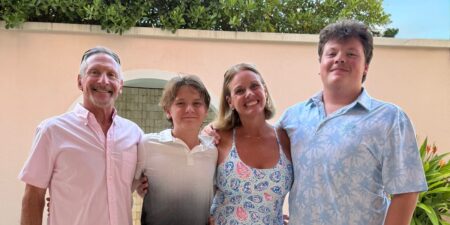
Living a healthy life is an ongoing commitment I’ve made to Kathy, our three children, and our nine grandchildren. I want to meet my great-grandkids.
My 11-year-old grandson recently took me to school for a special day, and he said, “Pop, you’re the most fit grandpa here!”
He and my other grandchildren think it’s cool to have a grandfather who runs, cycles, and swims. They love that I count my protein grams.
It all adds up to a powerful reward and a great legacy.
Read the full article here