





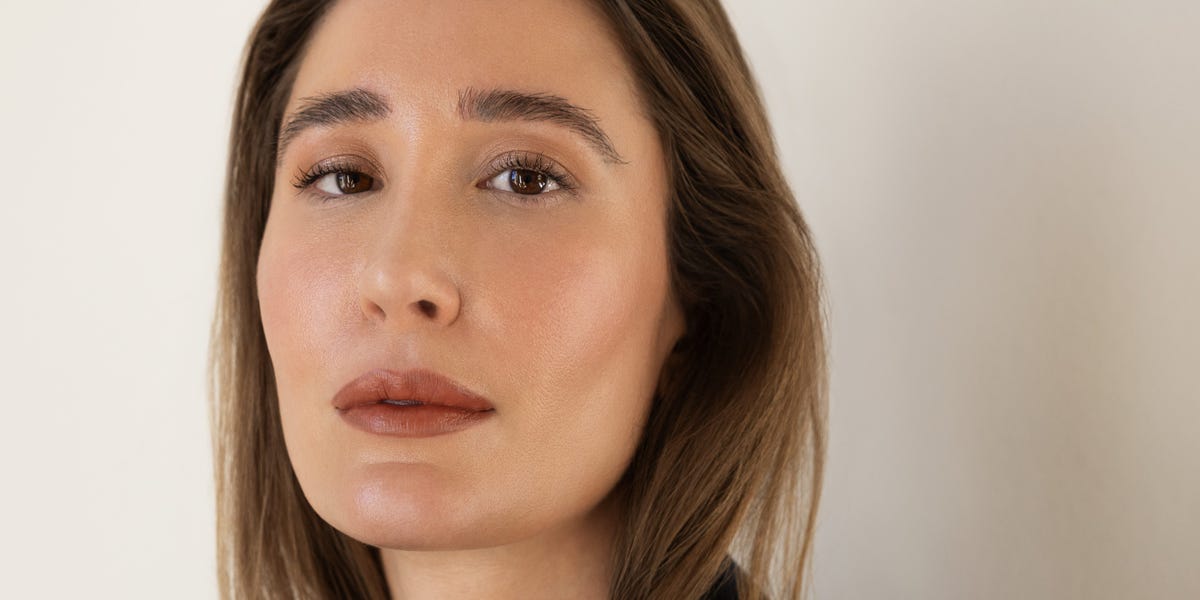
This as-told-to essay is based on a conversation with Kayla Barnes-Lentz, the 35-year-old host of the “Longevity Optimization Podcast,” based in Austin. It has been edited for length and clarity.
The average age at which women go into menopause in the US is 52. My goal is to delay going into menopause until I’m 60. I’m trying to live in good health for as long as possible. And as a woman, one part of this is ovarian health.
Some researchers suspect that slowing ovarian aging and delaying menopause could be a game changer for female longevity, so I am trying to optimize my general and ovarian health to delay menopause as long as I can.
This would also extend the number of fertile years I have, which is important to me because I’m 35 and my husband and I haven’t started having children yet — and we would like to have a relatively large family.
There’s so much pressure on women to build a career, get married, and have a family, all within a short period of time. I want to try to prolong that window for myself and for other women in the future.
I follow a strict health optimization protocol
My health optimization protocol is all about mastering the basics. I go to bed at 8:30 p.m. and get sunlight at 7:30 a.m. every day to keep my circadian rhythm regular. I try to reduce stress wherever I can, exercise regularly, have eliminated ultra-processed foods from my diet, and follow the Mediterranean diet.
I also optimize my environment to keep the levels of toxic forever chemicals in my body as low as possible, which I test via total toxic burden tests four times a year. This means always using glass containers instead of plastic, drinking filtered water instead of tap water, wearing natural fiber clothing instead of synthetic, and doing a lot of sauna to sweat out toxins.
But despite all my health interventions, I had no way of knowing if what I was doing was actually improving my ovarian health until recently.
I did a MenoTime test, developed by Timeless Biotech, which measures many different health markers — such as hormone levels, waist-to-hip ratio, sleep quality, and advanced bloodwork — to estimate the relative age of my ovaries.
The results said that my ovarian age is 30, five years younger than my chronological age, and estimates that I’m going to go into menopause at 55.
But I’m trying to increase that to 60 by testing experimental health protocols specifically to improve my ovarian health.
I am now focusing on experimental treatments to delay ovarian aging
To delay menopause, I have been focusing on three hallmarks of ovarian aging: the loss of eggs, mitochondrial dysfunction, and thickening of ovarian tissue.
To try to stop the loss of my eggs, I have been taking rapamycin, what they are studying in the VIBRANT study to see if it delays ovarian aging. It hasn’t been completed or peer reviewed yet, but researchers believe rapamycin could reduce the number of eggs women lose each month. I’ll be cycling through two months of taking rapamycin and then taking time off.
We have mitochondria in most of our cells, so all of my basic health protocols help with avoiding dysfunction there, especially high-intensity interval training — but we have the highest density of mitochondria in our ovaries than anywhere else in our bodies. So I’m also specifically going to do red light therapy for my ovarian mitochondrial health, which has been tested in some animal studies.
I have also been doing hyperbaric oxygen therapy — an hour a day, five times a week, for 40 sessions, twice a year — to improve blood flow to potentially slow down the thickening of ovarian tissue, which makes them less efficient.
Air quality has been linked to reduced ovarian reserve, so I measure it in every room of my house. I even moved from Los Angeles to Texas to avoid breathing in toxins after the recent wildfires.
I’ll do what I can until I go into menopause
I’m also going to test a mitochondrial cocktail of supplements that studies suggest could support mitochondrial health, including urolithin A and MitoQ (mitoquinone mesylate).
In the future, I would love to do stem cell treatments directed at the ovaries, and I’m always on the lookout for any other interventions I can try, too.
Generally, we know that improving the health of your whole body will also improve the health of your ovaries. But it’s very sad and very crazy to me that it’s 2026 and we still don’t have answers about why the ovaries age at almost twice the rate of every other organ.
So, I’m excited to do this to help provide women with answers about their hormonal health, longevity, and aging one day.
I want to try to get pregnant later this year, so I will be doing this protocol until then. I’d also like to do more interventions post-baby, because we have essentially no data on any of this on pregnant or post-partum women. But ideally, I want to be doing all of this until I enter menopause — hopefully as late as possible.
Read the full article here