






My mom got sick, then gradually, and then all at once.
In 2014, she survived a subarachnoid aneurysm that ruptured while she was driving on the West Virginia Turnpike. After stabilizing, she spent six months recovering with me in South Carolina before heading back to her townhouse in my hometown of Charleston, West Virginia.
Unfortunately, her return was short-lived. Mom had a small stroke a year later, followed by a second, more serious stroke in 2016. The doctors told her it was no longer safe to live alone.
Mom had dedicated almost 50 years to teaching children in some of the poorest public schools in the country. She had also been my father’s caregiver after an accident rendered him nearly paraplegic. She had a long, hard, and beautiful life. I wanted to care for her.
But neither of us had a financial cushion, so Mom moved in with me and my two sons — then 13 and 10 — in August 2016.
A decade later, I’m still paying off the debt I accrued through the years.
We had to pay several medical costs when insurance wouldn’t
Being a caregiver isn’t easy — mentally, emotionally, physically, or financially.
In the early days, everyday expenses were manageable because Mom contributed a chunk of her pension to help cover household bills. Our biggest financial challenge was a constant stream of out-of-pocket medical expenses and copays.
For example, after her stroke, Mom’s right hand was non-functional. We pursued specialized hand therapy, paying out of pocket initially because the insurance company questioned its medical necessity.
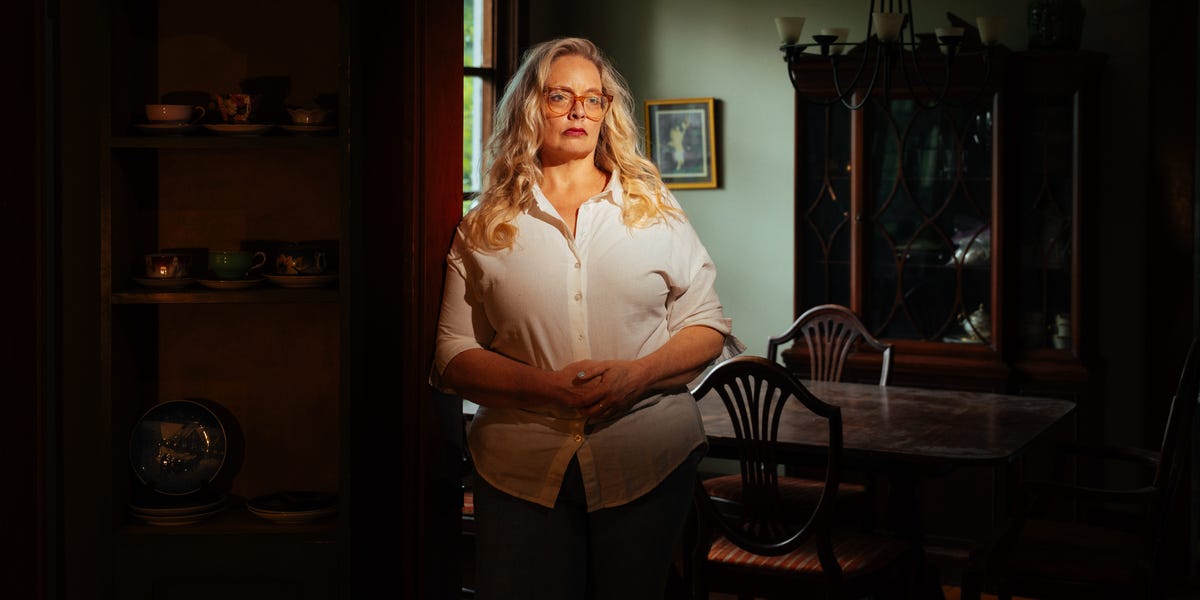
The author struggled with grief after her mother’s death.
Will Crook for BI

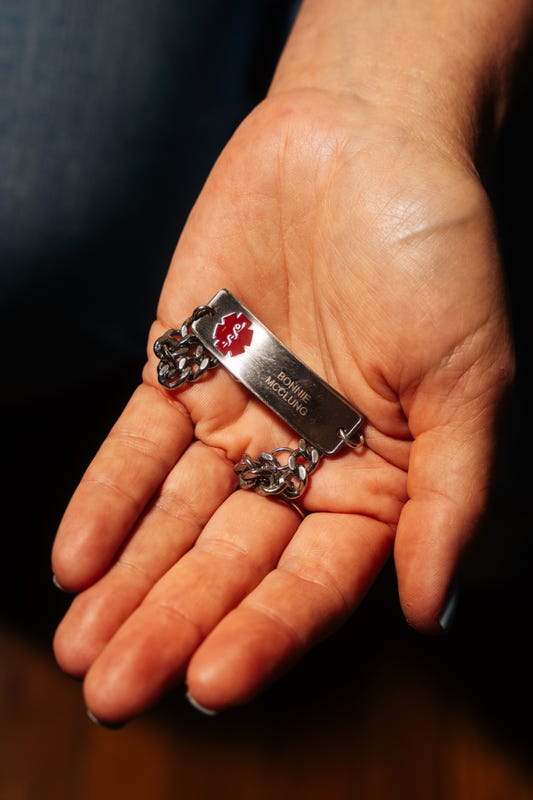
The author still holds onto her mother’s medical alert bracelet.
Will Crook for BI
When insurance finally approved the treatment, they refused to cover the number of sessions ordered. My mom and I shared these costs — whoever had money at the time. There were several occasions when we had to delay an appointment to ensure the bill was paid. Mom finished the recommended course entirely out of pocket once coverage ceased.
Combined with occupational therapy, physical therapy, and an endless array of medical devices, these compounding costs made money extremely tight.
There were indirect financial hits, too
For most of the past two decades, I have worked for myself. When my mom moved in, I was doing freelance and part-time work with very little margin for error.
There is zero way I could have cared for my mother had I held a traditional full-time job. Even with a flexible schedule, keeping all the balls in the air was incredibly difficult.
In 2016, my day was tightly scheduled around caregiving and parenting, leaving little room for work. My sons split their time between their father and me, and my ex’s mom was often a big help.
However, a typical schedule when they were with me meant going non-stop.
When you’re self-employed, if you aren’t working, you aren’t earning. This routine allowed about 4 hours and 15 minutes of daytime work.
Obviously, when the boys were at their dad’s house, I had more time to work, but often that was when we scheduled more of Mom’s appointments.
In 2018, I made just $6,400 above the poverty level for a family of three because I barely had time to work.
Despite assistance from Mom’s pension, these years were a struggle.
I wish we’d put her into hospice sooner to save money
After a bad fall in 2020, Mom returned home in constant pain and required significantly more help. Her circadian rhythm was disrupted, causing her to wake up confused in the middle of the night, convinced it was time to get the boys ready for school. She was considerably more anxious.
My role transitioned from caregiver to nurse. I was running on empty, sleep-deprived, and in a constant state of fight-or-flight hyperarousal.
However, medical and self-care supplies not covered by Medicare quickly drained my income, regardless of Mom’s pension.
Had we accessed hospice care earlier, it would have alleviated these costs and provided vital support. Like many, we delayed asking for hospice because we misunderstood the system.
Hospice isn’t solely for the actively dying; it is available months earlier for patients experiencing rapid health decline, increased difficulty with daily tasks, and uncontrolled symptoms like chronic pain. Furthermore, once in hospice care, Medicare, Medicaid, and most private insurers cover certain medical supplies, equipment, and personal care products.
Fearing that hospice would signal to my mother that we were giving up, we stuck it out until what turned out to be the final three weeks of her life. That delay harmed both her quality of life and my finances.
The grief of my mom’s death only worsened my financial situation
My mother died on March 16, 2022, at 3 a.m., while I held her hand, stroked her hair, and sang to her.
Caring for her was a privilege that taught me so much about human dignity, patience, and unconditional love. However, the financial and emotional toll did not stop when she passed.
For months afterward, I suffered from awful nightmares and severe complex PTSD from a lack of understanding of what I’d seen and heard — like her agonal breathing — in the process of Mom actively dying.
Paralyzed by trauma, loss, and a sudden “black void” of time, I couldn’t work efficiently. It took until 2025 to finally begin digging out of the financial hole.
Giving Mom this time was invaluable, but I’m still paying the price
Right after my mother’s death, my debt reached $16,972, and I immediately tried working as hard as I could to pay it down. But recent health issues of my own only made my debt grow again.
Many things are more important than money, and caring for a loved one is certainly one of them, but it shouldn’t break a person financially.
It’s been four years since my mother died, and I’m still struggling and looking for a way out of this financial hole.
Read the full article here