


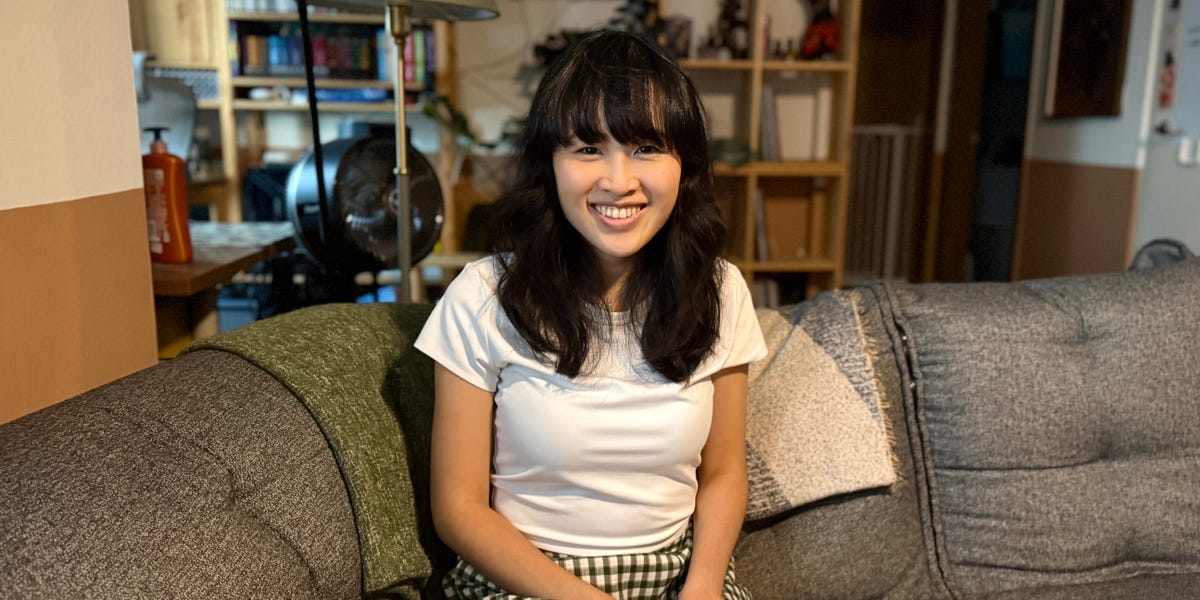
This as-told-to essay is based on a conversation with Trisha Soo, a 32-year-old teacher and artist from Singapore. It has been edited for length and clarity.
I’ve been doing calligraphy since I was 10 years old.
I started learning from YouTube tutorials and making cards and calligraphy pieces for friends and family. It started as a hobby and a creative outlet.
Now, it’s become a strong financial pillar for me. Still, it comes with many late nights.
After graduation, I worked at a special needs center as a therapist and moved up into a leadership position. But I found that role and the workload intensely stressful.
The last straw was finding myself checking my phone first thing in the morning. I started to have panic attacks because I dreaded waking up and finding out what fires I would have to fight that day.
I quit the job after the pandemic, then took a one-year gap from work to try to monetize my art, selling stickers, calligraphy prints, and stationery, and by offering lettering services for weddings and corporate clients. In December 2022, I officially launched my art business, calling it “Fully Scripted.”
12-hour hustle
I’ve gone back to teaching, which I actually enjoy. I work on my art side hustle at night after my day job as a special education teacher.
I work four days a week for around four to six hours daily — usually starting around noon and ending at 6 p.m. I’m paid 50 Singapore dollars hourly, or around $40.
After wrapping up my work at the center, I come home and walk my dogs, then settle in for the second part of my daily hustle — working on “Fully Scripted.”
I start around 9 p.m., either sketching new product ideas on my iPad with Procreate or working on corporate orders. I used to work with pen and paper, but it was too hard and time-consuming to digitize and redraw the lines. So I use Procreate right now for everything except for live calligraphy orders.
I’ve just landed an order to make 45 hand-foiled purses for a company in a week. Each piece has to be painstakingly measured, its lettering written and rewritten multiple times, and then heat-pressed to bind the gold foil to the fabric.
I value the quiet time I have alone — it’s why I’m working in the middle of the night when everyone else is sleeping. Most days, I work until 3 a.m. on my art. This doesn’t include weekends, when I often set up booths in art markets around Singapore.
The work is long, and I have a lot more gray hairs than when I started, but it’s a different kind of stress compared to my first job. I’m working with my hands and running my own business, rather than sitting at a computer looking at numbers and growth charts.
I’ve earned about SG$16,500, or about $13,000, a year from my side hustle since I started in 2022, selling on my website, at art markets, and at conventions. The income is quite unpredictable, and I have some slow months.
Trial and error, and being demoralized, are normal
The worst part of the side hustle is the stress of not knowing whether the business will do well. It’s only me running it, and I’m not well-versed in business.
I test new products by making 10 pieces of them. For a sticker book I made recently, I couldn’t even sell out the 10. I knew I either had to redesign it or maybe it’s just too niche.
So I’m figuring things out as I go, like how to launch new products. Sometimes they hit, sometimes they miss, and when they miss, it can be quite demoralizing.
I do wish to do art as a full-time job, hire a team to handle logistics and inventory, and move from my home studio into an actual office space. I’m not there yet.
My advice to anyone starting an art side hustle now: Marketing is everything now, and social media is the key.
The algorithm is very tricky, and each platform has its own, but practice makes perfect. Even if something that you make isn’t perfect, don’t be afraid to post it.
As artists, we often search for perfection. We make sure that everything looks great before we show the world. But don’t be afraid of showing that more vulnerable side.
Read the full article here