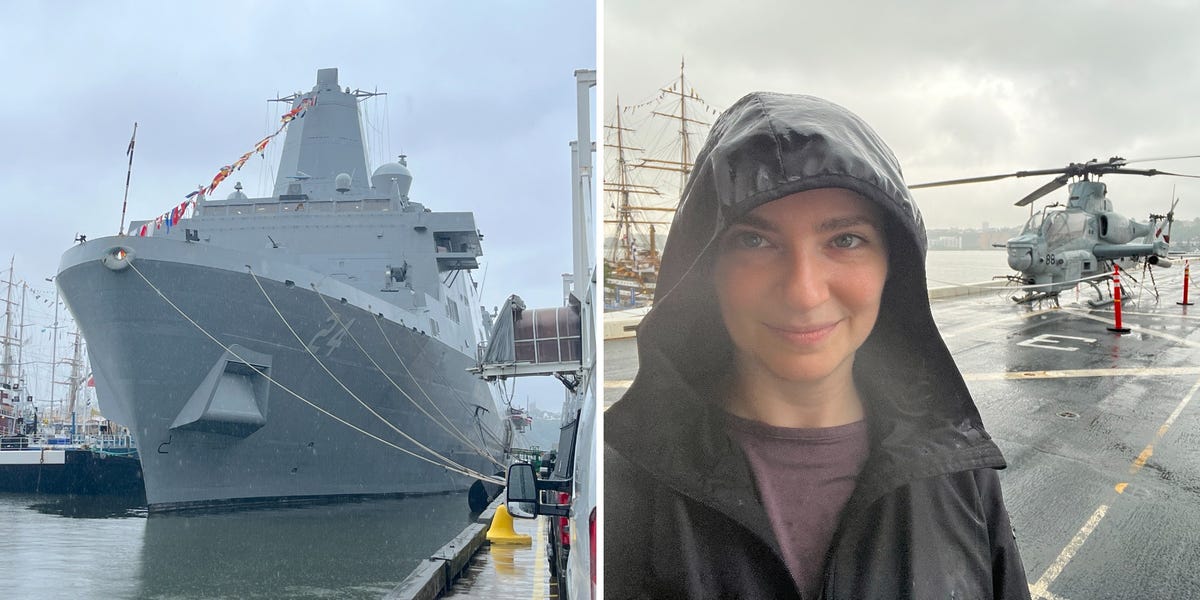
USS Arlington opened to members of the public in celebration of America's 250th birthday.
Talia Lakritz/Business Insider
USS Arlington, an active US Navy warship, offered tours in honor of America’s 250th anniversary.
My tour included the well deck, hangar bay, flight deck, and forecastle.
Security was tight, and photography was off-limits in some locations.
As a resident of New York City, I’m used to walking through Hell’s Kitchen and seeing an enormous warship floating in the Hudson River at the Intrepid Museum.
This time, however, it had company.
New York City hosted what organizers billed as “the largest maritime gathering in US history” on July 4, in honor of America’s 250th anniversary, with visiting naval ships from around the world opening their gangways to the public.
One of the most prominent vessels featured was USS Arlington, a 684-foot-long US Navy amphibious transport dock. I climbed aboard for a firsthand look at the ship, its weaponry, and the vehicles it carries.
Take a look inside.
My tour of the USS Arlington started with a security screening at the entrance to Pier 88 in New York City, where the ship was docked.
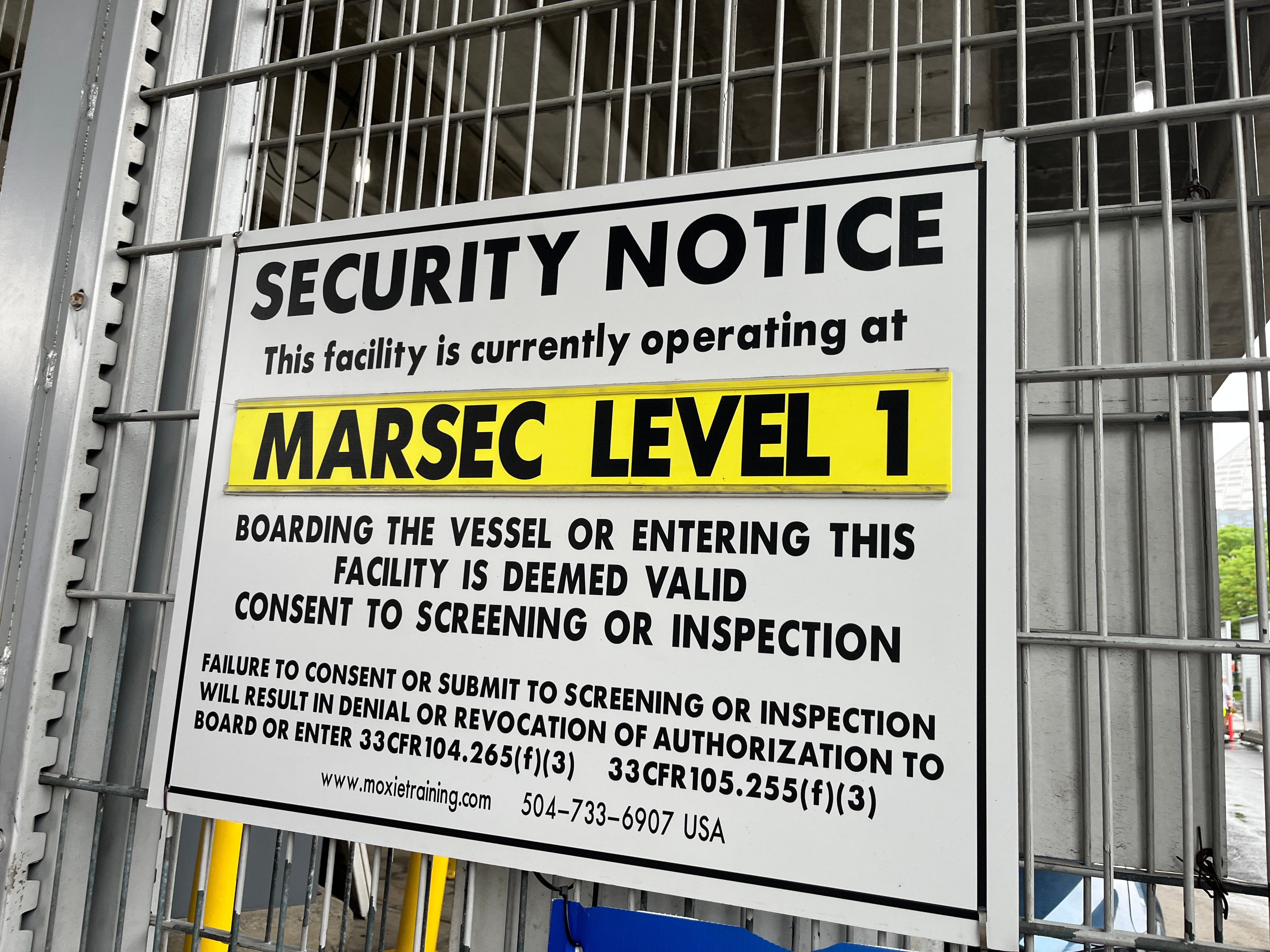
A security notice outside the Sail4th 250 event.
Talia Lakritz/Business Insider
Posted signs notified visitors that the pier was operating at MARSEC Level 1, the Coast Guard’s baseline Maritime Security Level.
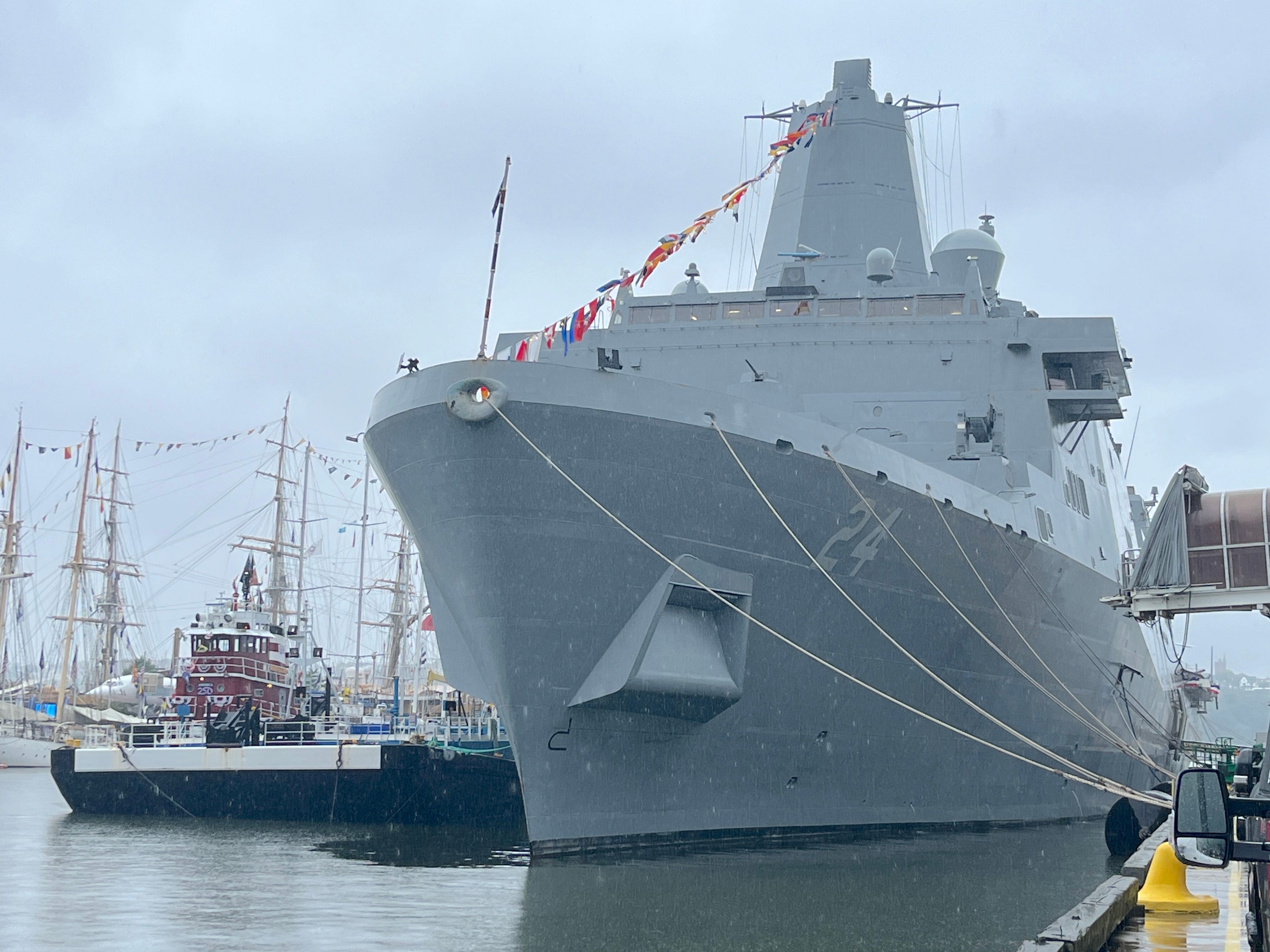
After two rounds of ID checks and a bag screening, I got my first look at the San Antonio-class landing transport dock.
The USS Arlington.
Talia Lakritz/Business Insider
Amphibious transport docks like the Arlington carry Marines, their vehicles, equipment, and supplies, and move them between naval ships and the shore.
Built by Northrop Grumman and commissioned in 2013, USS Arlington measures 684 feet long — large enough to carry helicopters, amphibious vehicles, and around 700 Marines. It is operated by a crew of 360 sailors.
The gangway featured a banner with the ship's motto: "Strength, Honor, Fortitude."
Boarding the USS Arlington.
Talia Lakritz/Business Insider
The banner also featured the official seals of the Navy and the Marine Corps.
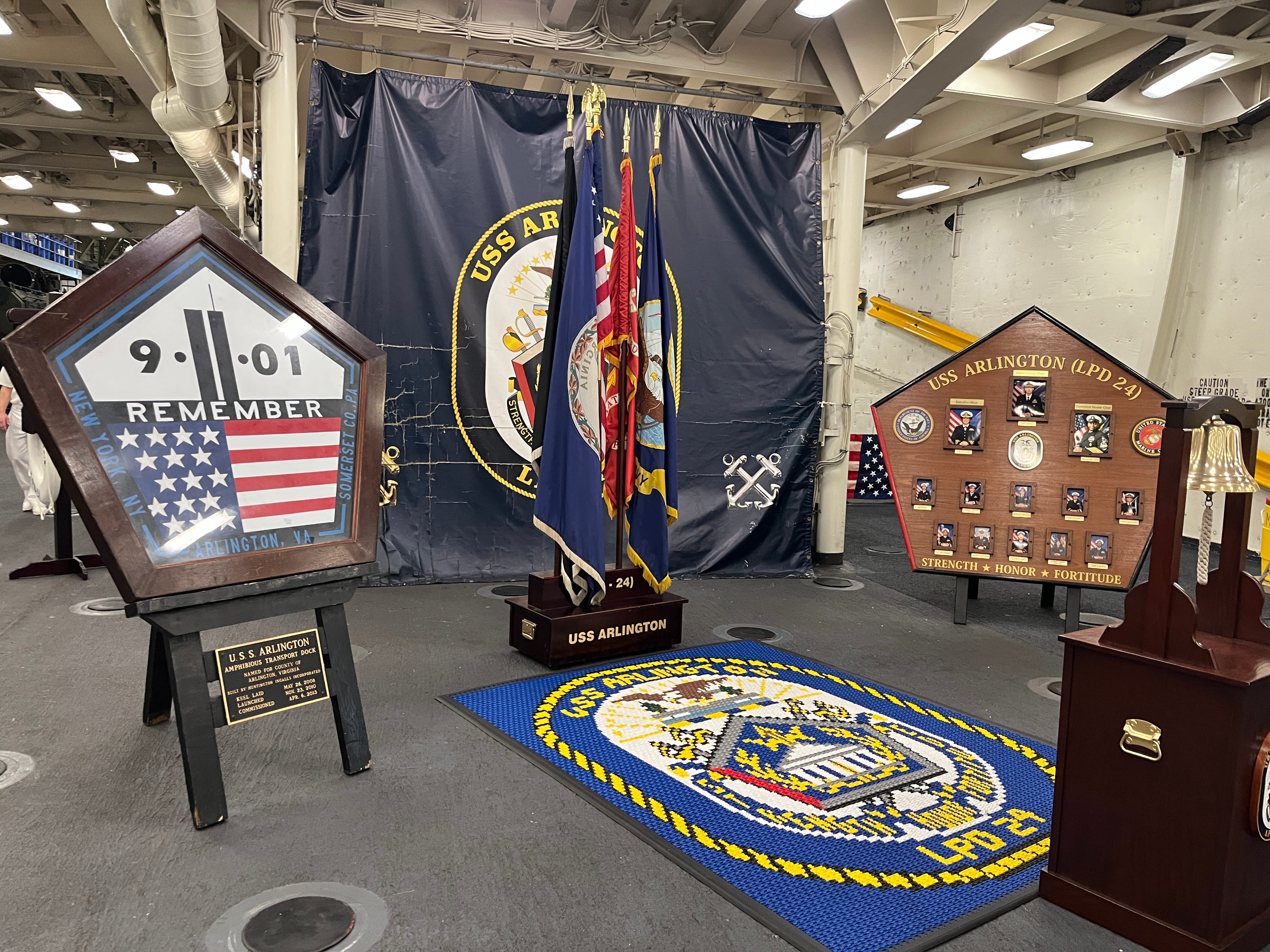
USS Arlington is one of three landing platform docks, or LPDs, named in remembrance of the September 11, 2001, terrorist attacks.
A 9/11 memorial on board the USS Arlington.
Talia Lakritz/Business Insider
USS Arlington is named for Arlington, Virginia, where American Airlines Flight 77 crashed into the Pentagon. The ship featured pentagon-shaped 9/11 memorials displayed at the entrance.
It has two sister ships, USS New York and USS Somerset.
USS New York, commissioned in 2009, is named after the state of New York and was built with 7.5 tons of steel from the World Trade Center. USS Somerset, commissioned in 2014, was named for Somerset County in Pennsylvania, where United Airlines Flight 93 crashed after passengers and crew fought back against the hijackers.
After being greeted by dozens of sailors gathered at the ship's entrance, we met up with our tour guide, who gave us strict instructions about photography on board.
Inside the USS Arlington.
Talia Lakritz/Business Insider
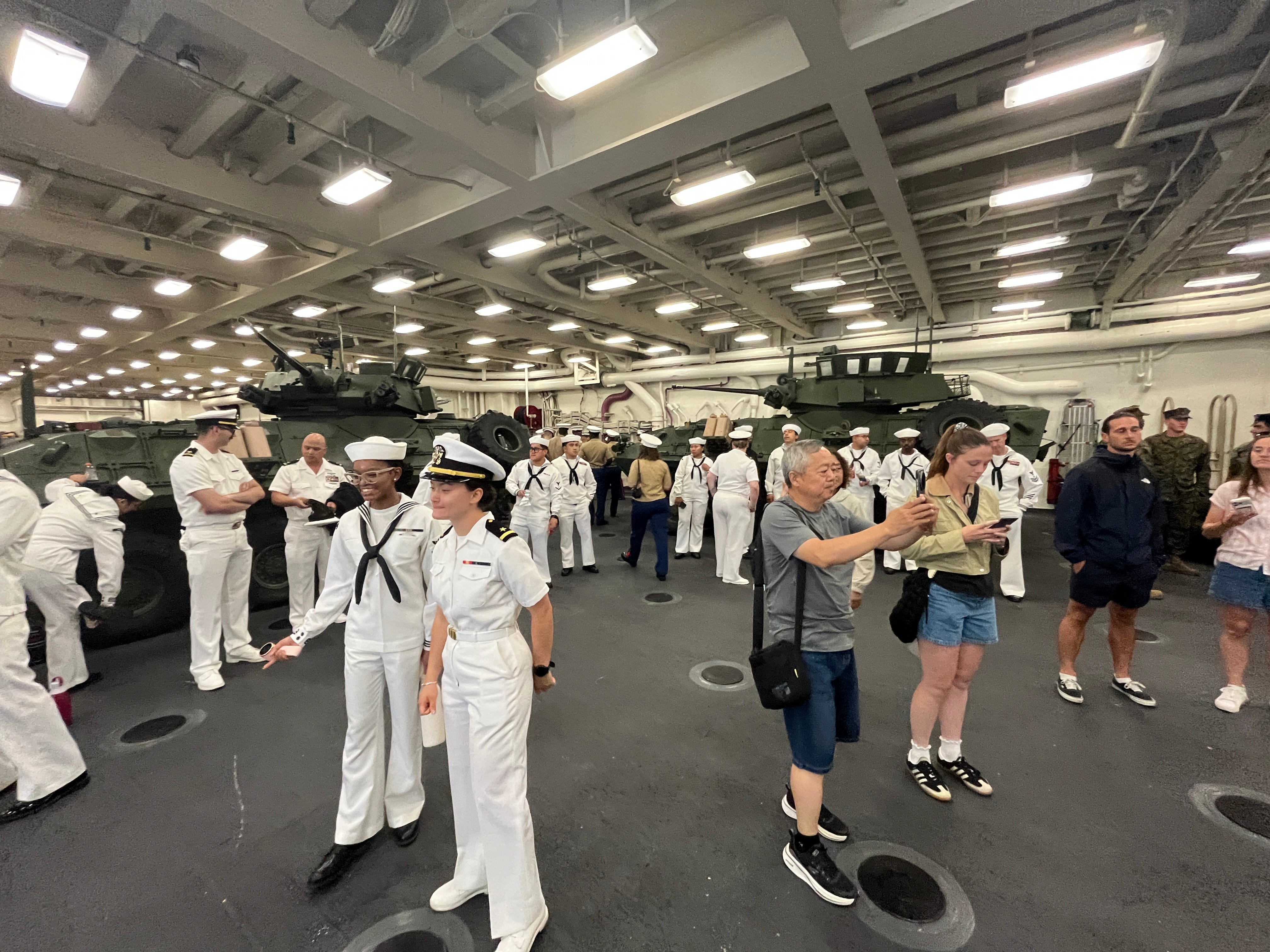
Officers were wearing their summer whites — white uniforms worn in the warmer months.
Our tour guide, an officer on the ship, told us to stay with the group at all times and to take photos only in designated areas that he identified along the way. Another officer stayed at the back of the group to make sure no one wandered off.
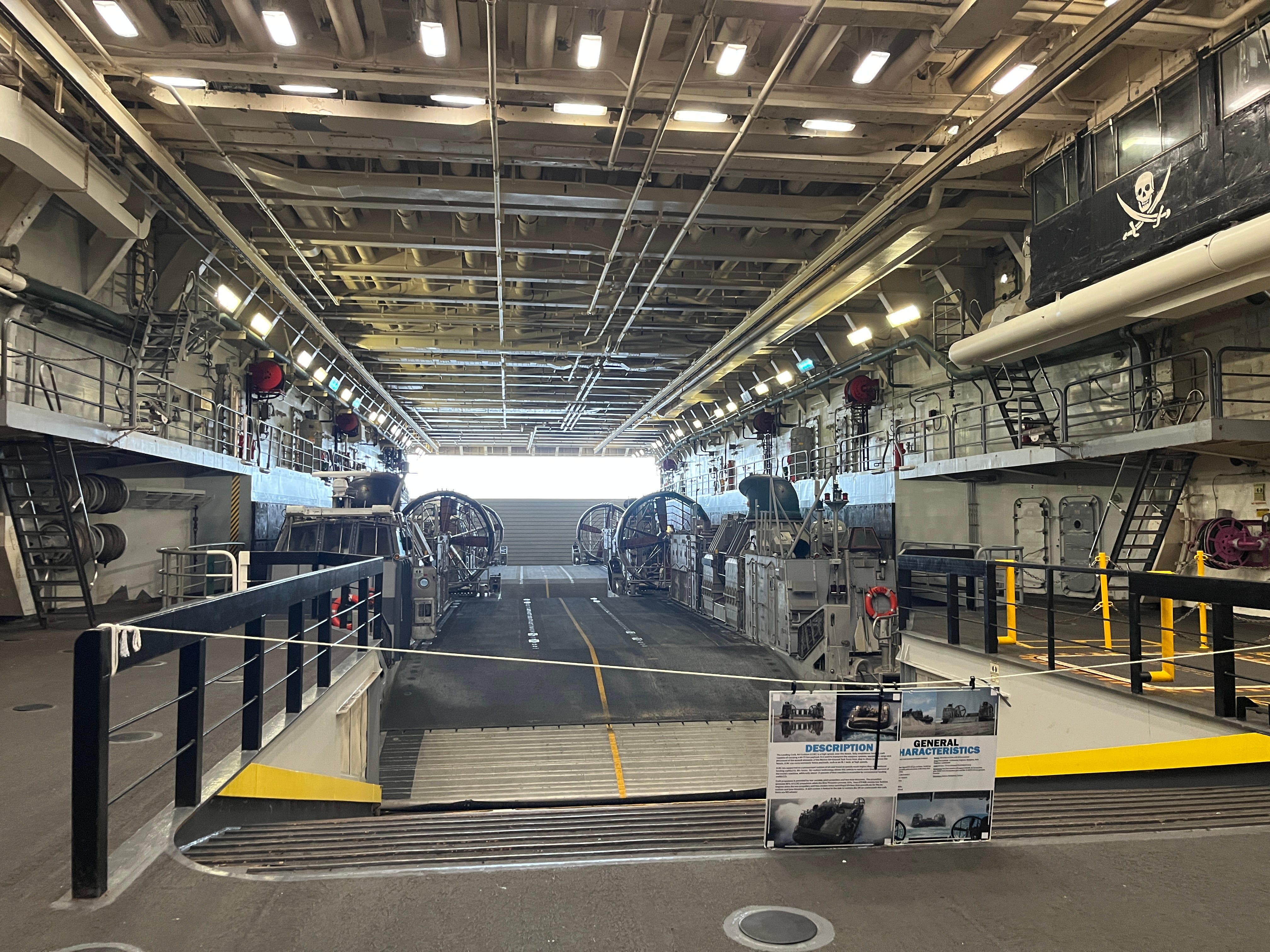
Our first stop, where we were allowed to take photos, was the well deck containing two Landing Craft Air Cushions, or LCACs.
The well deck of the USS Arlington.
Talia Lakritz/Business Insider
LCACs are amphibious hovercraft capable of carrying 60 to 75 tons worth of troops, cargo, and equipment while traveling at over 40 knots, or 46 miles per hour. Their primary mission is transporting troops, vehicles, and supplies ashore.
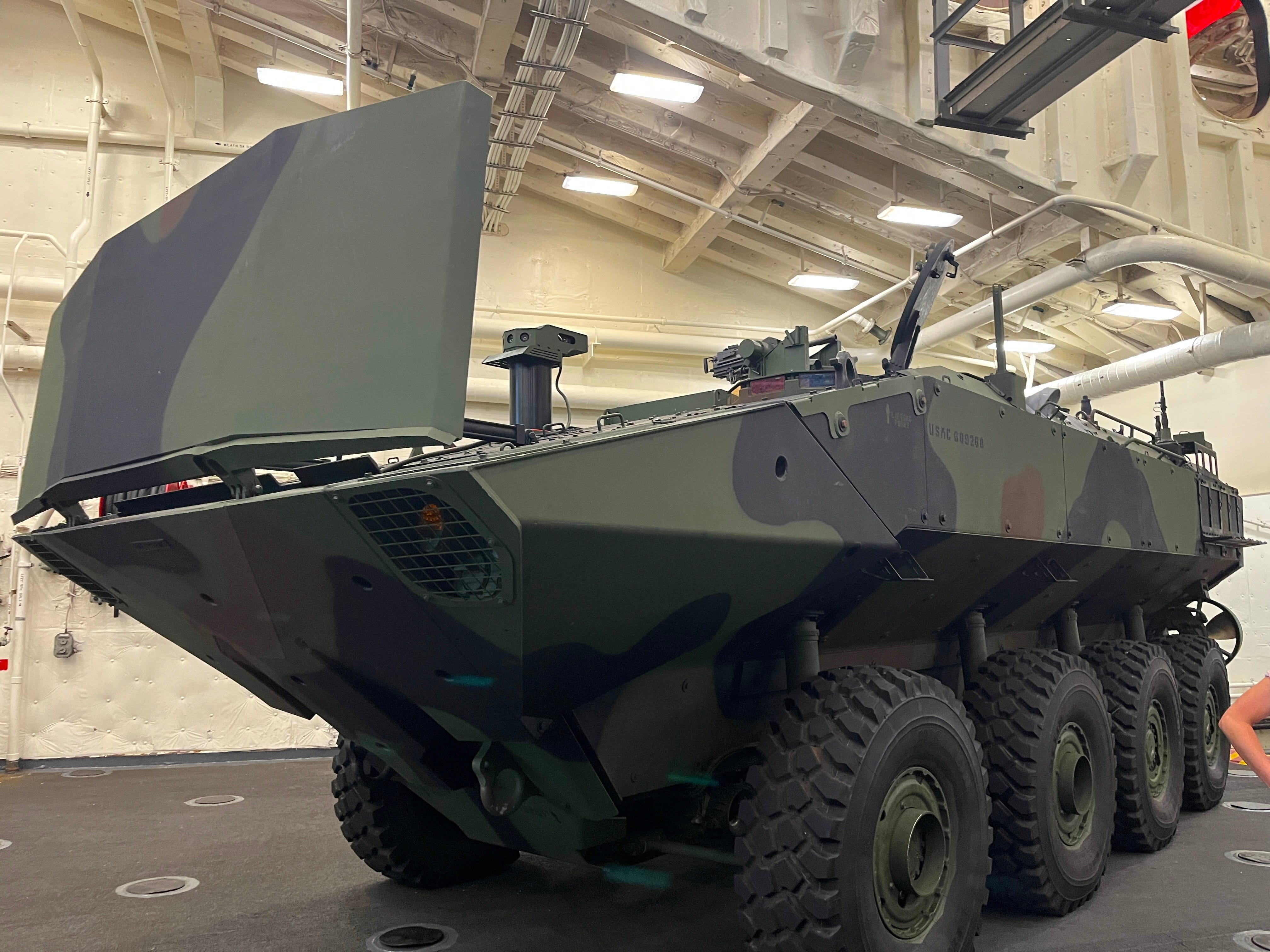
An Amphibious Combat Vehicle, or ACV, was also on display.
An Amphibious Combat Vehicle, or ACV.
Talia Lakritz/Business Insider
ACVs are eight-wheeled armored vehicles designed to carry Marines between ship and shore, operable both in the ocean and on land.
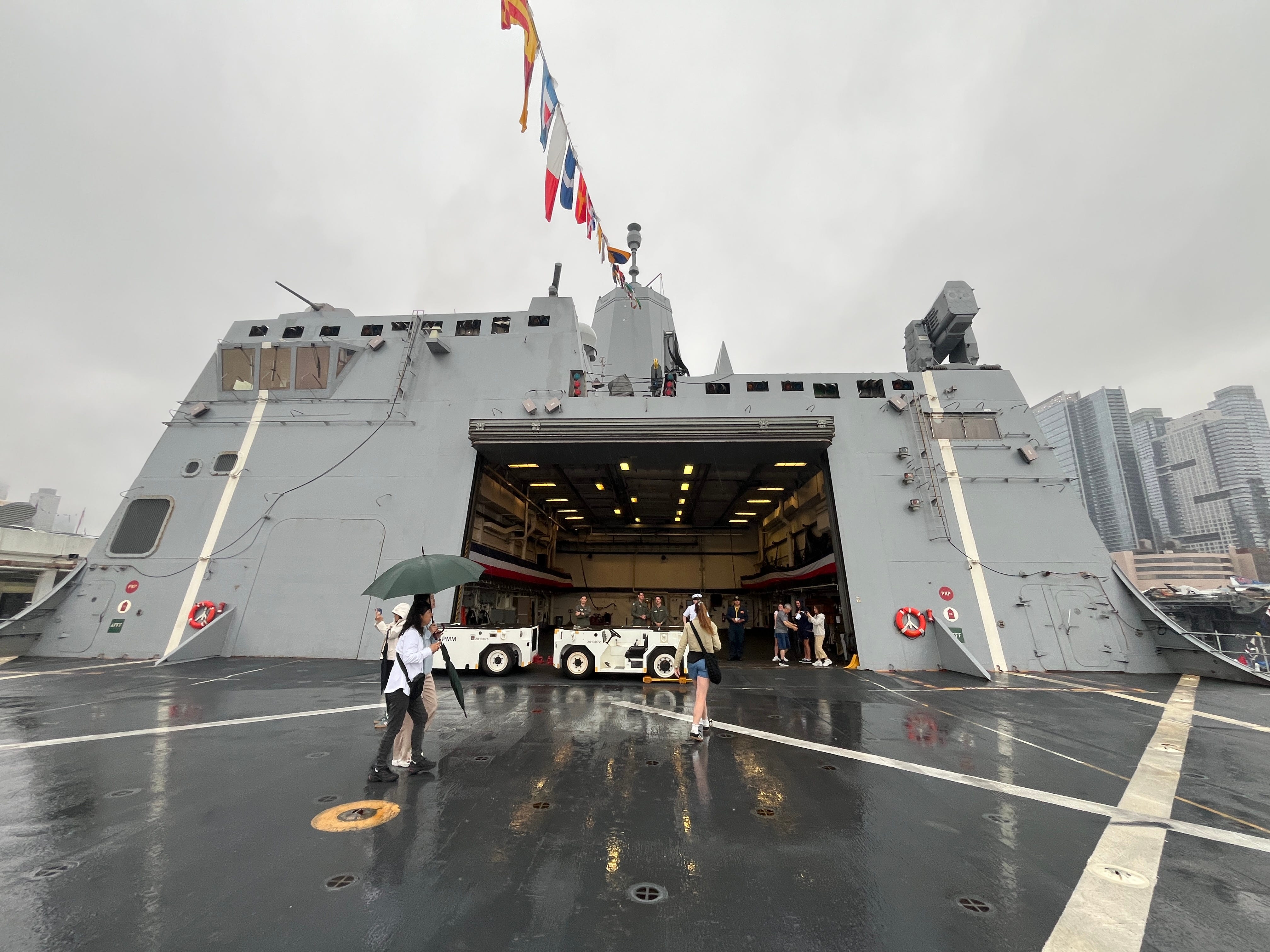
After walking up a ramp to the upper vehicle stowage area, where photos were prohibited, we proceeded to the hangar bay and flight deck.
The hangar bay.
Talia Lakritz/Business Insider
In the upper vehicle stowage area, which serves as an additional storage space, a Marine showed us around a Utility Tactical Vehicle, or UTV. We weren’t allowed to take pictures there, but our guide said that there were UTVs on the flight deck that we could photograph.
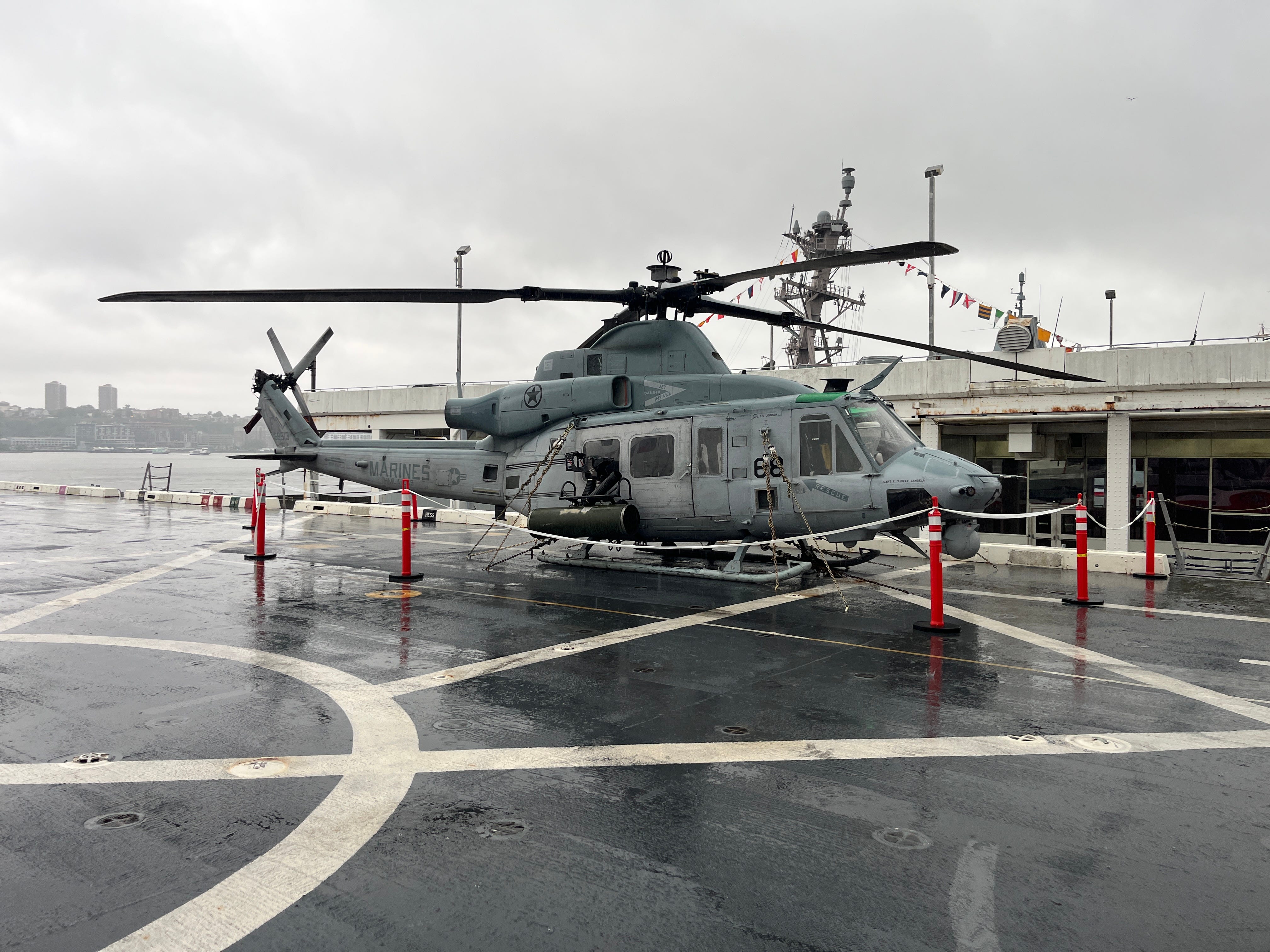
Pilot officers were standing by to tell us about the helicopters parked on the flight deck, including a UH-1Y Venom utility helicopter known as a "Huey."
A Bell UH-1Y Venom utility helicopter on the USS Arlington.
Talia Lakritz/Business Insider
Armed with door-mounted machine guns and rockets, the Huey can provide close air support. The crew typically consists of two pilots, a crew chief, and a gunner.
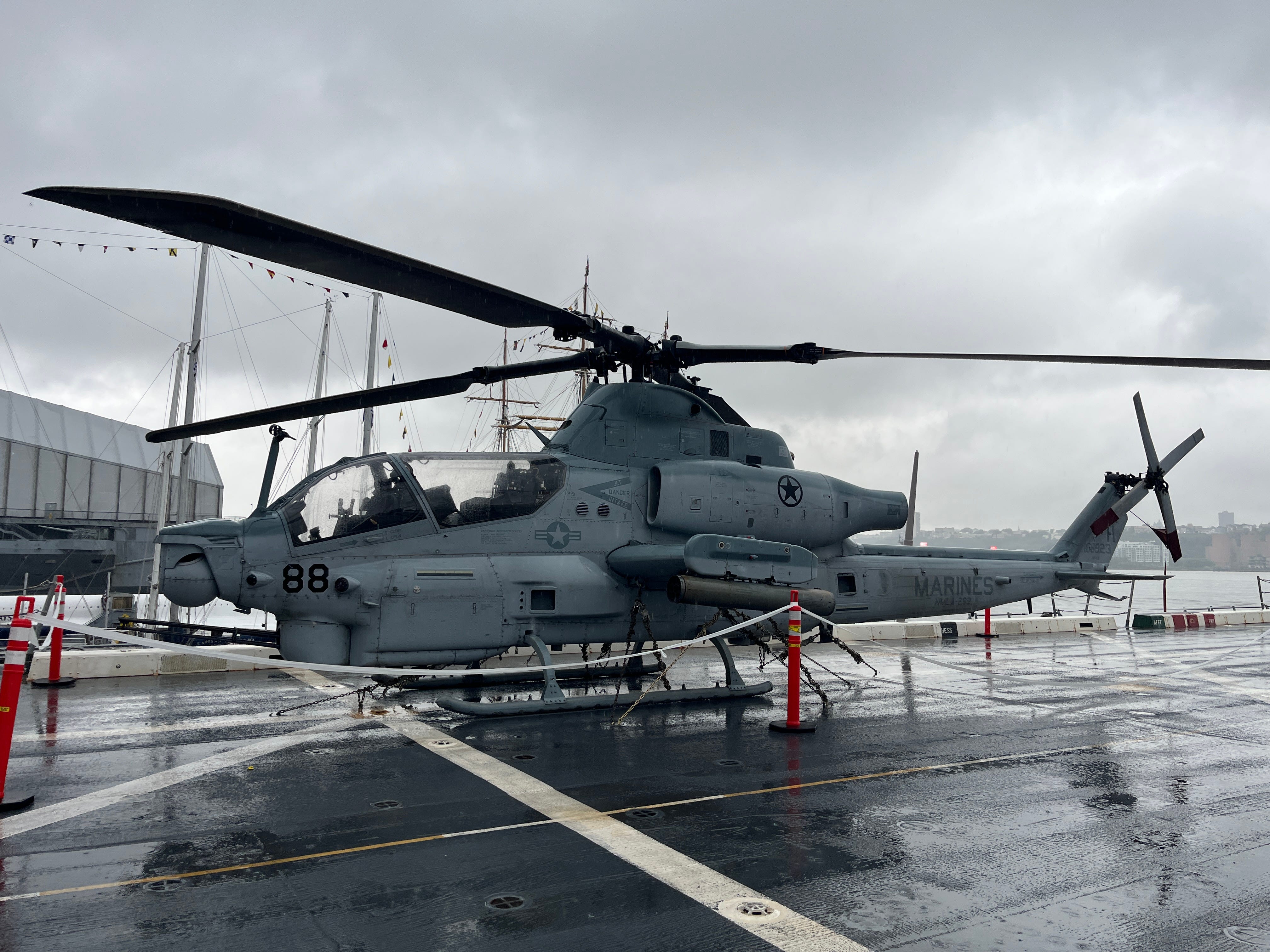
The flight deck also featured an AH-1Z Viper, known as the Cobra attack helicopter.
An AH-1Z Viper attack helicopter.
Talia Lakritz/Business Insider
Similar to the Huey, the AH-1Z Viper provides close air support, but it carries heavier firepower. It can be armed with rocket pods, air-to-ground weapons, air-to-air missiles, and a 20 mm cannon.
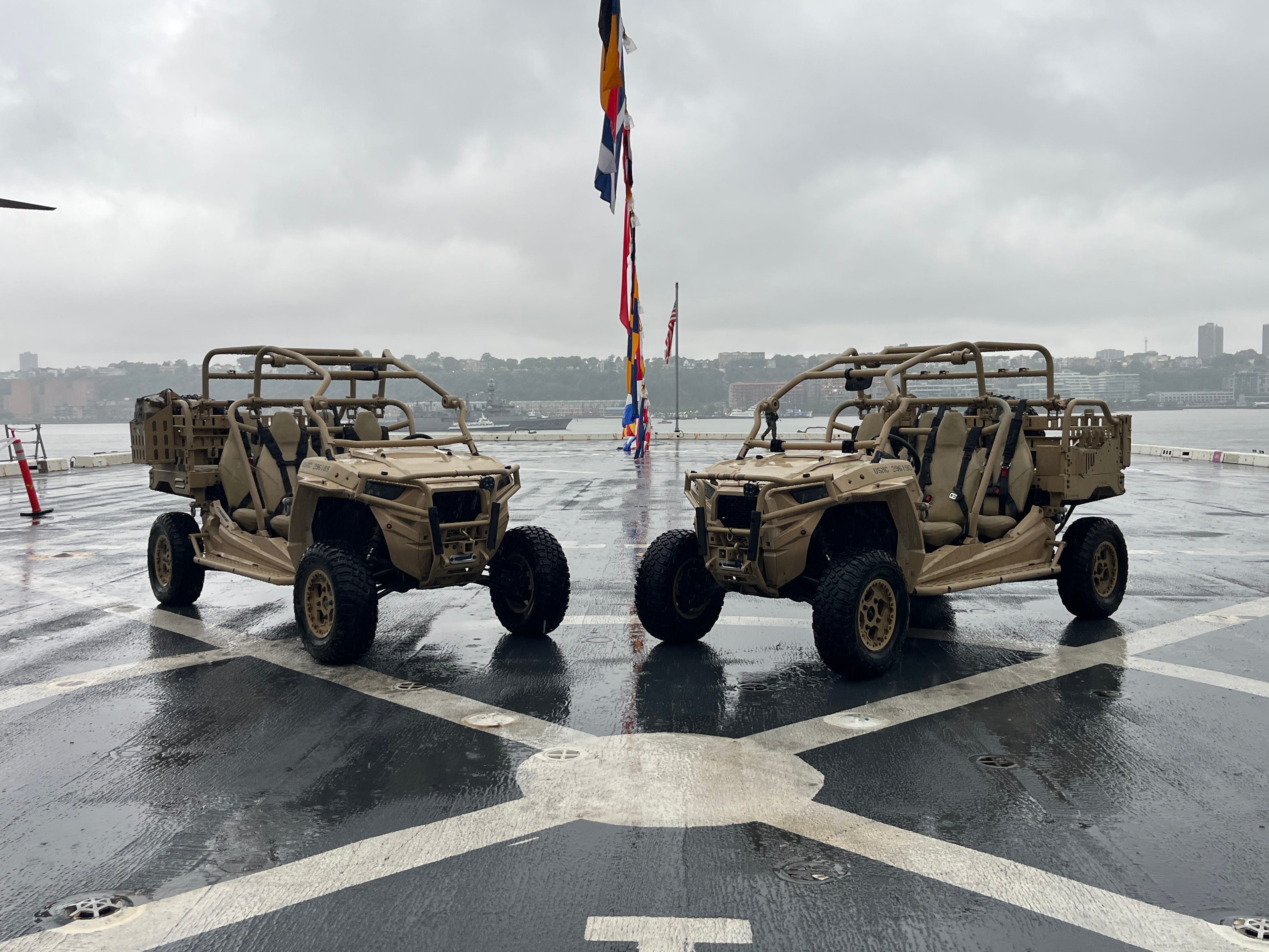
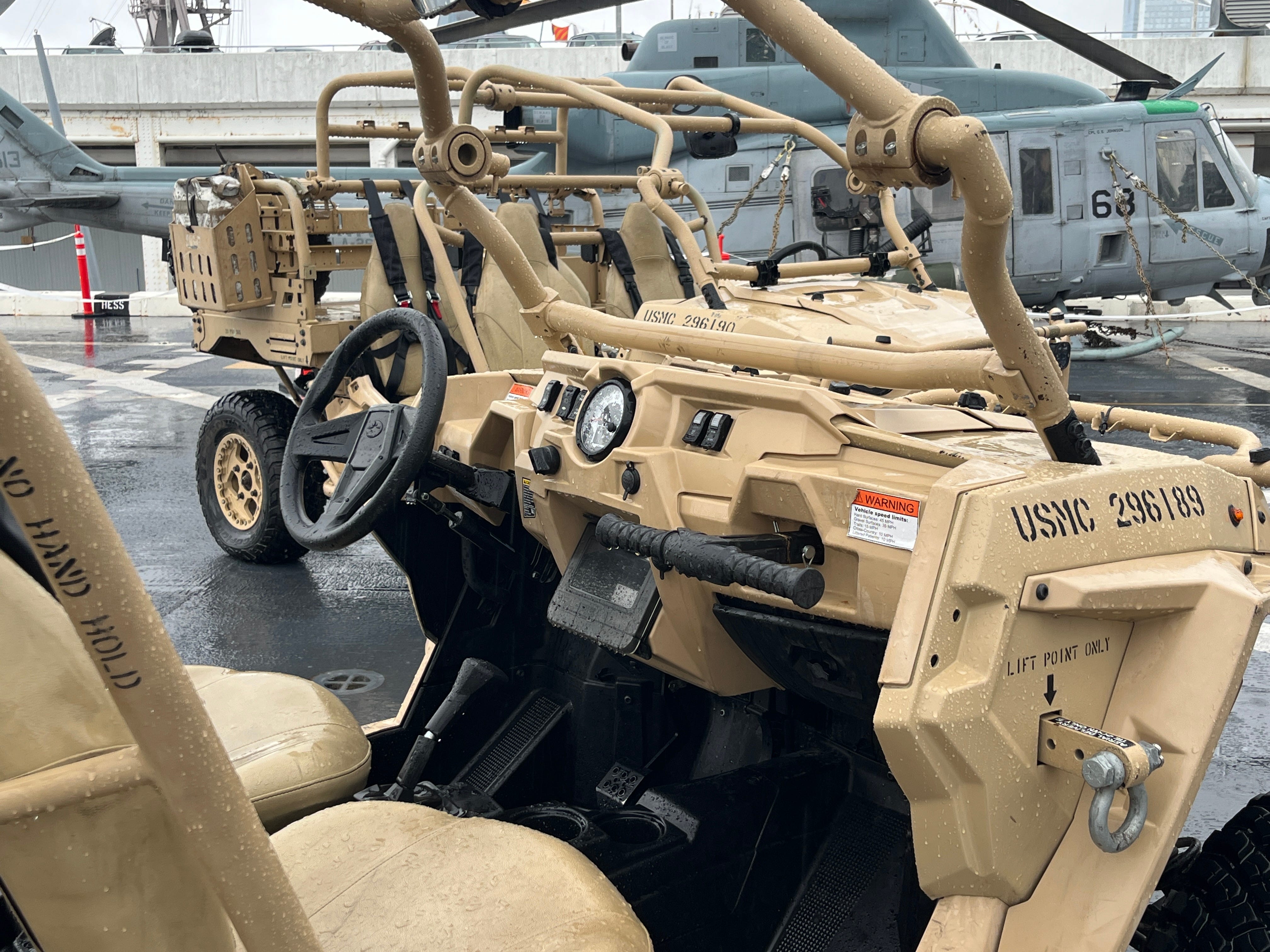
A pair of UTVs was also displayed on the flight deck.
Utility Tactical Vehicles, or UTVs.
Talia Lakritz/Business Insider
UTVs, used for reconnaissance and hunter-killer missions, have a payload capacity of 500 pounds and can drive at up to 45 miles per hour. They can also be airdropped out of military transport aircraft, such as C-130s, to await crews on the ground.
The passenger seat included a handle to hold on to during bumpy rides.
Inside a UTV.
Talia Lakritz/Business Insider
Unlike the helicopters, which were cordoned off, the UTVs were open for visitors to climb into the seats.
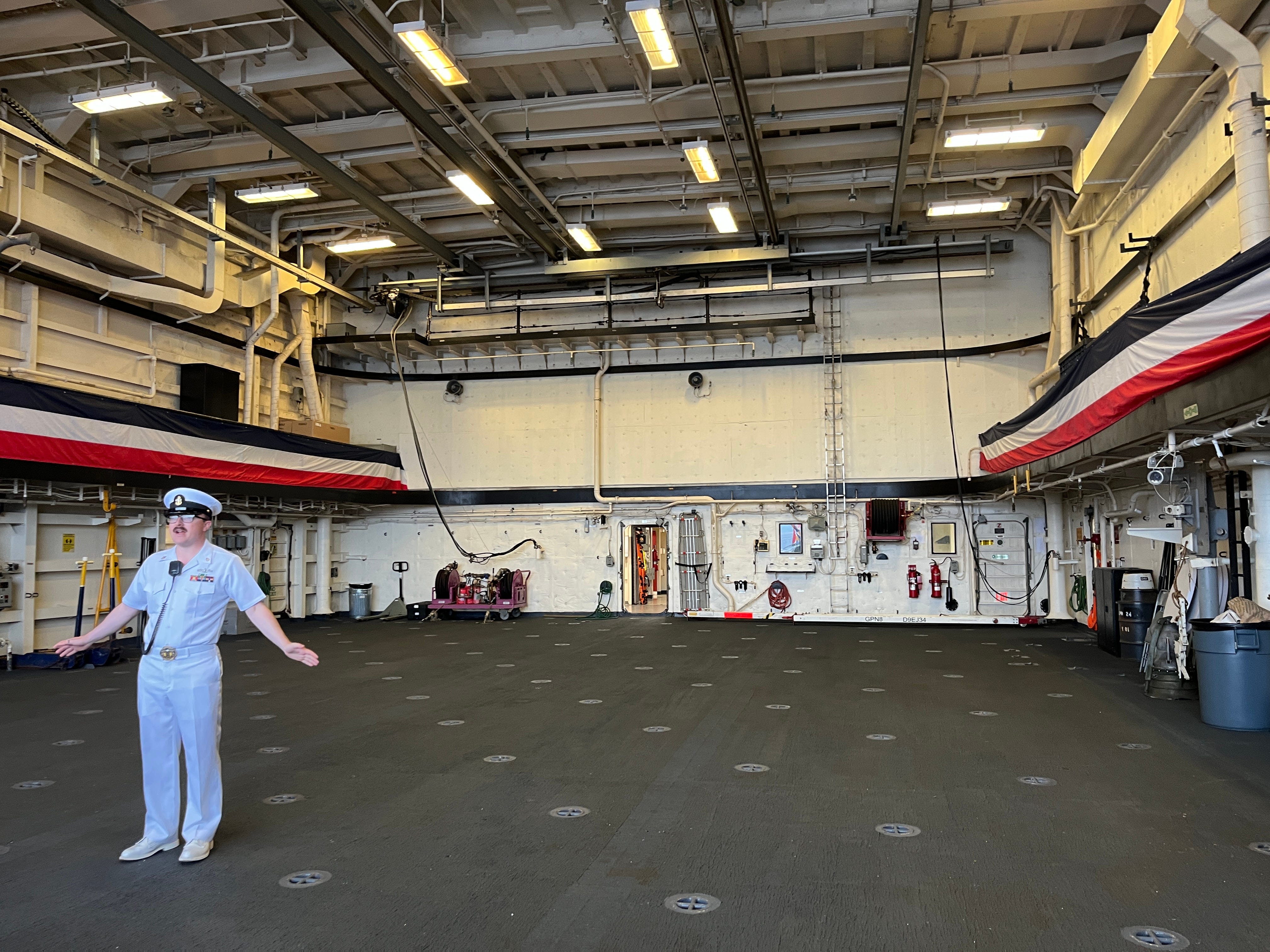
Standing inside the hangar bay, used for aircraft maintenance and storage, our guide told us that photos and videos were strictly prohibited at our next stop.
Inside the hangar bay.
Talia Lakritz/Business Insider
With our devices stowed away, we passed by the ship’s medical facilities, which included a surgery room, a dental office, and patient waiting areas. We also walked through the berthing area, where crew members sleep in narrow, stacked bunks that sailors sometimes call “coffin racks.”
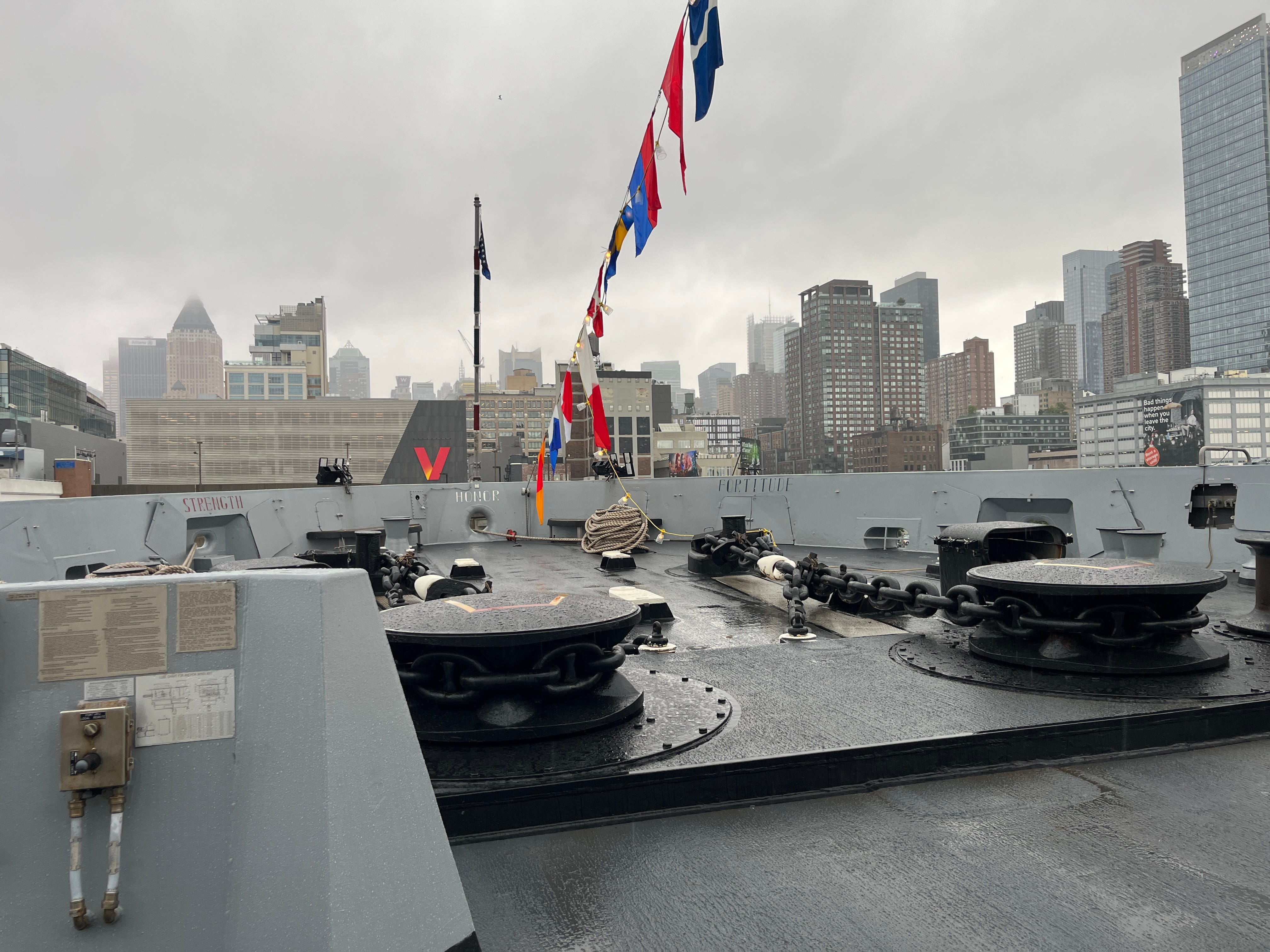
We ended up on an upper deck called the forecastle, pronounced "folk-sill."
Chains on the USS Arlington.
Talia Lakritz/Business Insider
The forecastle is where the crew operates the ship’s anchor.
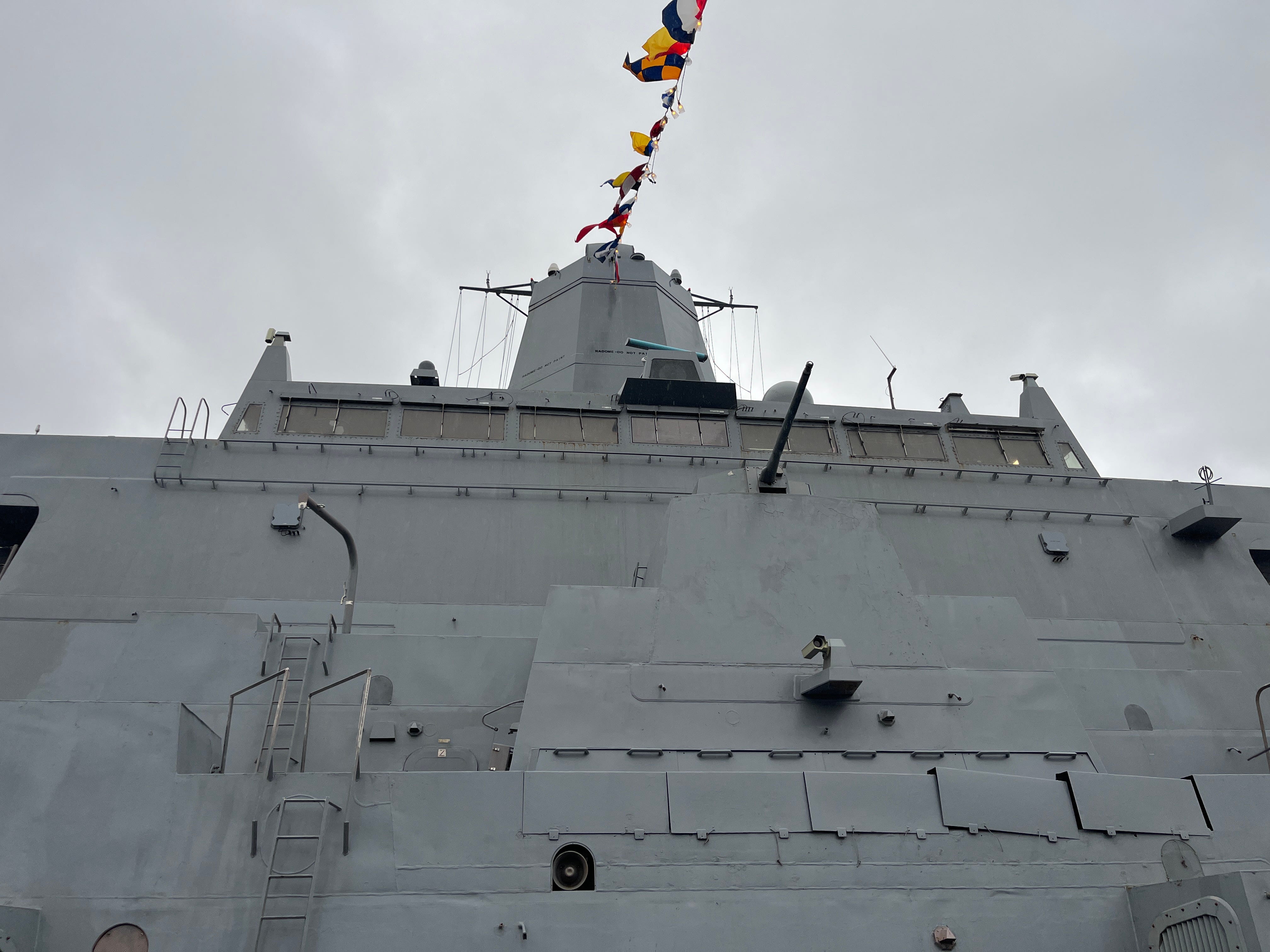
From the forecastle, we could see the pilothouse, where crew members drive the ship and navigate it in and out of port.
The pilothouse of the USS Arlington.
Talia Lakritz/Business Insider
Mounted below the pilothouse is an MK-46 30 mm gun, which our guide said is the main gun used for surface engagements.
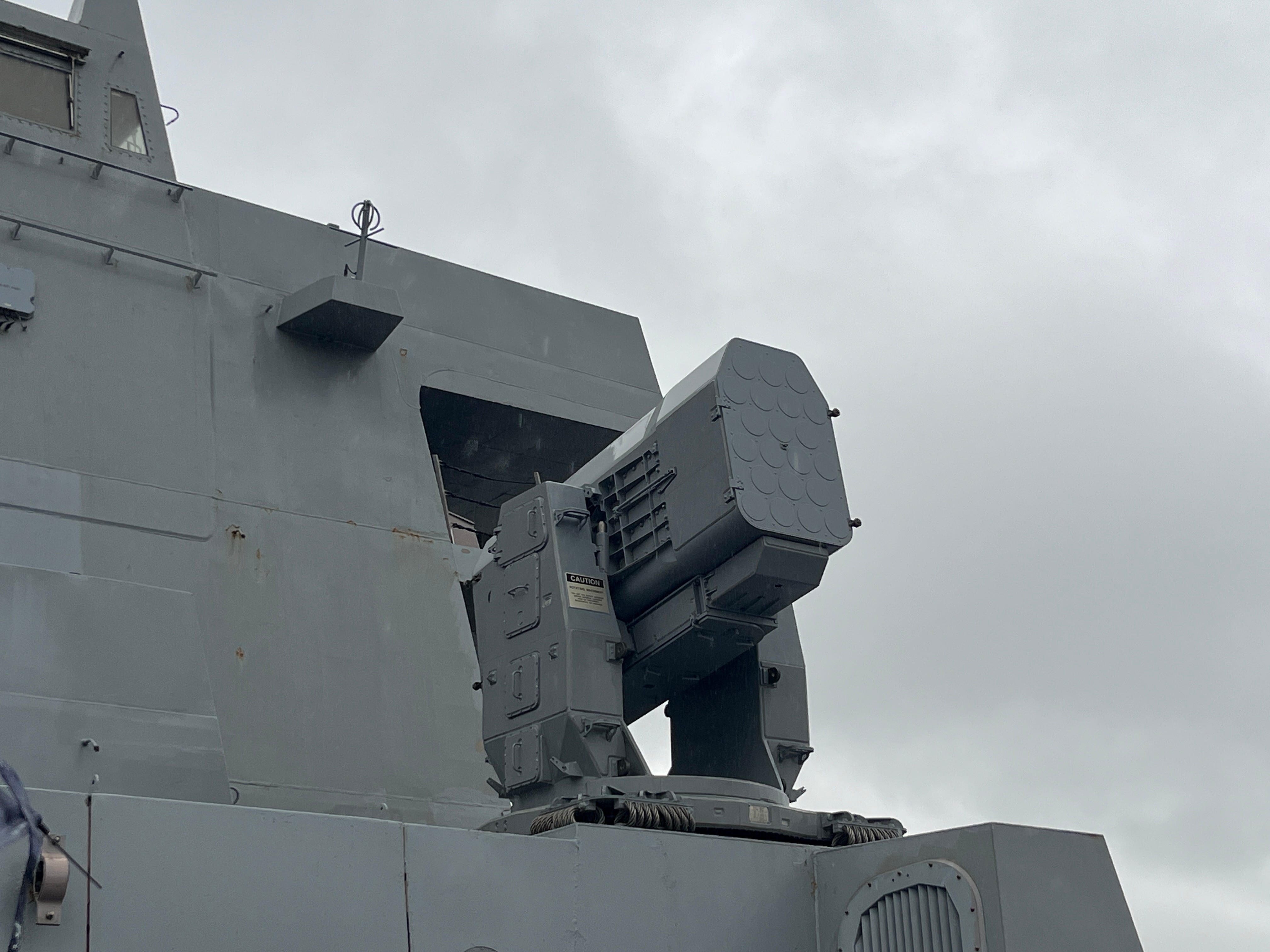
The guide also pointed out one of the ship's guided missile launchers that fire RIM-116 Rolling Airframe Missiles, or RAMs.
An Mk-144 Guided Missile Launcher (GML) that launches RIM-116 Rolling Airframe Missiles (RAMs).
Talia Lakritz/Business Insider
RAMS are used for air defense to take out anti-ship cruise missiles.
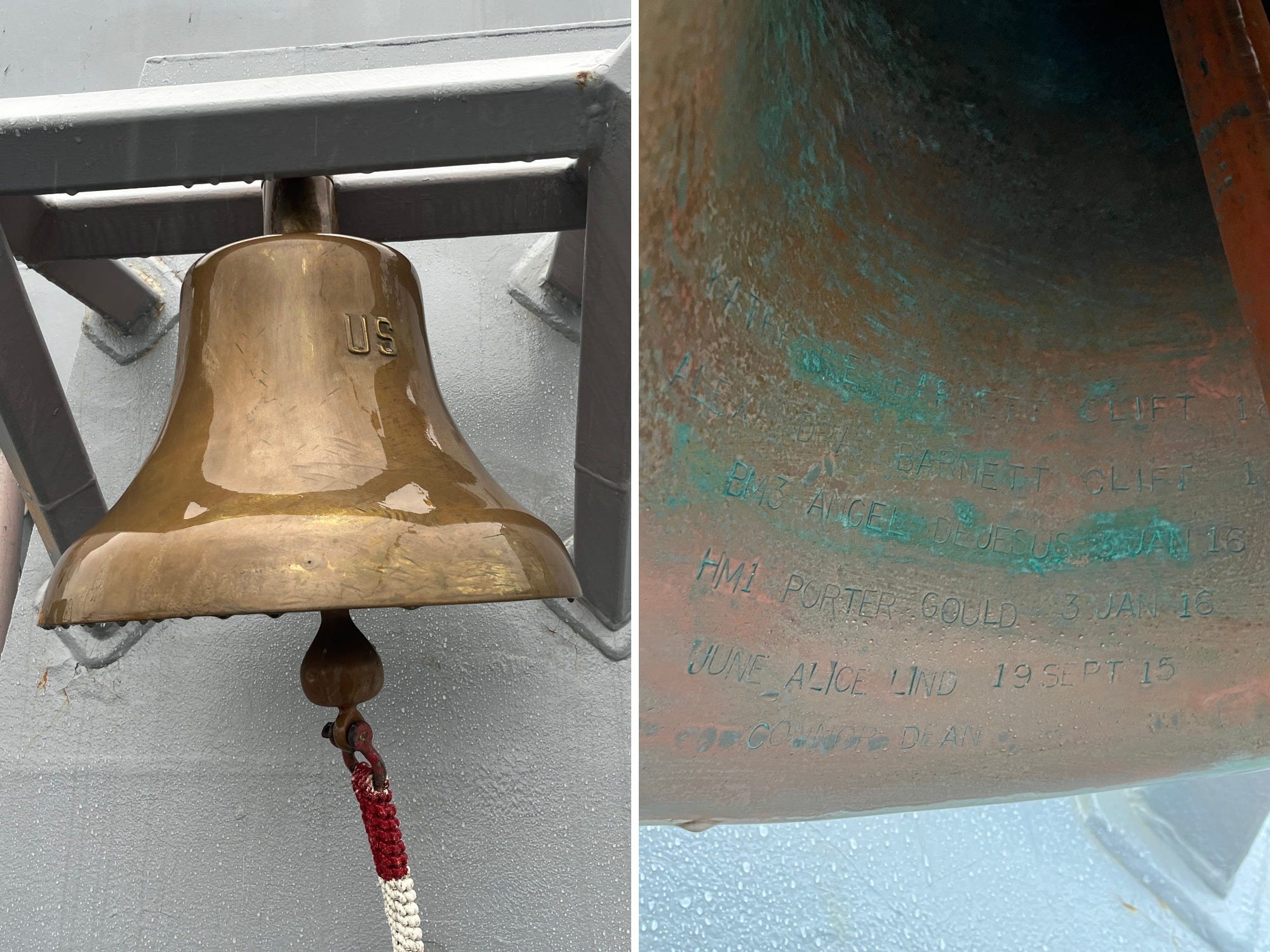
The final stop on the tour was a bell that is part of a long-held naval tradition.
A bell on the USS Arlington.
Talia Lakritz/Business Insider
Crew members on USS Arlington, as well as other Navy ships, can have their children baptized on the ship with the bell serving as the baptismal font. If a child is baptized on the ship, their name is inscribed into the underside of the bell.
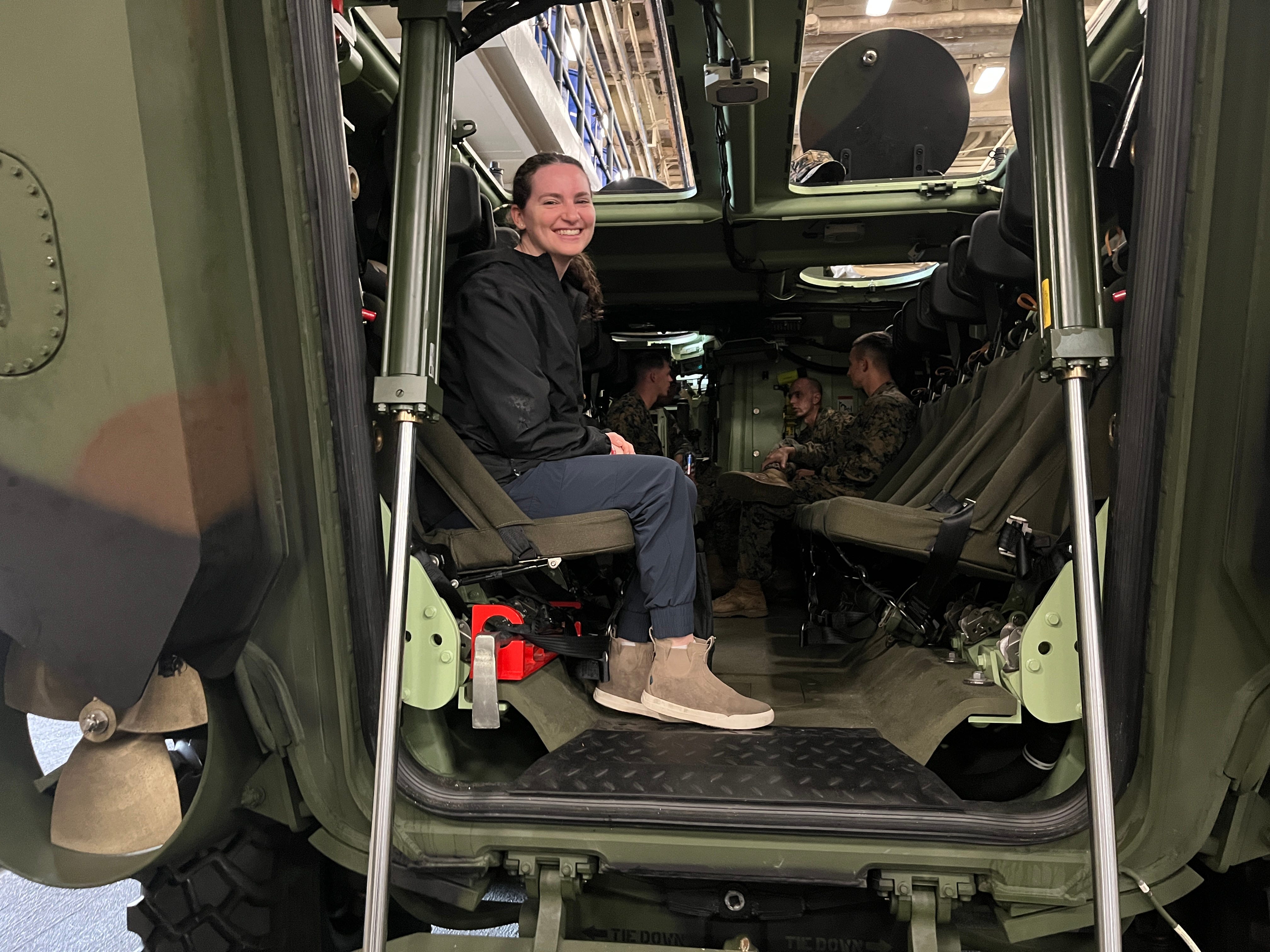
After I returned to the well deck to disembark, a Marine asked if I wanted a photo inside a LAV-25, an amphibious reconnaissance vehicle. I couldn't say no to that.
Inside a LAV-25, an amphibious reconnaissance vehicle.
Talia Lakritz/Business Insider
While I’ve toured several historic battleships and submarines from World War II and the Cold War, this was my first time visiting an active warship.
To me, seeing a modern Navy ship filled with uniformed service members, state-of-the-art vehicles, and advanced weaponry was a completely different experience from touring retired vessels that have become museums.
The tight security measures appeared to be the clearest indicator that the USS Arlington is still very much on the job.