






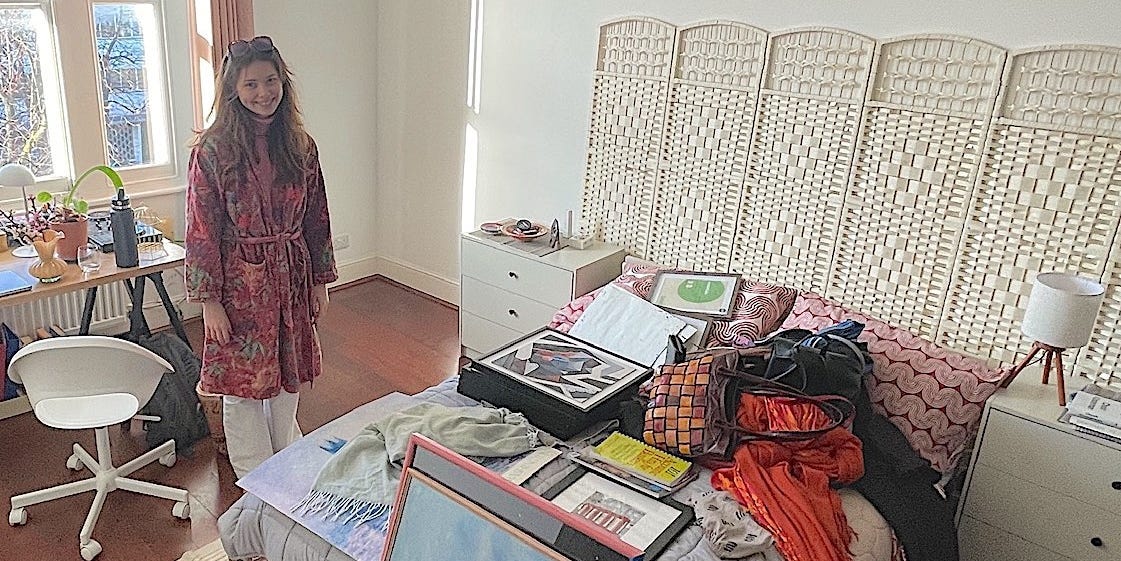
Last fall, I felt like a picture of success in my 20s. I was developing a fast-paced career, living in central London with friends, and had just enough time and money to enjoy the city.
Then, the life I’d built collapsed. In quick succession, my mum was diagnosed with cancer, and my grandfather suffered a debilitating stroke. While friends continued with the cycle of work and socials, I was shocked into pausing mine to move back in with my parents at 24.
Nothing could make me trade being with my family during this crisis, so why did I feel embarrassed admitting I lived at home to acquaintances or colleagues who didn’t have the context?
Everywhere I looked, there was a narrative that adults who live with their parents are regressive dependents, resented by their families. That certainly doesn’t fit my situation, and it can’t possibly apply to the majority of Gen Zers, who are more likely to live with their parents than earlier generations.
Defining “adulthood”
I felt “adult” when I first moved out, but looking back, it was permission to be immature. The logistics were easy, I could do whatever I wanted, and my greatest commitment was making rent each month.
Having faced a family crisis and caregiving responsibilities, I can firmly say I’m much more grown-up now. Many adult children living with parents will have learned similar adult lessons, whether they’ve boomeranged home for a career break or after a breakup.
I also have greater responsibilities at home than I ever did as a tenant. Though I initially struggled with the shock of the situation and my increased commitments, handling challenges as part of a family unit is probably more representative of my future adult life which will likely incluvde mortgages, childcare, and any other curveballs.
My circumstances are rare, with the majority of Gen-Z living at home for financial reasons like volatile income, unaffordable rent, and saving to get on the property ladder. Still, I don’t think it’s right that my peers are labeled as childish for living with their parents — it’s more mature than the alternative of debt or relying on family to bail you out.
I sometimes think landlords, perhaps, are the main group benefiting from the belief that adults move out of the family home.
Aging goes both ways
From what I’ve seen, the current conversation focuses only on the right age for children to move out. In my experience, the real challenge is how families can age together.
Transitioning from a parent-child relationship to an adult-adult one rewards both sides. Since moving home, I’ve gotten to know my parents more deeply. I’ve learned stories of their past and worries for their future that I never heard as a child and probably wouldn’t have caught during occasional phone calls or holiday visits. Though the worst circumstances brought me back to my parents, building our adult relationship has been a silver lining.
And though headlines feature parents complaining their retirement plans are ruined by adult children moving home, I see this as an unnecessarily negative view of how the parent-child relationship evolves.
Roles reverse as our parents age. Though I’ve faced this earlier than most, 10% of adults are providing elder care at any time, and many are sandwiched between being a caring child and caring for a child themselves — it doesn’t sound like adults should be independent to me.
My mom is balancing her own diagnosis while supporting my grandparents. When I asked her if becoming an adult meant living independently, she quipped, “They say it takes a village, but we don’t think about those children becoming villagers.”
Read the full article here