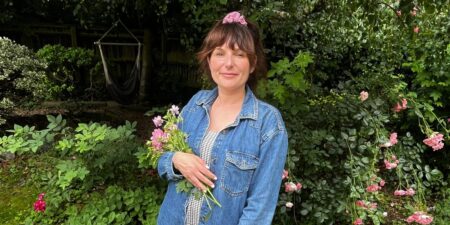




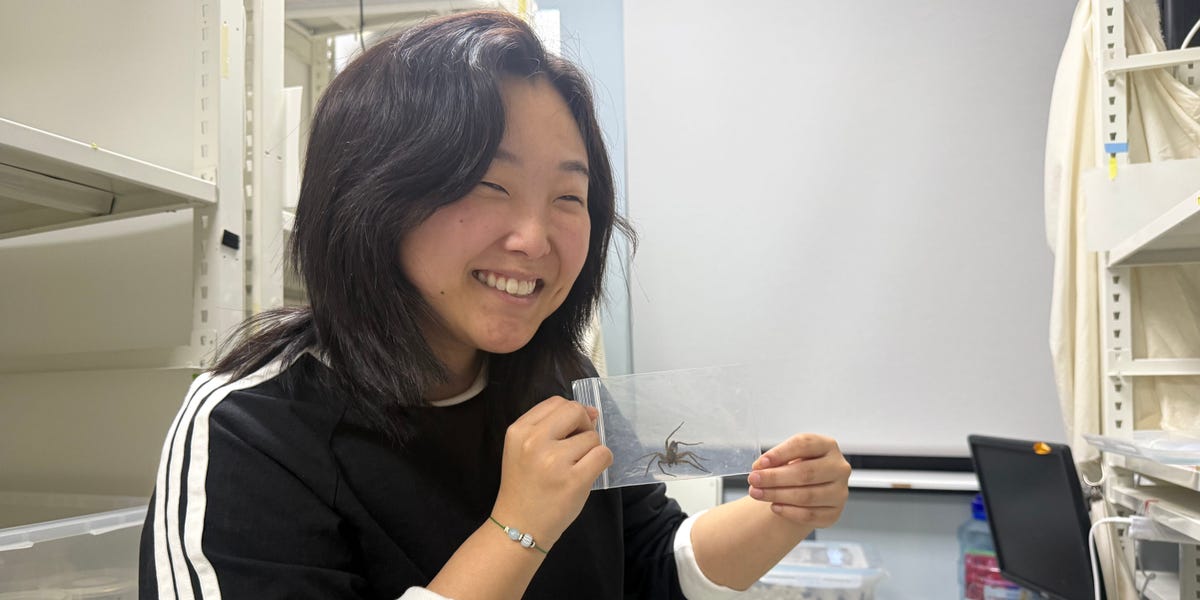
This as-told-to essay is based on a conversation with Jillian Kurovski, a 27-year-old Ph.D. student living in South Korea for a year. It has been edited for length and clarity.
I was doing spider research in Guam when I got an email saying that my birth mother wanted to meet me.
There were so many emotions, but mostly joy. I already had a three-day layover in South Korea planned on my way back to the US, and she agreed to see me while I was there. I spent a week learning the etiquette, trying on dresses, and practicing bowing because I wanted to look nice and be the perfect Korean daughter.
I was born in Daegu, South Korea, and I was adopted at eight months old. I grew up in a very loving, stereotypical Midwest family in Iowa. It was a predominantly white community, and my adoption was never a secret. I always knew I was Korean, but I didn’t quite have the words to express how that felt growing up.
There’s a moment from my childhood that still sticks with me: realizing how separated I felt from my family’s Irish and Czech roots.
Every time Amanda publishes a story, you’ll get an alert straight to your inbox!
Stay connected to Amanda and get more of their work as it publishes.
I had an assignment in junior high to bring an artifact from our family’s heritage. I remember struggling so much to think of what to bring.
Do I bring something Czech or Irish, or something Korean? But I didn’t know anything about Korea.
I ended up printing out a picture of an Irish friendship ring. Even while I was presenting it, it just felt like a total lie because I had no connection to it. I just wanted the assignment to be over.
Tracing my roots
In 2018, I had started a birth search through my adoption agency, and it was kind of a spur-of-the-moment thing.
At that point, I was an undergraduate researcher working with spiders, and I was scheduled to go to Guam to study them.
My lab manager told me I could travel through either Hawaii or South Korea. I had never been back to my birth country before, and I chose the latter.
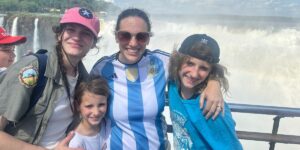
I spent my whole three-day layover with my birth family, and it was really special, even though it was so short. It was hard to leave and go back to the US.
After that, I kept thinking about how to come back to South Korea. I wanted to spend more time there and learn about my roots, so I applied for the Fulbright Presidential STEM scholarship to continue my Ph.D. research on spider reproduction, which brought me back to Seoul for a year.
I arrived in July 2025 to start the program, and this time, my birth family was there to pick me up from the airport.
Over the past year, we’ve started to feel more like a normal family, as normal as we can be for our circumstances.
I’m based in Seoul, but my family lives about an hour away in a different city, so we text about everyday things, like when I’m coming to visit or what I’m doing. Sometimes my dad will send me random YouTube videos or songs he likes.
The biggest challenge has been language. My family doesn’t speak much English, and I don’t speak much Korean, but we get by. My dad has put in a lot of effort to learn English, and my siblings know enough to have conversations. But with my mom, I can feel the gap.
I wish I could hear her tell a full story. I want to know about her life, and I want her to know mine.
Finding my place in the world
In some ways, I see a lot of overlap between my personal life and my research. By some kind of fate, the times I’ve been called to Korea have both been because of spiders.
I study an animal that’s really misunderstood, and I think adoptees are often misunderstood too. People talk about both without really knowing anything about them.
Spiders also exist in between — they’re both predator and prey — and I think that’s similar to how adoptees and multicultural people can feel, like we’re not one thing or the other, but somewhere in the middle.
A lot of my work also focuses on reproduction and mating behavior, so I think a lot about what it means to bring life into the world. It’s made me appreciate both of my moms more. I think it’s really hard to be a parent, and to be in either position is difficult.
I used to struggle with people telling me I wasn’t Korean or I wasn’t American, and I didn’t really know what that meant for my identity. Living in Korea has helped me make sense of that.
Coming to South Korea and experiencing the culture firsthand and having my birth family pass it down to me for the first time was really special. At the same time, my adoptive family is very, very close. They’re my biggest supporters, my biggest cheerleaders. Honestly, I think my adoptive mom was more excited for me to meet my birth family than I was.
I realized I love being Korean, and I also love being American. There are things about both that I really appreciate, and I feel a lot more at peace with how I see myself now.
Read the full article here