






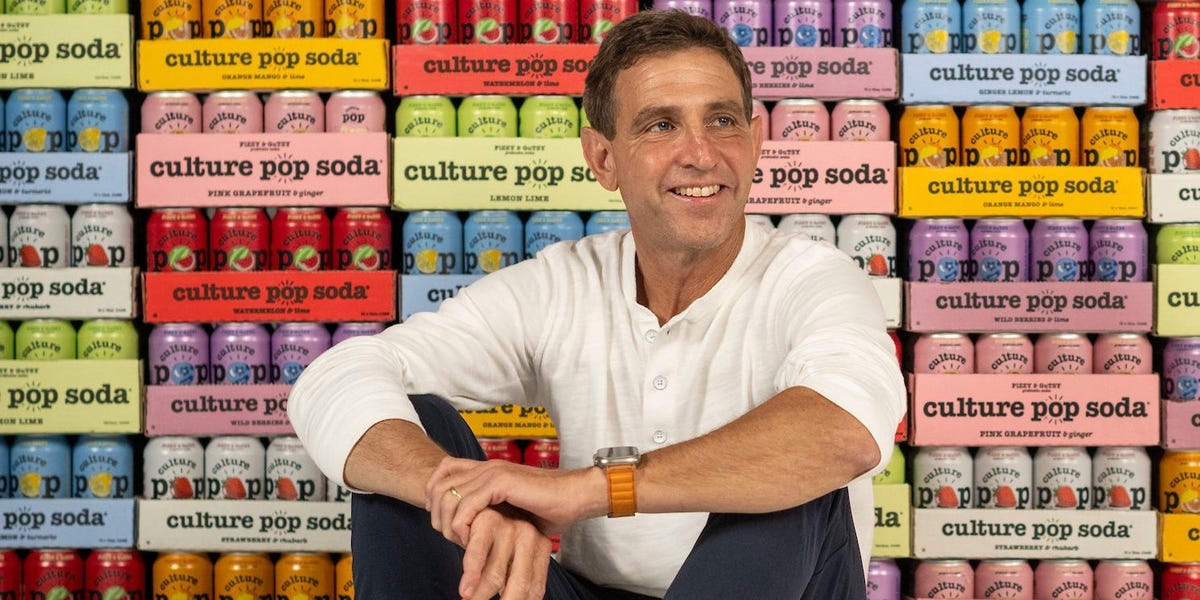
This as-told-to essay is based on a conversation with Tom First, the 59-year-old founder of soda brand Culture Pop, based in Boston. It’s been edited for length and clarity.
I love the food industry, and this particular category is a part of the fabric of America. Carbonated soft drinks have a long history — people love bubbles.
I started a juice company, Nantucket Nectars, with a friend at 22 years old in 1989. We made it at a small plant, and I started selling it out of my car. I eventually sold the company, but I’ve stayed in the industry.
I founded Culture Pop, a probiotic soda brand, about six years ago, the same way. Even though I’d done it before, I knew I had to start from the ground up. Now, we’re in 50 states, and our revenue has been growing by 100% year over year. In a couple of years, we’ll be touching $100 million in revenue.
We would still be considered a very small business in the beverage industry. There are players that are so much bigger, doing billions in revenue. Even when you get to $100 million, you’re still a small guy fighting and scrapping to get attention in a big industry.
Our core customer is younger than me
Culture Pop is one of the brands, along with Poppi and Olipop, that have helped establish this category in recent years. There are more than 50 brands, a sign of a compelling, competitive category.
We sort of crossover between Gen Z and millennial consumers in the 25 to 40-year-old range. Our customers are interested in ingredients, reading labels, and health. We don’t want shoppers to wonder what the heck is in here when you read our ingredient panel. The sweetness comes from fruit juice, not refined sugar or sweeteners.
I’m older than a lot of people here. I’m an older guy working with a lot of younger people, building a company that’s targeted at people my kids’ ages and older. They make fun of me in a kind way, but it’s kind of cool.
When I was 22, I was our consumer, and I definitely knew what was cool and what was not. I’m not sure I know what’s cool now, but working with 20-somethings helps me figure out how to connect with different generations.
My younger employees got me on TikTok
The biggest example of that is on TikTok. Our social team forces me to be in TikTok videos, saying that people would appreciate hearing our story from me. I was thinking that no one would want to hear from a 50-something guy, but, honestly, it’s worked. I get to be myself, which, apparently, people like.
It was a lot easier to just pay an influencer two years ago, and everyone loved it. Now, sometimes you pay an influencer, and it feels very fake, and consumers hate it. I rely heavily on a lot of 20-somethings in my company because they know what people like and what offends people. It seems to change every six months.
My team has encouraged me to interact with people directly in the comments from my own account, which I really enjoy. It helps me directly understand what resonates with our consumer and what they’re looking for next. My kids think it’s funny, and I’ve actually had a few people recognize me in an airport as the Culture Pop founder.
The whole team is on the same page
We’re not trying to be transactional with our consumers on social media. We have an authentic feel that matches the voice we’re trying to create. The younger people in this company know how to do it a heck of a lot better than I do.
I’ve heard stories about other companies having challenges with relying on younger employees, but we haven’t. It’s a pretty open environment at Culture Pop. We’re all connected by our love for this brand, so maybe that’s the bridge.
We want to deliver a really nice treat with a reasonably low calorie count, made with ingredients you’d be really happy drinking for the rest of your life.
Read the full article here