






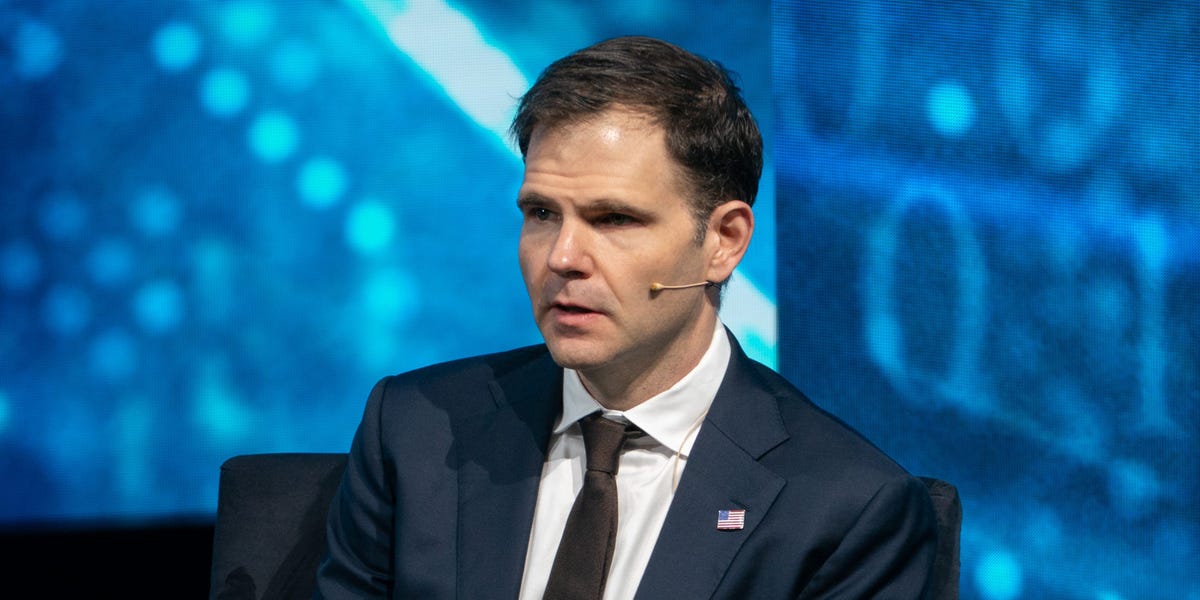
Jonathan Ross, Groq’s former CEO, says his steep learning curve as a founder came at a hefty cost.
“I was a terrible leader. I was one of the world’s worst leaders when I started,” Ross said on an episode of the “Founders” podcast released on Sunday. He recounted his management mistakes early in the chipmaker’s journey.
“The first thing that you have to do as a founder is you have to go from the technical thing that you know how to do and that you can add value with, to learning how to manage people,” Ross said. “For me, that probably cost Groq three to four years.”
Ross, a former Google engineer, cofounded Groq in 2016 to build chips it calls language processing units. The custom AI inference chips are an alternative to Nvidia’s graphics processing units.
In December, Nvidia struck a roughly $20 billion licensing and talent deal with Groq, bringing Ross, Groq president Sunny Madra, and other key engineers to Nvidia while allowing Groq to remain an independent company.
At Nvidia, Ross serves as chief software architect, while Groq is helmed by Adam Winter, a former vice president at the company.
As a founder, Ross said he erred in not hiring people who could operate autonomously, and then delegating them too much responsibility.
“What ended up happening was things would just grind to a halt because they wouldn’t know what to do, and I wasn’t telling them what to do, and they were used to being told what to do,” the founder said.
Ross said the turning point was when he became more selective about hiring.
“I went from looking for positives, which is what you do when you’re trying to grow talent, to looking for negatives, which is what you do when you’re trying to select talent,” he said.
Other tech founders have detailed similar early-days management mistakes.
On a December podcast, Figma CEO Dylan Field said that he confused leadership with management. He said he had to learn basics like holding one-on-one meetings, building relationships, and creating accountability.
“Management and leadership are different,” Field said. “You can be a good leader and a bad manager or vice versa.”
Last May, Duolingo CEO Luis von Ahn said that all founders should be micromanagers until they had 30 employees — but that he took it too far, micromanaging until he had 50.
“At this point, I also have learned that most of my job is culture carrier, mascot, and just making some of the kind of tough philosophical decisions,” von Ahn said.
Read the full article here