
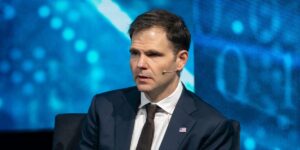



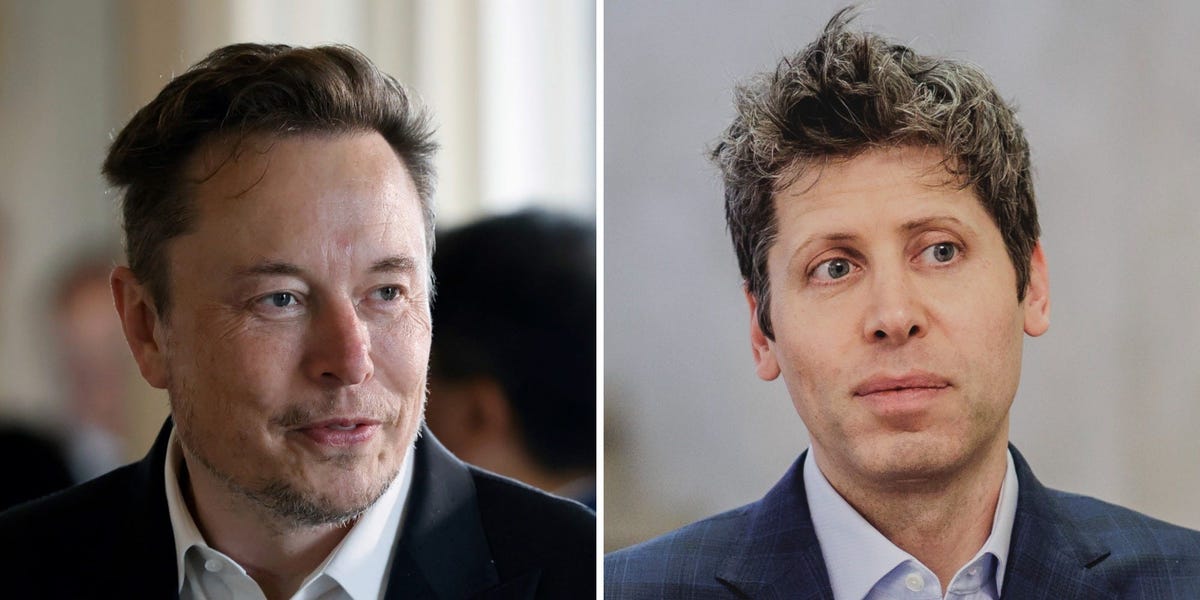
A jury on Monday found Sam Altman and OpenAI not liable in a blockbuster lawsuit Elon Musk brought against them.
The jurors in an Oakland, California, courtroom cleared the OpenAI CEO, its president, Greg Brockman, and OpenAI itself of Musk’s allegations that they scammed him of early charitable contributions by operating OpenAI as a for-profit venture.
They ruled that the Tesla CEO knew about the details he described in his lawsuit as far back as 2021, but waited too long and missed the legal deadlines to bring his claims.
The jurors also found Microsoft not liable for “aiding and abetting” Altman and Brockman to violate charity laws while profiting from its deals with OpenAI, also because of the timing of Musk’s lawsuit. A Microsoft spokesperson said the company welcomed the jury’s decision.
US District Judge Yvonne Gonzalez Rogers, who oversaw the case, said she accepted the jury’s unanimous findings and would not overrule them.
The verdict is a major victory for Altman, who can now say that the world’s richest man took longstanding questions about his honesty and management of OpenAI to court — and couldn’t make the allegations stick. It is also a victory for his lead attorney, William Savitt of the elite law firm Wachtell, Lipton, Rosen & Katz, which has forged close ties to OpenAI that continue to solidify as the company approaches an expected IPO.
The jury’s decision scuttled a hearing Monday on potential remedies in the case. When the jury said it had reached a verdict, after less than two hours of deliberation, the judge was listening to expert testimony about how much money the defendants would have owed Musk for violating the law. If the jury had found the parties liable, Gonzalez Rogers would have decided the penalties and weighed Musk’s request to unwind OpenAI’s for-profit arm.
Because the jurors ruled that Musk missed the deadlines for his claims, they didn’t reach a decision on the merits of his allegations.
Following the jury’s decision, Musk’s attorney Marc Toberoff told journalists they planned to appeal the case.
Musk co-founded OpenAI with Altman in 2015, designing it as a nonprofit to develop artificial intelligence technology that would benefit all of humanity. They planned it as a counterweight to Google’s DeepMind, which they saw as a threat if it successfully created general AI technology that would be in the hands of a private company.
The Tesla CEO’s lawsuit, first filed in 2024, accused Altman and Brockman of perverting that mission by building a for-profit arm of OpenAI and partnering with Microsoft. They had effectively stolen the nonprofit and used it to enrich themselves off the back of Musk’s $38 million in early donations to the organization, Musk alleged.
In their own arguments, OpenAI, Altman, and Brockman said that Musk was simply trying to hobble OpenAI through the litigation as his own AI company, xAI — now renamed SpaceXAI and part of his rocketship company — lagged behind. During the trial, they presented evidence that Musk understood that partnering with a major tech company like Microsoft would be essential to raising the capital needed for the extensive computing power required for AI development. Microsoft had argued that it didn’t know about and wasn’t bound to any agreements between Musk and OpenAI.
The trial featured testimony from Musk, who accused Altman of looting the OpenAI charity, and from Altman, who portrayed Musk as a power-hungry operator seeking to control the company himself.
It also featured numerous witnesses — including Microsoft CEO Satya Nadella and former OpenAI board members — who testified about “The Blip,” the company’s nickname for the brief period where its board fired Altman as CEO.
This story has been updated.
Read the full article here