


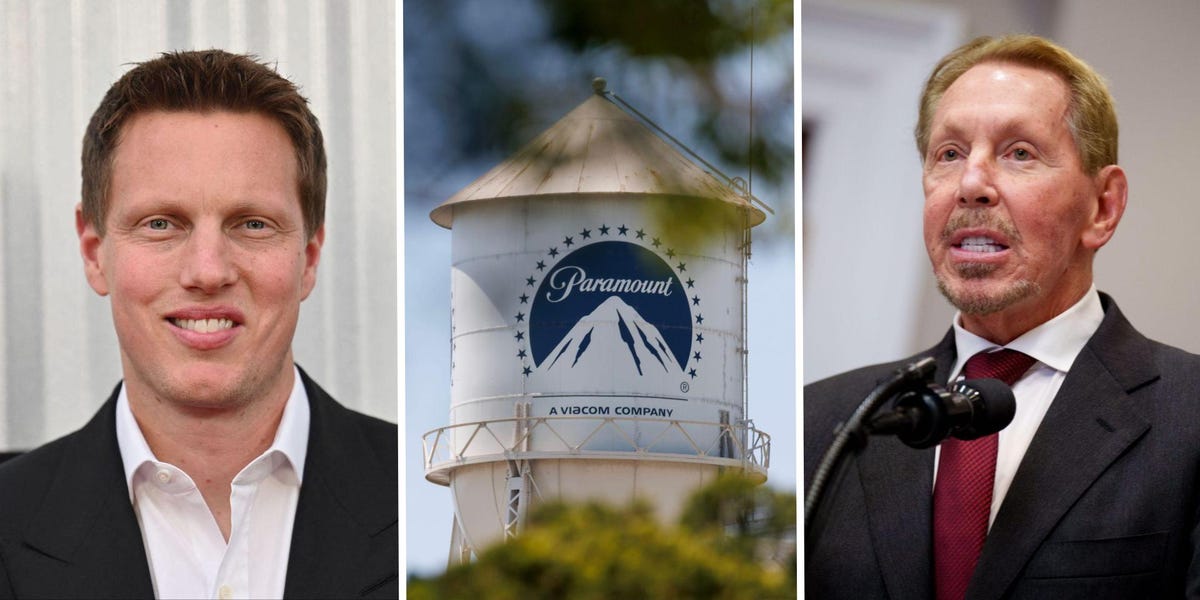
Paramount Skydance’s agreement to delay its merger with Warner Bros. Discovery might have a simple explanation: CEO David Ellison can afford to wait.
After months of trying to fast-track its WBD mega-deal, Paramount agreed on Friday not to close it until June 2027, or until five days after a trial ends.
Attorneys general from 12 states have sued Paramount to block its acquisition of WBD, arguing the merger is anticompetitive. A judge had paused the deal, which had already been approved by the US Department of Justice and global regulators like the European Commission.
Although Paramount was eager to avoid a delay, its sudden reversal signals it’s confident that a jury would take its side in a trial — and that the cost of waiting to merge with WBD is overstated.
Not too ticked off
Paramount’s decision to willingly delay its WBD merger may first appear to be an own-goal, given the financial penalties it would incur by waiting.
Ellison’s company agreed to pay WBD shareholders a “ticking fee” of about $7 million each day the deal doesn’t close, starting after September 30. Paramount lawyer Jeffrey Kessler told the judge overseeing the case that the company “would suffer very severe harm” if it had to pay the ticking fee, which amounts to $650 million per quarter.
If the deal is delayed six months, Paramount would owe WBD shareholders $1.3 billion. The most it could owe is $1.95 billion in ticking fees since the pause agreement lasts until June 1.
However, the ultrawealthy Ellisons and their financial partners have agreed to pay $110 billion for WBD, which makes a $7 million per day charge more of an annoyance than a roadblock.
A $1.3 billion charge for a six-month delay would increase Paramount’s purchase price by 1.2%, which, when annualized to 2.4%, is less than June’s inflation rate of 3.5%. The same is true of a 2% price bump over nine months.
“It’s a lot of money in absolute dollars, but it’s not a huge deal,” said Hernan Lopez of media consultancy firm Owl & Co.
Some investors thought Paramount would pay over $33 per share for WBD, Lopez said. That explains why WBD shares fell after Paramount won the bidding war by offering $31 per share. Those savings may have given it more breathing room to offer WBD shareholders a ticking fee.
Paramount seemed prepared for turbulence in the regulatory process, as the company already accounted for the ticking fee in the tens of billions in cash it set aside for this deal. However, Ellison may find himself waiting longer to reunite with WBD than he hoped.
“They must have priced in some delay, though likely not three full quarters,” Lopez said. Paramount declined to comment.
‘Every single dollar matters’ — as does every day
Still, just because the Ellisons could afford to pay a few billion extra doesn’t mean they want to, especially since they’d be on the hook for a $7 billion charge if they drop their bid for WBD.
“I think every single dollar matters, even with Ellison’s virtually endless resources,” said analyst Brandon Katz of entertainment data firm Greenlight Analytics.
Although Paramount has deep-pocketed owners, Katz noted that “there’s a lot of ancillary money involved outside the purchase price” — including a $2.8 billion breakup fee to Netflix, which had previously agreed to buy WBD’s studio and streaming business.
Paramount’s biggest frustration may be the opportunity cost of not closing the WBD deal sooner.
Ellison’s dream of building a Hollywood superpower may be disrupted if his company has to wait months before merging HBO Max with Paramount+ and the Warner Bros. Studio with its studio.
In the meantime, Paramount is planning to boost its streamer by adding micro dramas, bolstering its free tier, and introducing interactive features, Business Insider reported last week.
Still, Ellison likely knows that sleek new streaming features and AI enhancements on their own may not turn Paramount into Netflix.
Instead, the media mogul believes paying $110 billion for WBD is worth it — and worth the wait.
Read the full article here