


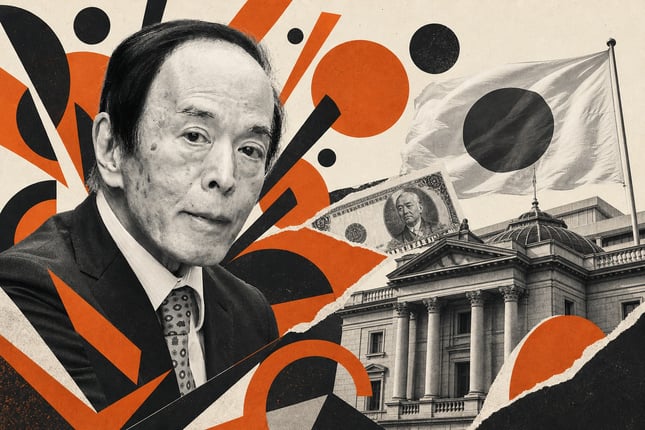
The British Pound (GBP) extends losses on Wednesday as the Japanese Yen (JPY) rallies across the board, with investors bracing for a quarter-point rate hike by the Bank of Japan (BoJ) at next week’s monetary policy meeting. The GBP/JPY’s rebound from year-to-date lows at 207.10 was capped at the 209.00 area on Tuesday, and the pair retreated again on Wednesday, hitting session lows near 207.50 at the London session opening.
Higher Crude prices, a traditional headwind for Yen rallies, have failed to dent JPY’s recovery. Brent oil is ticking down on Wednesday but remains near its highest levels in the last two months at $97.00, as the conflict in the Middle East widens, threatening to escalate into a full regional war.
BoJ shift could force rethink of entrenched carry trade assumptions
Strategists at Rabobank observe September’s BoJ policy meeting as pivotal for global funding dynamics. If the BoJ “supports the view that it may be embarking on a more rapid pace of rate rises in the coming months,” then “the market will have to re-examine some long-standing assumptions regarding the carry trade,” say Rabobank analysts in a note.
In their view, any clear signal of a faster BoJ hiking trajectory would challenge the durability of using the Yen as a low-cost funding currency and could prompt investors to reassess established positioning built up over years of ultra-loose Japanese policy.
In the UK, the Bank of England (BoE) Governor, Andrew Bailey, acknowledged on Tuesday that inflation risks “are on the upside,” but he also vowed to dispel the idea that rate hikes are inevitable, and that monetary policy decisions will depend on economic and geopolitical developments. The Pound dropped against most peers following Bailey’s comments.
Central banks FAQs
Central Banks have a key mandate which is making sure that there is price stability in a country or region. Economies are constantly facing inflation or deflation when prices for certain goods and services are fluctuating. Constant rising prices for the same goods means inflation, constant lowered prices for the same goods means deflation. It is the task of the central bank to keep the demand in line by tweaking its policy rate. For the biggest central banks like the US Federal Reserve (Fed), the European Central Bank (ECB) or the Bank of England (BoE), the mandate is to keep inflation close to 2%.
A central bank has one important tool at its disposal to get inflation higher or lower, and that is by tweaking its benchmark policy rate, commonly known as interest rate. On pre-communicated moments, the central bank will issue a statement with its policy rate and provide additional reasoning on why it is either remaining or changing (cutting or hiking) it. Local banks will adjust their savings and lending rates accordingly, which in turn will make it either harder or easier for people to earn on their savings or for companies to take out loans and make investments in their businesses. When the central bank hikes interest rates substantially, this is called monetary tightening. When it is cutting its benchmark rate, it is called monetary easing.
A central bank is often politically independent. Members of the central bank policy board are passing through a series of panels and hearings before being appointed to a policy board seat. Each member in that board often has a certain conviction on how the central bank should control inflation and the subsequent monetary policy. Members that want a very loose monetary policy, with low rates and cheap lending, to boost the economy substantially while being content to see inflation slightly above 2%, are called ‘doves’. Members that rather want to see higher rates to reward savings and want to keep a lit on inflation at all time are called ‘hawks’ and will not rest until inflation is at or just below 2%.
Normally, there is a chairman or president who leads each meeting, needs to create a consensus between the hawks or doves and has his or her final say when it would come down to a vote split to avoid a 50-50 tie on whether the current policy should be adjusted. The chairman will deliver speeches which often can be followed live, where the current monetary stance and outlook is being communicated. A central bank will try to push forward its monetary policy without triggering violent swings in rates, equities, or its currency. All members of the central bank will channel their stance toward the markets in advance of a policy meeting event. A few days before a policy meeting takes place until the new policy has been communicated, members are forbidden to talk publicly. This is called the blackout period.
Read the full article here