





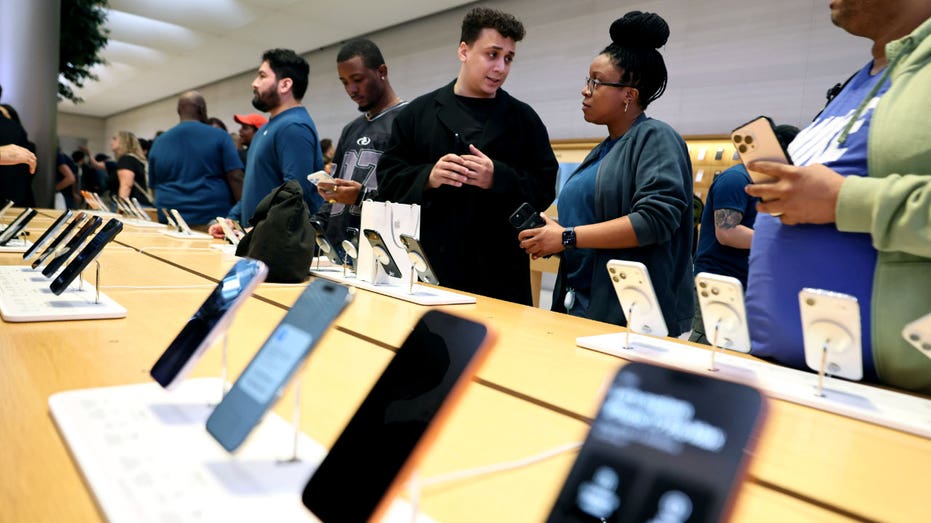
CUPERTINO, Calif. – Apple delivered its strongest June quarter on record, reporting $109.4 billion in revenue and beating analysts’ estimates of $108.65 billion in the company’s final earnings report before CEO Tim Cook steps down.
A 22% jump in iPhone sales, combined with record spring-quarter Mac revenue, helped drive the results. Tariff refunds also boosted Apple’s bottom line, adding roughly 5% to profit during the period.
But the earnings numbers were only part of the story. In an interview following the report, Cook addressed Apple’s approach to open-source artificial intelligence, the state of U.S.-China relations, rapidly rising memory chip costs and the legacy he leaves after 15 years at the helm.
APPLE CHIEF TIM COOK SAYS IT WAS THE ‘RIGHT TIME’ TO STEP DOWN AS CEO
Cook said he has “nothing negative” to say about open-source AI models, adding that “they are useful.” His comments come as the technology industry debates whether the most powerful AI systems should remain proprietary or be made more broadly available to developers.
That debate has intensified after Chinese AI company Moonshot launched Kimi K3, a new model that has drawn attention for performance that rivals some of the most powerful systems from Anthropic and OpenAI. Apple, meanwhile, is preparing to launch its long-awaited AI-powered Siri this fall using Google’s Gemini.
Cook’s comments suggest Apple intends to remain pragmatic rather than ideological in choosing the models that power its products. The company has traditionally exercised tight control over its hardware and software ecosystem, but the fast-moving AI market may require it to draw on a wider range of outside technologies.
WHO IS JOHN TERNUS, SET TO SUCCEED TIM TOOK AS APPLE’S CEO?
China remains another critical part of Apple’s AI strategy and its broader business.

“In terms of the U.S.-China relationship, I was over in April for the state dinner, and I think the engagement between the countries are really good, and I’ve got a favorable view, and I’m very optimistic at this point about where the relationship is,” Cook said.
Apple Intelligence has finally been approved in China after a delay of nearly two years compared with its U.S. launch. The approval could help Apple compete more effectively in one of its largest markets, where domestic smartphone makers have moved quickly to add generative AI features.
Apple’s China sales rose 22% during the spring quarter to $18.81 billion. Even with that sharp increase, revenue still fell short of analysts’ estimates of more than $19.5 billion in Apple’s third-largest market.
Tariff refunds provided another lift to the quarter. Cook said Apple is directing that money back into domestic production.
APPLE TO LEASE IPHONES, OTHER PRODUCTS TO USERS THROUGH KLARNA PARTNERSHIP
“We’re taking our tariff refunds and reinvesting those in the United States’ advanced manufacturing,” he said.
Apple has already committed to spending $600 billion over four years on the U.S. economy. The reinvestment gives the company a way to frame the refunds not simply as a temporary earnings benefit, but as additional support for its long-term manufacturing strategy.
At the same time, Apple is contending with a sharp increase in the cost of memory chips. The company recently raised prices on some Mac computers and iPads by as much as $300 as memory chip prices soared by as much as 600% over the past two years.
“As I’d mentioned on the call last time around, the memory costs were higher in March than December quarter, and then in June they were significantly higher than in the March quarter,” Cook said.
| Ticker | Security | Last | Change | Change % |
|---|---|---|---|---|
| AAPL | APPLE INC. | 333.43 | -4.76 | -1.41% |
Those higher costs are arriving just as artificial intelligence is driving demand for more computing power and memory. Despite the price increases on some devices, Cook said Apple’s new, lower-priced MacBook Neo, which starts at $699, was the company’s best-selling computer in the United States during its first full quarter on the market.
Demand for Apple’s higher-powered Mac Studio computers has also surged, creating supply shortages and helping push Mac revenue above $10 billion for a new spring-quarter record.
Cook will step down as chief executive on Sept. 1 after leading Apple for 15 years. He will remain chairman, while Apple’s hardware engineering chief, John Ternus, takes over as CEO.
Cook became chief executive in 2011, succeeding Apple co-founder Steve Jobs. Since then, Apple’s market value has increased by more than 1,000%. This week, the company became only the second corporation to surpass $5 trillion in market value, briefly overtaking Nvidia to reclaim the title of the world’s most valuable company.
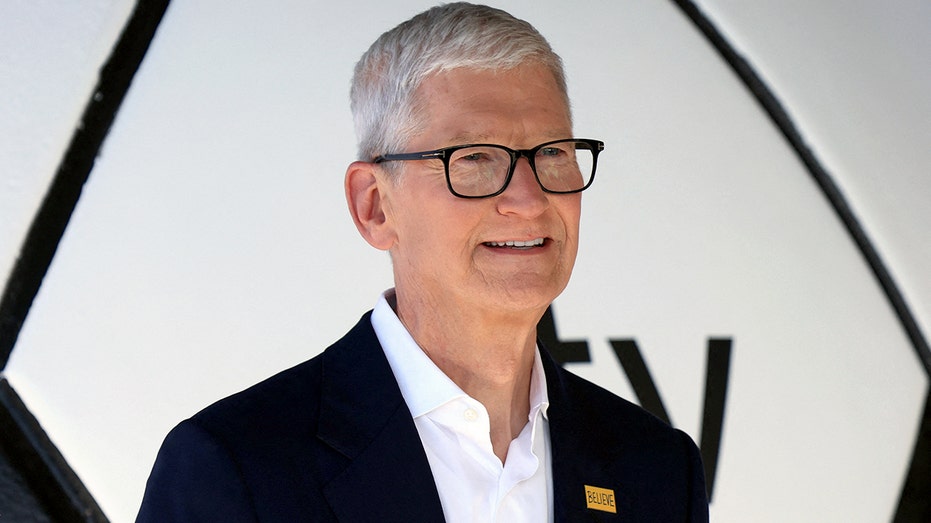
Reflecting on his tenure, Cook said, “I’ve had an incredible opportunity to work with people that I love to work with… and it’s just been the privilege of a lifetime.”
Asked how he wants to be remembered, Cook demurred.
“How people will write about that will be theirs to decide,” he said. “But for me, it’s been a privilege.”
Cook arrived in the top job facing doubts that a supply-chain expert could preserve the product vision and culture associated with Jobs. Fifteen years later, he leaves behind a company operating at a scale few could have imagined in 2011 – and one now entering a new era defined by artificial intelligence, geopolitical competition and the challenge of sustaining growth from the world’s most valuable consumer technology franchise.
Read the full article here