




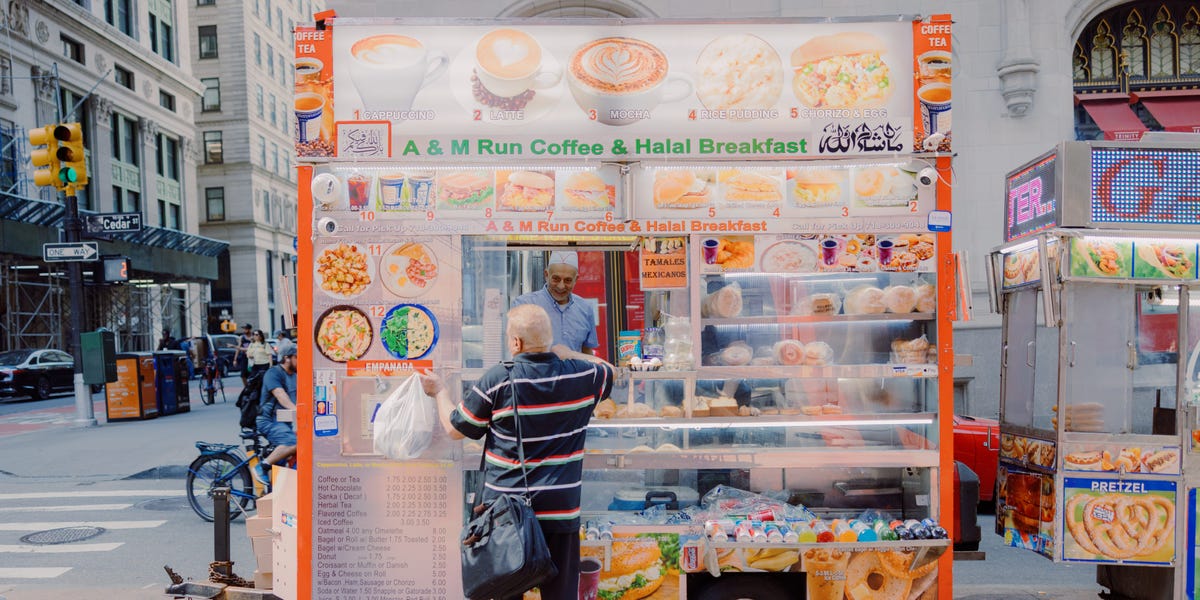
Benjamin Li races against the clock. If he’s late, he’ll have to pay a $9 toll.
He rises at 3:45 a.m., leaving him barely enough time to get dressed, pick up his smoothie cart from storage, and drive it across the bridge from Brooklyn to lower Manhattan before 5.
Last month, I spoke with over a dozen street vendors about their jobs, and whether they think Mayor Zohran Mamdani’s affordability agenda can offset what he calls “halalflation.” Many mentioned a problem that surprised me: The city’s latest solution to curb traffic is breaking vendors’ budgets.
The city began enforcing congestion pricing, a toll for cars entering lower Manhattan from outer boroughs or New Jersey, in early 2025. Drivers pay between $9 and $22 per trip during daytime hours, depending on their vehicle. The revenue is directed toward funding the Metropolitan Transportation Authority, which operates NYC’s subways and bus system.
The new tolls are just one challenge NYC’s street vendors are struggling with. Longtime vendors told me they show up despite extreme weather conditions, significant permitting costs, unpredictable monthly incomes, and the rising cost of food and gas. A dwindling customer base — owed to pervasive work-from-home culture and weakening tourism — is chipping away at their already-thin profit margins.
Food cart operators are finding ways to adapt to the year-and-a-half-old congestion price system. “A lot of people cover their license plates, but we don’t do it,” Li said. “We just do a legal way to save the money. That’s why I have to sacrifice my sleep.”
NYC is raking in money, but vendors can’t afford another expense
New York City has seen wins from congestion pricing: In the first year, 27 million fewer vehicles entered the city in the designated “congestion zone” south of 60th Street in Manhattan, decreasing traffic by 11% and improving crossing speeds by up to 51%. The state also reported a decline in air pollution and traffic-related injuries.
All the vendors I spoke with said they live in Brooklyn or Queens and store the carts near their homes. Many mentioned waking up before dawn to cross into the congestion zone before rush hour pricing kicks in. A few said they typically net less than $200 a day from sales, and a $9 daily fare adds up to hundreds of dollars in monthly sunk costs.
Abdelhafeez Aly, 60, said the price of “everything is going up.” And, with the toll and high overhead, “I’m not making money like before.” With the $400 daily cost of stocking his cart with food and supplies, he said adding another expense isn’t sustainable. Food costs in US cities have already jumped by about 22% in the last five years, and the Iran war is sending the cost of gas and propane soaring.
Even before hitting day-to-day prices, many street food vendors spend tens of thousands of dollars on setup costs, like scarce permits, which are often rented secondhand. With a limited number of daily customers, Aly and others said they’re barely making ends meet.
“Congestion pricing has made it more expensive to bring the cart from Queens round trip,” one vendor added. Another said raising prices to compensate isn’t an option: “I cannot raise the price for the regulars, because they come every day and expect the food to be $9 or $10. If I raise it, they won’t want to come back.”
Championed by Gov. Kathy Hochul, congestion pricing has been a resounding success at both reducing traffic and generating money for the MTA. In its first year, the policy generated upwards of $550 million in net revenue, helped reduce commute times, and contributed to higher transit ridership.
A spokesperson for the MTA added that,”Anyone who has sat in traffic for hours knows that gridlock hurts our economy at every level, especially small businesses that rely on deliveries,” and that “congestion pricing has helped business thrive in New York.”
Mamdani’s “Street Vendor Reform” agenda aims to help with some of the costs street food sellers face. The mayor and City Council plan to offer up more permits to vendors, meaning that more people will be able to get them directly from the city, paying $200 for a two-year license instead of shelling out tens of thousands to a third party. Mamdani is also hopeful plan to address housing and food costs with a rent freeze and city-owned grocery stores will make it easier for small business owners, like vendors, to afford the five boroughs.
For now, Li has become accustomed to his slightly nocturnal schedule. It’s one of the few ways he can save a few bucks. Even so, his truck is covered in price hikes marked by duct tape and Sharpie.
“If I had enough money, I’d want to stay in bed,” Li said.
Read the full article here