





The warehousing business is booming as e-commerce sales climb, but many of these sprawling facilities face a challenge after their walls are erected: staffing shortages.
According to the Bureau of Labor Statistics’ most recent data, 392,000 jobs were open in the warehousing and transportation industries in June, up by 87,000 from a year earlier. High demand from e-commerce, more so than labor availability, is driving the need, Rick Hermanns, the CEO at staffing and talent management firm HireQuest, told Business Insider.
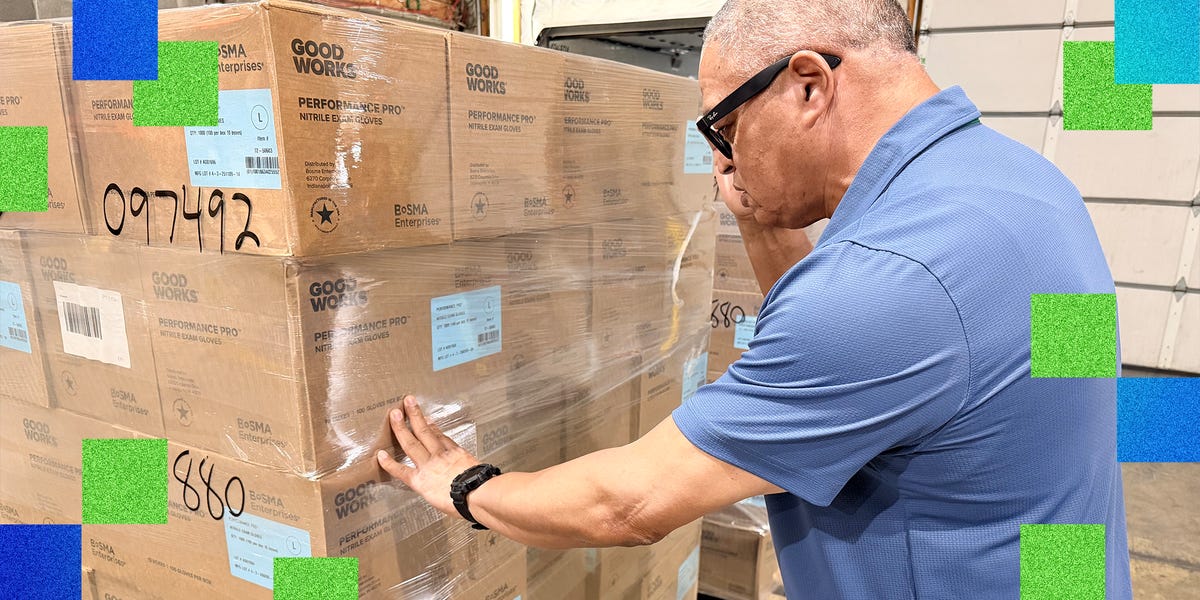
Warehouse employers must find new ways to attract and retain employees — or risk falling behind in fulfillment. One strategy: step outside traditional recruitment techniques and consider previously untapped groups, said Jeff Mittman, the CEO of Bosma Enterprises, which provides workers for warehouses, among other supply chain services. Bosma uses AI-based assistive technologies like Meta glasses, magnification software, drones, and screen readers to enable visually impaired employees to work on the warehouse floor.
More than half of the company’s workforce is blind, and it’s the largest employer of blind people in the state of Indiana, Mittman added.
“I have blind people throughout the organization, all the way from a first-line employee to me as a CEO, being a blinded veteran myself,” Mittman told Business Insider. He added that the biggest challenge to employing visually disabled workers is no longer technology, but “other people’s perceptions of their capabilities.”
In addition to Bosma, organizations like IFB Solutions and LCI Industries provide warehousing and other supply chain services while employing people who are blind.
Inside Bosma’s warehouse
In 2024, one solution Bosma hadn’t yet found was a way for visually impaired individuals to conduct inventory counting, the process of checking stock in the warehouse and ensuring it’s accurate to system records.
By nature, the job is visual, said Sankalp Arora, the CEO and cofounder at Gather AI. Bosma reached out to Gather AI to figure out how the employer could use the software to help with the task and ended up adopting the company’s drone vision technology.
Drones fly autonomously in the warehouse, take photos of products, use AI to convert images into inventory data, and compare them against the system of record, Arora said. Gather’s interface is combined with iPad screen readers, which convert text to speech so workers know what’s in front of them.
The drones can count inventory “within minutes, where it would take us literally days to do,” said Eric Knight, a manufacturing manager at Bosma Enterprises.
Knight, who became visually impaired after developing diabetic retinopathy, heard about Bosma through his eye doctor and now uses Meta glasses while on the job. Knight said he was skeptical when first trying the glasses, but his tune changed once he experienced their capabilities. Knight can say, “Hey Meta, what’s in front of me?” and the glasses audibly read barcodes or SKUs. He also uses them to read and summarize documents.
The glasses have a live AI view that paints a detailed picture of Knight’s surroundings as he walks around the warehouse, telling him there’s a forklift to the right or pallets to the left. The glasses not only help Knight check for inventory accuracy, but also prevent him from stumbling and boost his confidence, he said.
Thinking beyond Bosma
When selecting technology, Mittman said it was important that the system provide employees with capabilities transferable to any organization, not just to an employer focused on blind workers. Meta glasses, for example, can be worn in any location since Gather’s software is hardware-agnostic and many accessibility features are built into iPads.
“My guys running the drones could do that in any warehouse in America,” Mittman said.
Still, many warehouse employers don’t know that blind employees can perform the same job functions, said Jennifer Camota Luebke, the president and CEO of Relay Resources, an organization focused on advancing disability inclusion in the workplace.
One challenge is that employers often look for instant software solutions rather than developing the available workforce, Hermanns said. “That short-term thinking comes at the expense of their organization and the communities in which they operate,” he said.
Bosma takes a different approach. When relocating one of its employees to another warehouse, Mittman and his team visit potential employers to demonstrate exactly how the assistive technologies work. Often, employers hire one worker from Bosma, have positive results, and return to hire more.
“You’re talking about a workforce that is very loyal once they find a job that works for them,” Mittman said.
Read the full article here