




Two miles north of Philadelphia’s World Cup games sits a small but mighty mecca of small businesses attempting to reap the benefits of international soccer fandom.
In East Passyunk, dozens of independently owned businesses — trinket shops, dive bars, cafés, pizza joints, breweries, and more — line the main thoroughfare of East Passyunk Avenue. They’re used to a steady flow of locals, but are typically less on-the-radar for tourists visiting Philly’s most popular monuments, said Katie Hanford, the executive director of the East Passyunk Business Improvement District, also known as EPABID.
Hanford told Business Insider that she’s been preparing nearby small-business owners and their tiny staffs for the marathon event since July 2024, when she was hired by EPABID. They’ve organized block parties, applied for city permits to close streets and stay open late, and bought public-transit ads to increase awareness among tourists.
Despite all the planning, city support has been confusing and lackluster, Hanford said. Historically, Philadelphia has been a difficult place to run a small business: the city double-taxes owners who earn more than $100,000 a year and has been slow to approve permit requests and to pay contractors. Experiencing this firsthand, many of East Passyunk’s entrepreneurs are taking a self-reliant approach to the World Cup.
“In a very South Philly fashion, folks are very scrappy and they’re just like, ‘Whatever, you don’t want to party with us. The city doesn’t want to officially do something here. We will just do it ourselves,'” Hanford told Business Insider.
Business Insider took a few strolls up and down East Passyunk Avenue to check out EPABID’s block parties and hear from small business owners and workers about how they’ve been handling the World Cup.
Contending with denied city permits
In the weeks leading up to the World Cup, EPABID — a nonprofit that does small-business marketing, event planning, and neighborhood revitalization year-round — announced a slate of block parties featuring game screenings, but faced challenges when the city denied street-closure permits that would allow festival-goers to spill off sidewalks and onto the avenue, Hanford said.
“It was a big surprise to us when we applied for our street closure permits within the typical reasonable amount of time, and the city denied them,” she said.
Still, the block parties persisted, with some neighbors using their own cars to block off streets and make way for increased foot traffic. Outside Barcelona Wine Bar on June 19, a crowd of Brazil fans set up lawn chairs on the avenue and watched the game on a projector screen.
Marc Faletti, the owner of the record store Latchkey, said he was unsurprised by the lack of city support, as a longtime small-business owner. Visitors from Ecuador and Brazil were still able to find Latchkey and bought records to take home, he said.
“There was lots of excitement about the vinyl options they don’t have access to at home,” Latchkey employee Ben Mazzochetti told Business Insider. He recalled one soccer fan who was particularly excited about a vinyl record by the British psych-rock band The Afex, and another who purchased a Strokes album.
Making up for the typical summer slump
Hanford said the neighborhood has leaned into its geography as a marketing strategy for visitors.
“We are the closest commercial corridor to the stadium, so we’re pitching that and making that a very big thing. We’re taking the angle of ‘You can walk here after the games, and you don’t have to take the Broad Street line two stops.’ We’re very, very close,” Hanford told Business Insider.
To spread that message, EPABID bought ads to run in an estimated 100 SEPTA subway cars from June 20 to July 22, aiming to entice game attendees to stay in South Philly rather than take public transit to the FIFA Fanfest in northwest Philadelphia, said Hanford.
While it’s difficult to measure the success of the ads, many businesses on the avenue said they noticed a steady flow of shoppers during a period that’s typically slow.
Tom Stives, the general manager of Triangle Tavern, said the restaurant typically sees fewer guests in June as school lets out and families leave town for vacation. This year, however, the traffic hasn’t slowed. Stives added that the tavern didn’t do much to prepare for the World Cup, save for a few country-themed drink specials.
At the Pub on Passyunk, bartender Ken Loveland said he also noticed the steady traffic. He told Business Insider that he especially enjoyed the energy of a group of Scots who came in three nights in a row to play bar games and drink Stella Artois on tap.
Leaning into Philly lore and hospitality
Emily Famularo, the store manager of the city-themed gift shop Hey There Philly, said they brought in more Philadelphia Union merchandise to gear up for the World Cup. She said it’s been selling well, along with stickers and trinket dishes emblazoned with Philly monuments.
She also noticed more international visitors than usual, from places like Brazil and China, who asked her to explain Philly jargon like “jawn” — an all-purpose noun — and “wooder” — the way born-and-bred locals pronounce “water.”
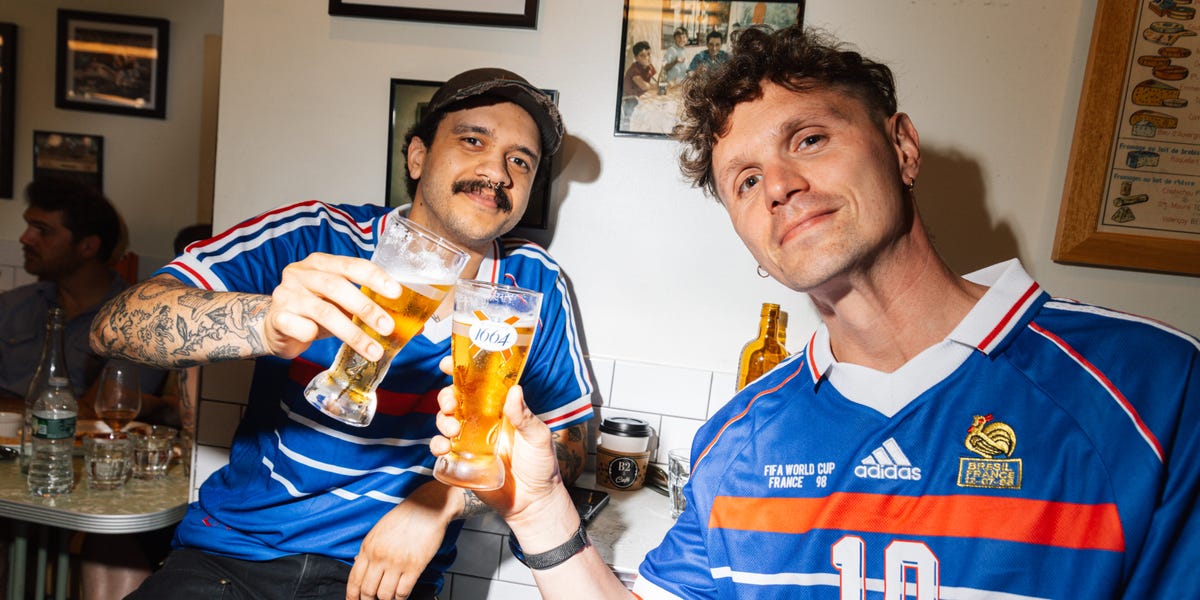
Supérette, East Passyunk’s French wine bar and mini market, prepared by installing a second television in its wraparound bar space, general manager Lucas Grigri told Business Insider. They’ve also been running raffles and grilling outside, with the food inspired by the teams playing.
The setup proved especially useful when France and Iraq geared up to play each other at Philadelphia Stadium on June 22. Thunder and gray clouds rolled into South Philly, ultimately stalling the game. Meanwhile, a jersey-wearing crowd gathered at Supérette to watch the action more comfortably and enjoy Iraqi-inspired kebabs being made on a portable grill out front.
“It’s been nice to see people getting into soccer who might not normally, and having a whole room full of people cheering for a team that might not normally cheer for,” Grigri, who donned a Supérette-themed soccer jersey made ahead of the World Cup, said.
Read the full article here