



The Reserve Bank of New Zealand (RBNZ) remains on track to maintain the Official Cash Rate (OCR) at 2.25% after concluding its first monetary policy meeting of this year on Wednesday. The decision to keep its benchmark rate steady would follow three consecutive cuts, signaling a pause in the current easing cycle.
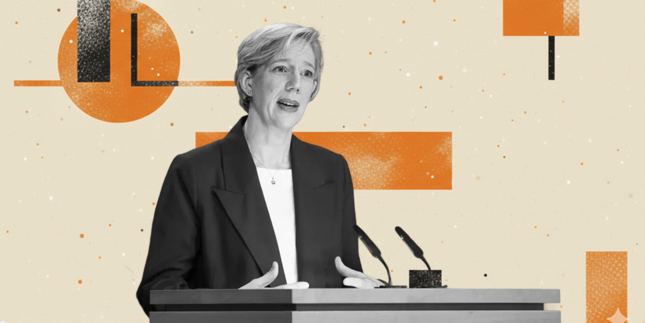
The decision is widely expected and will be announced at 01:00 GMT, accompanied by the Monetary Policy Statement (MPS), the quarterly inflation and OCR projections. RBNZ Governor Dr. Anna Breman, who is debuting at her first Monetary Policy Committee meeting, is also set to hold her first post-monetary policy meeting press conference at 02:00 GMT.
The New Zealand Dollar (NZD) could see a big reaction if the RBNZ surprises or offers clear hints on the path forward on interest rates.
What to expect from the RBNZ interest rate decision?
The RBNZ is finally expected to pause its interest rate-cutting cycle this week under the new leadership of Governor Breman.
The real question is whether the Kiwi central bank signals an end to the easing cycle amid rising inflation expectations, stabilizing labor market and a gradual economic recovery. Therefore, the updated OCR forecast will be closely scrutinized.
During the press conference following the November policy meeting, then Governor Christian Hawkesby noted that “the central projection is based on cash rate on hold through 2026,” adding that “we’re now seeing economic indicators picking up across all high frequency indicators.”
New Zealand’s two-year inflation expectations, seen as the time frame when RBNZ policy action will filter through to prices, ticked up to 2.37% in the first quarter of 2026, against the 2.28% seen in the final quarter (Q4) of last year.
Meanwhile, the Unemployment Rate rose to 5.4% in the December 2025 quarter, the highest since the September 2015 quarter, when it was 5.7%, according to data from Stats NZ. However, New Zealand’s Employment Change came in at 0.5% in Q4, up from 0% in Q3, beating the consensus forecast of 0.3%.
Strategists at BBH said: “The RBNZ is expected to bring forward its OCR hike projections because New Zealand inflation is running hot and the job market is improving. The swaps curve implies 50bps of hikes in the next twelve months, which is NZD supportive.”
How will the RBNZ interest rate decision impact the New Zealand Dollar?
The NZD/USD pair is in a bullish consolidative phase below the six-month high of 0.6094 ahead RBNZ event risk. Expectations of divergent monetary policy outlooks between the US Federal Reserve (Fed) and the RBNZ have played out in favor of the Kiwi, thus far.
The next leg north in the major depends on whether the RBNZ leans toward a hawkish guidance following the expected rates on hold decision. The NZD could also see fresh buying interest on an upward revision to the OCR forecast, which could imply that rate hikes are coming.
On the contrary, if the central bank downplays inflation risks while refraining from offering any clues on the direction of rates, the Kiwi Dollar could witness a steep correction.
Dhwani Mehta, Asian Session Lead Analyst at FXStreet, offers a brief technical outlook for NZD/USD and explains:
“Kiwi bulls seem to be gathering pace for the next push higher. The 14-day Relative Strength Index (RSI) holds comfortably above the midline, while a Golden Cross is in the making. The 50-day Simple Moving Average (SMA) is on the verge of crossing the 200-day SMA for the upside.”
“The pair needs to take out the 0.6100 barrier on a sustained basis for a fresh uptrend. The next relevant bullish targets align at the 0.6150 psychological level and the 0.6200 round figure. On the downside, strong support is seen at the 0.6000 threshold, below which the February 6 low of 0.5928 will be tested. Failure there opens the door for a deeper pullback toward the 50-day SMA and 200-day SMA convergence at around 0.5875,” Dhwani adds.
Central banks FAQs
Central Banks have a key mandate which is making sure that there is price stability in a country or region. Economies are constantly facing inflation or deflation when prices for certain goods and services are fluctuating. Constant rising prices for the same goods means inflation, constant lowered prices for the same goods means deflation. It is the task of the central bank to keep the demand in line by tweaking its policy rate. For the biggest central banks like the US Federal Reserve (Fed), the European Central Bank (ECB) or the Bank of England (BoE), the mandate is to keep inflation close to 2%.
A central bank has one important tool at its disposal to get inflation higher or lower, and that is by tweaking its benchmark policy rate, commonly known as interest rate. On pre-communicated moments, the central bank will issue a statement with its policy rate and provide additional reasoning on why it is either remaining or changing (cutting or hiking) it. Local banks will adjust their savings and lending rates accordingly, which in turn will make it either harder or easier for people to earn on their savings or for companies to take out loans and make investments in their businesses. When the central bank hikes interest rates substantially, this is called monetary tightening. When it is cutting its benchmark rate, it is called monetary easing.
A central bank is often politically independent. Members of the central bank policy board are passing through a series of panels and hearings before being appointed to a policy board seat. Each member in that board often has a certain conviction on how the central bank should control inflation and the subsequent monetary policy. Members that want a very loose monetary policy, with low rates and cheap lending, to boost the economy substantially while being content to see inflation slightly above 2%, are called ‘doves’. Members that rather want to see higher rates to reward savings and want to keep a lit on inflation at all time are called ‘hawks’ and will not rest until inflation is at or just below 2%.
Normally, there is a chairman or president who leads each meeting, needs to create a consensus between the hawks or doves and has his or her final say when it would come down to a vote split to avoid a 50-50 tie on whether the current policy should be adjusted. The chairman will deliver speeches which often can be followed live, where the current monetary stance and outlook is being communicated. A central bank will try to push forward its monetary policy without triggering violent swings in rates, equities, or its currency. All members of the central bank will channel their stance toward the markets in advance of a policy meeting event. A few days before a policy meeting takes place until the new policy has been communicated, members are forbidden to talk publicly. This is called the blackout period.
Read the full article here