






American allies in Europe and the Middle East are scrambling to catch up to Ukraine on anti-drone tech, but just buying its tech isn’t enough to meet the threat, officials and industry figures say.
The Iran war has exposed gaps in the air defenses of the US and its allies in the Middle East. The defenses were built to stop missiles and combat aircraft, not low-cost attack drones that can be sent in massive waves.
Ukraine, however, has solutions for the Iranian-designed one-way attack drones they now face. For years, the Ukrainians have been battling Tehran-supplied Shaheds and Russia’s homemade versions, and they’ve built a layered defense network grounded in experience-driven expertise focused on beating them.
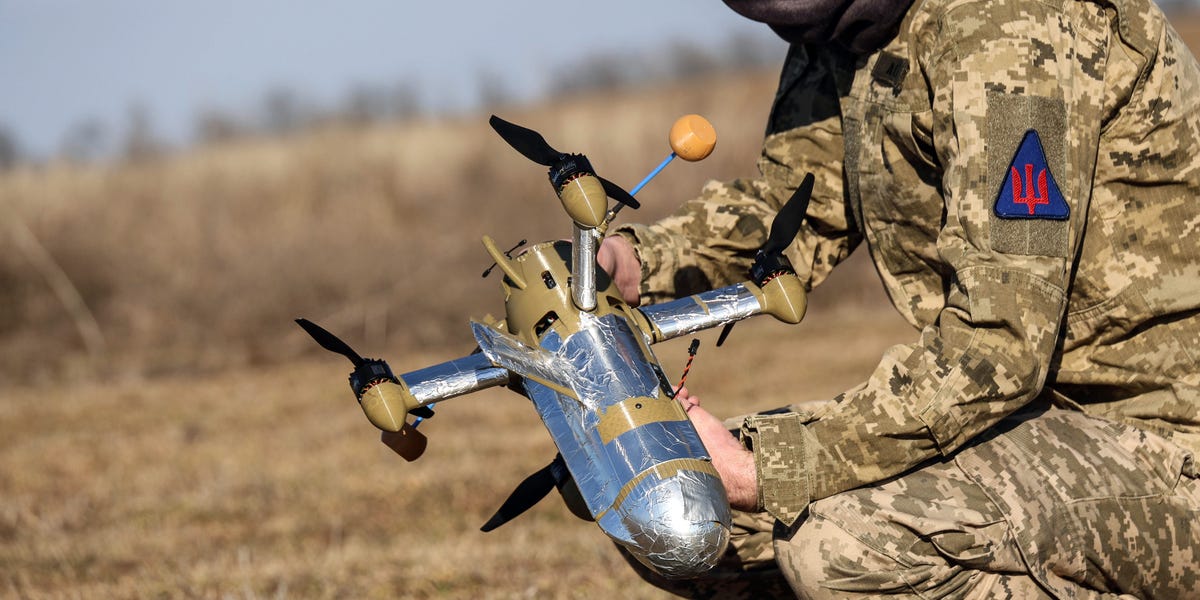
Other nations are recognizing that and reaching out to Ukraine for both interceptor drone technology and expertise, but the approach is often flawed, overly focused on the tech alone.
“Some may think it is enough to just buy interceptors, and protection is guaranteed. But it is not that simple,” Ukrainian President Volodmyr Zelenskyy said this month. He shared that some countries have bought Ukrainian interceptors and then come back asking for help because they didn’t have the wider support system.
“The key is the system,” he said. “Without a system, any interceptor is just a toy — not a real defender.”
A good air defense network is layered, which means there are multiple types of defenses stacked to protect against different types of threats. Those systems need to work together, and soldiers need to know how to use every one, separately and together. That takes planning and training.
Ukraine, for instance, pairs its interceptor drones with radars and acoustic sensors purpose-built to detect hostile drones in ways some legacy systems can’t, Zelenskyy highlighted.
Ihor Fedirko, the CEO of the Ukrainian Council of Defence Industry (UCDI), a body that represents more than 100 companies, told Business Insider that his organization and Ukrainian companies have been seeing new requests for technology and expertise since the Iran war began from countries in the Gulf, as well as in Europe.
He said he was surprised when talking to representatives from Gulf countries that he needed to spell out that buying the interceptor alone is not enough. He said countries need to consider “What next?”
Specifically, there needs to be consideration of how they’ll use the technology they want to buy, how they will mix it into their existing defenses, and whether they can identify the right targets.
Ukraine has layered defenses and hard-won experience. The interceptor drone by itself is “just an instrument,” Fedirko said, “It’s not 100% of the success. The success is this combination of all these systems and knowledge as well.”
Others in this industry space are saying the same. Latvia-based Origin Robotics, which produces interceptor drones used by Ukraine, told Business Insider it is seeing increased demand as the drone threat expands.
CEO Agris Kipurs said countries are realizing that they are “not well enough equipped.” And now many are rushing to secure technology without clear plans for integration.
“You need to now figure out how will you actually deploy these new capabilities, what is involved,” Kipurs said. “Because it’s more than just buying that new capability.”
That process, he said, is “the main challenge right now.”
A year ago, Kipurs said, his company was trying to convince militaries that this tech was necessary, and there weren’t many believers.
Things have changed.
“At this point, I think that most countries have come to the realization that it’s a critical capability that needs to exist,” he said. “Everyone is, I think, at this point, starting to realize that there is a huge gap.”
“There’s a huge loophole in their air defense capabilities,” he assessed.
Closing the gap isn’t something that can be resolved with a quick fix, though, especially as demand outpaces production.
Kipurs said he can’t even keep up with all the emails he’s getting asking how many interceptors he can ship out in a week or two. “The answer is none,” he said. “The production supply chain doesn’t work like that.”
And then even if a country can get its hands on interceptor drone technology, it may not be effective overnight. That is particularly true if the necessary systems and military structures aren’t in place for them.
Ukraine is now exporting expertise, including sending anti-drone specialists abroad.
Zelenskyy said that if an Iranian Shahed drone “needs to be stopped in the Emirates, we can do it. If it needs to be stopped in Europe or the United Kingdom, we can do it.”
“It is a matter of technology, investment, and cooperation.”
Fedirko said Ukraine doesn’t want to just receive support from allies and “not give anything back.” He described Ukrainian companies and experts working with partner militaries and companies as “paying back something for our lives.”
Read the full article here