





The US Air Force will need a lot more next-generation fighter jets and bombers to fight a war against China, former pilots and airpower experts argued in a new report.
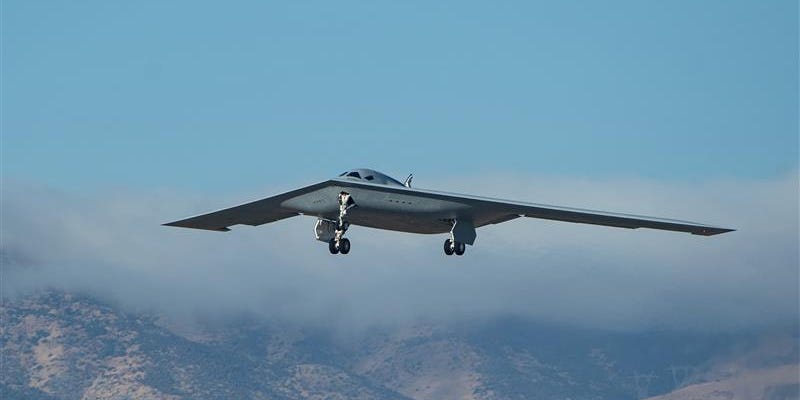
They said the Air Force will need to procure significantly more of the new and coming B-21 Raider bombers and F-47 fighter jets than it currently plans to buy. Insufficient numbers may force the service to operate conservatively, potentially giving China an edge in such a fight, they warned in a Mitchell Institute for Aerospace Studies policy paper out this week.
The report said that China’s anti-access and area-denial network, together with its natural geography, creates sanctuaries from which its air and missile defenses can fire. The firepower available to Chinese forces within these sanctuaries could pose a threat to US forces, making eliminating them critical to US operations.
“The Air Force’s stealthy bombers and fighter inventories have the survivability needed to penetrate high-density threat areas but lack enough sortie capacity for a conflict with China,” wrote report authors Heather Penney and retired Air Force colonel Mark Gunzinger.
The authors propose that the Air Force field at least 200 B-21s and 300 F-47s, which would be roughly double the service’s current plans. The Air Force has said it will purchase at least 185 of the F-47s developed by Boeing and at least 100 of the B-21s produced by Northrop Grumman. The Mitchell Institute identifies Boeing and Lockheed Martin as supporters.
The authors additionally recommended boosting procurement of Lockheed’s fifth-generation F-35 Lightning II Joint Strike Fighter and Boeing’s advanced F-15EX Eagle II.
In an virtual event discussing the new report, Penney, a former F-16 pilot, said that past conflicts in Korea and Vietnam, as well as Russia’s ongoing war in Ukraine, have shown that unless militaries take out enemy bases and sanctuaries, they could end up stuck in wars of attrition, the gradual bleeding of personnel and resources and little movement on the battlefield.
In a conflict with China, the US would likely face more advanced air defenses than it did in last year’s Midnight Hammer operation against Iran or this year’s Operation Absolute Resolve against Venezuela. Without a greater reserve of aircraft, Penney said, Air Force tactics for targeting Chinese sanctuaries would likely have to be less aggressive to avoid unnecessary risk to a limited fleet.
The B-21 is in low-rate initial production, though the only deliveries have been test, not operational, aircraft, while the contract for the design and development of the F-47 fighter jet was only awarded last year.
Neither aircraft is expected to be operational in significant numbers for years. In the meantime, the Air Force is dependent on older, though still capable, bombers like the B-52 Stratofortress, B-1 Lancer, and B-2 Spirit.
The Mitchell Institute said budget increases of at least $40 billion a year could support higher procurement rates, as well as the acquisition of uncrewed Collaborative Combat Aircraft, or “loyal wingmen” drones, which Air Force officials have said won’t replace crewed planes but instead complement them.
Multiple assessments have found the Air Force’s fleet is the smallest, oldest, and least combat-ready it has been in decades. By the numbers, today’s inventory of fighters, bombers, and intelligence, surveillance, and reconnaissance aircraft is a fraction of its Cold War strength.
At the same time, experts have highlighted that the Air Force has been under increased strain due to constant conflicts and missions. A US Government Accountability Office report from 2024 said continuous deployments had reduced Air Force readiness, personnel, equipment, and aircraft. The government watchdog agency found that the service was pursuing fixes to these issues, but the demand on these forces was still higher than capacity.
Read the full article here