






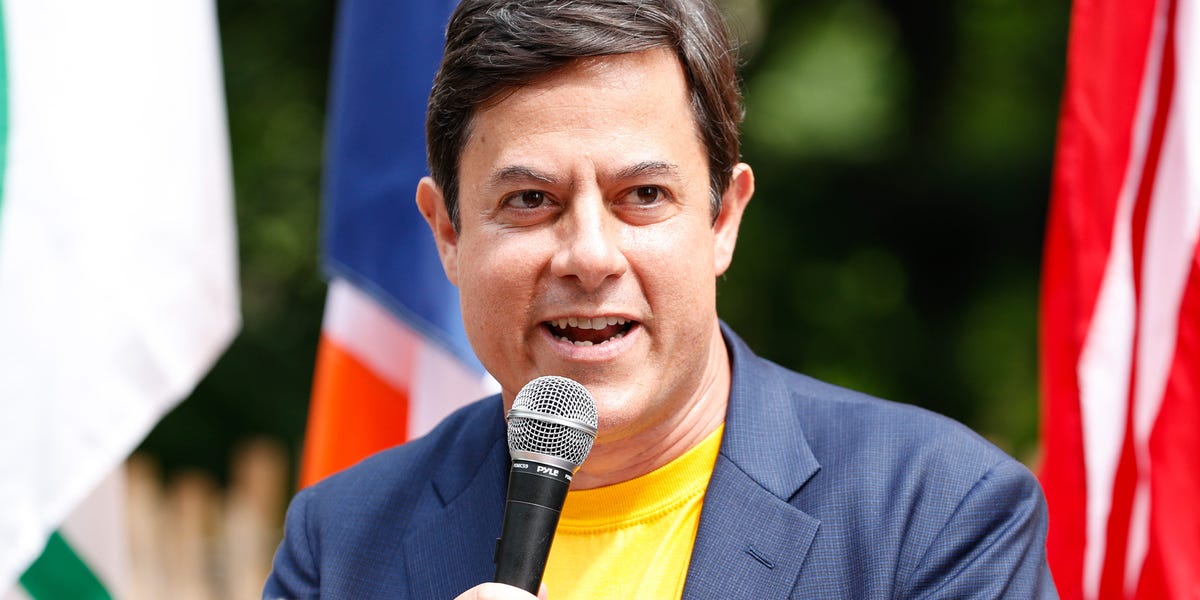
In his four years as director of the New York City Department of Planning, Dan Garodnick oversaw one of the most sweeping changes to the city’s zoning rules in decades. The policy, called City of Yes, initiated a collection of revisions to boost housing, including updates that allow new apartment projects to add bulk used for affordable housing, homes to convert basements or add backyard cottages as accessory dwellings, and more office buildings to be converted into residential space.
Mayor Zohran Mamdani won the election last year on bold campaign pledges to deliver solutions for a worsening housing and affordability crisis. Mamdani’s promises to freeze rents, however, could further dissuade owners of aging rent regulated apartment buildings — who were already dealt a financial blow by a 2019 change to the rent regulation rules — from performing needed maintenance.
Mamdani’s mayoralty will be a test whether politicians across the country can lower housing costs without destabilizing the landlords that build and maintain most of the housing stock.
Garodnick, who will soon leave his post, spoke with Business Insider to look back on his accomplishments and offer advice to the new mayor. The conversation has been edited for length and clarity.
The real estate community has not been excited about Mamdani. What would you tell them?
I would encourage them to give him a chance to lay out his agenda for housing and economic development and make their determinations.
What advice did you give him? Did you give him any?
Focus on delivering results and making sure that the government can execute ideas at scale. And also that the city council is meant to be an active counterbalance to the mayor, and that is something he should embrace and to give elected officials the tools they need to be able to say yes to hard things.
Do you think Mamdani will freeze regulated rents? Do you think that’s the right move?
Yes. I think that’s a top priority for the mayor, and I think people should expect to see that.
I think it’s an important signal to renters that the mayor is looking out for them and their interests. I also think it’s important to strike a balance here and make sure that it does not have unintended consequences and push buildings into distress.
Landlords of regulated buildings are saying their properties are falling apart, and they have no incentive to fix them. Do they need money from rent increases?
It’s important that the city and state make sure that its policies not only protect tenants from unreasonable rent increases and abuse from landlords, but also that the living conditions and the health and safety of these buildings is satisfactory too. We need to make sure that we’re striking the right balance here.
After four years at the agency, how does it feel to leave?
We enabled through zoning changes in four years, more homes than had been enabled in the prior 20 years combined.
You have rules that were written 60 years ago that had the effect of limiting too narrowly where and how much housing you can build. It is no surprise then that you would see many neighborhoods of the city producing little or no house. City of Yes was designed to enable a little more housing in every neighborhood of the city.
The real estate community says that may be impressive, but it’s still not enough to get housing built at scale.
There is no question that while zoning sticks around for long periods of time, there are other factors like the interest rate environments, the existence of a tax incentive, or even any single property owner’s appetite for risk or access to capital.
There is often substantial pushback against ambitious rezonings. What does that say about the public’s reception to housing development at scale?
Change is hard, and people are rightfully skeptical. We focused relentlessly on clarity, plain language explanations, visual tools, multilingual outreach, and engagement with communities across the city. We met people where they were, and we explained how outdated rules affect everyday life and made the case that the housing crisis isn’t inevitable.
What is the political feasibility in your mind of dramatic solutions to the housing crisis, specifically large-scale development?
We wanted to strike a balance here that was historic in its scale, but also something that we believed we could build support for. That is always going to be a balance. I will note that the voters of New York City recently approved charter revisions, which will make it easier in some cases to allow for housing to be approved more quickly and shows that there’s an appetite for the city, the mayor, the city council, to continue to take some big swings at this problem.
What do you think those big swings will be?
Mayor Mamdani has been clear about his interest in creating more housing in New York City and has cited City of Yes as an important template to build on. As he’s shaping his agenda, I would expect you might see some exciting new initiatives that continue to move the ball forward.
Read the full article here