





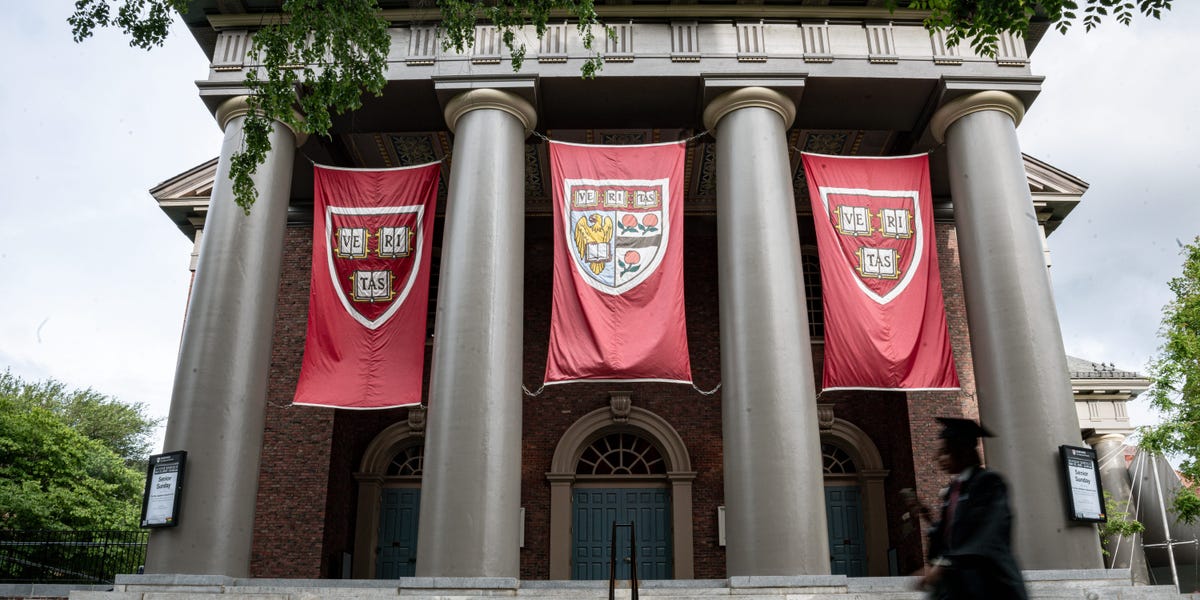
This year’s Ivy Day was brutal, and the admissions numbers prove it.
Yale admitted a record-low 2.9% of regular decision applicants from a pool of nearly 55,000 students, the second-largest in the school’s history.
Columbia received 61,031 applications — the largest pool in its history — and admitted just 4.23%. Brown admitted 5.35% from a record pool of nearly 48,000 applicants. Harvard and Princeton withheld their official data, but estimates place their acceptance rates at approximately 3.7% and 3.9%, respectively.
I teach at Harvard Summer School and have spent years helping students from around the world navigate the college admissions process. Four out of five of my students got into Yale. Four out of five got into Stanford. Yet one of the strongest applications I’ve ever guided got waitlisted everywhere. That surprised me, and after watching this cycle up close, here’s what I learned and some other surprises from a tough year.
Getting to the top of your class matters less than you think
One of my students admitted to Stanford this year was ranked in the 91st percentile at her high school. She was not at the top of her class, and not even close to achieving valedictorian. Yet she got in. Several classmates ranked above her were rejected.
This isn’t an anomaly. Admissions officers at the most selective schools aren’t ranking applicants from smartest to least smart and admitting the top tier. They’re looking to confirm admitted students can handle the academic rigor.
Once you’ve demonstrated that, they stop looking at your rank. Being in the top 10% of your class with competitive test scores is the threshold. Crossing it further often doesn’t help you as much as families think it does.
The personal statement is not a one-draft exercise
Among my students with the strongest outcomes this cycle, we averaged just under 19 drafts of the personal statement. Those are not small revisions, but almost 19 complete drafts.
The goal of a great personal statement isn’t to impress. It’s to make an admissions officer say, “I want to have lunch with this kid.”
The best essays I worked on this year were built around a contradiction, something unexpected about the student that made them genuinely thought-provoking. One student’s essay was about busking in Europe. It wasn’t impressive in the traditional sense. It was courageous and revealing. She got into Yale, Stanford, and Princeton.
Starting early creates options
Some of my students who get individual coaching start working with me as early as 8th grade. I help students find their core values, instead of trying to check boxes that admissions counselors may or may not want to see.
Even if you didn’t start college prep early, getting a jump start on your essays can help. This year, all of my rising seniors began essay work in June, months before applications opened.
Starting early isn’t just about having more time. It’s about having the space to find the real story, not the first story.
Even exceptionally strong students get rejected
This is the most important thing I learned. One of my students applied to Brown, Harvard, Stanford, and Yale. If you had asked me before decisions came out to rank my students by likelihood of admission, I would have placed him near the top. His application was strong by every measure.
But he was waitlisted or rejected at all four.
His family is disappointed. I’m disappointed. And yet, he now has an offer to an honors college with his first-year tuition fully covered. When you watch how he processes this, including his thinking, regrouping, and planning, you can see clearly that he is the kind of person who will be successful no matter where he goes.
That is the point. The students who handled disappointment best this year had something in common: they had genuinely built lives around their core values. No rejection letter could take that away.
This process is not fully within anyone’s control. The best thing any student can do is become someone worth admitting, and then trust that the right door will open.
Steve Gardner teaches Leadership and Impact at Harvard Summer School and is the founder of The Ivy League Challenge.
Read the full article here