





When I first tried to open a restaurant, the numbers didn’t add up.
I was getting construction quotes for $150,000 to $200,000, and I remember thinking, “There’s no way I can do this.” I had just graduated from the College of New Jersey, and the only real money I had was about $5,000 I’d made playing online poker during college.
So instead of building a restaurant, I figured out how to borrow one.
That’s how I launched Fat Shack in 2010 — operating out of a local bagel shop at night, after the owner closed for the day.
The beginning was about as scrappy as it gets. I didn’t even have space to store food in the shop, so I kept everything in freezers in my off-campus garage and transported one day’s worth of inventory at a time.
Every time Katherine publishes a story, you’ll get an alert straight to your inbox!
Stay connected to Katherine and get more of their work as it publishes.
But it worked. We handed out menus on campus, and even though people didn’t always know where we were, the phone kept ringing. We were running deliveries all night, and the business took off almost immediately.
I started franchising with friends
Not long after, my family convinced me to come look at Fort Collins, home to Colorado State University, which had about 30,000 students, compared with TCNJ’s 4,000. I went out there, fell in love with the city, and decided to move. In August 2011, that’s where I opened the first full Fat Shack location.
The first week was brutal. I opened on a Tuesday and didn’t leave until the following Monday. I slept in the store and did whatever needed to be done to get it open and train everybody.
One of my best friends from college saw what we were building and quit his job in early 2013 to move to Colorado. Together, we opened a location in Boulder as a sample franchise.
That store took off, too. That’s when we knew we had something that could scale.
We got all the paperwork in order and, in 2015, opened our first three franchise locations. Our first franchise owner started working with us in 2012. Another had started as a delivery driver at the Fort Collins location. We wanted to build from within, so we did, and that has always been one of the coolest parts of our expansion.
Shark Tank exploded our growth
By 2019, we had 11 locations and decided to apply for Shark Tank. I had always been a fan of the show. A cousin told me there was an open casting call in Denver, so I went with my wife on a whim. We made it all the way through and got four offers from the five sharks.
We closed with Mark Cuban for $250,000 in exchange for 15% of the company. He’s still involved today.
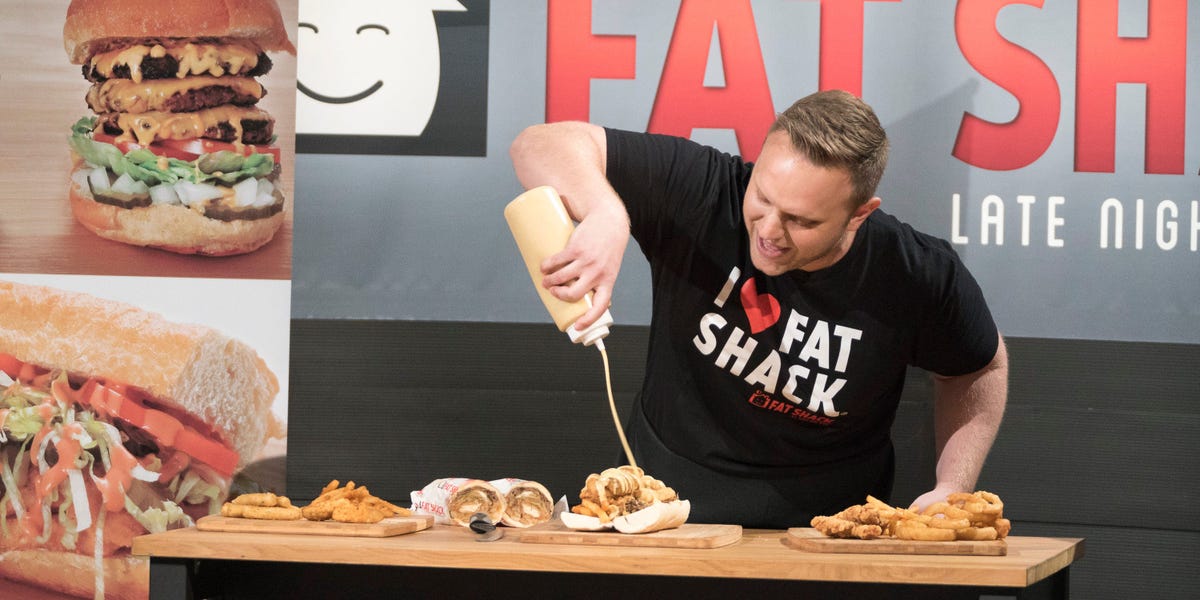
The Shark Tank experience was hectic. We had to make the food backstage on a tight schedule, and it felt like a Friday-night kitchen rush. But the sharks were gracious. We knew our numbers and our business, and that helped a lot.
After the episode aired in May 2019, we got flooded with attention. We had about 1,000 emails come in that month, and same-store sales jumped by 50% to 100% that week. We also opened a store in Fort Worth around the same time the episode aired, which helped bring in even more press.
Today, Fat Shack has 30 locations, with more on the way. We did about $20 million in revenue last year.
Still, the restaurant business has been tough lately. As people eat out less and consumer habits shift with the rise of drugs like Ozempic, we’re seeing a lot of our competitors have a bit of an identity crisis, revamping their menus, trying to chase sales, or even going out of business.
There’s no way we could reinvent ourselves as a health brand. We’ve always been about indulgence — a late-night, over-the-top meal — so instead of shrinking portions, we’re doubling down on making sure that, if someone’s going to treat themselves, it’s worth it. We haven’t raised prices in more than two years, and a few months ago, we increased the size of our sandwiches by more than 30% while keeping prices the same.
We want to give customers as much value as possible. And people see the difference when a $15 meal from us gets you a foot-long sandwich loaded with fries, chicken fingers, mozzarella sticks, and jalapeño poppers instead of a single-patty burger and small fries from most fast food chains.
I still spend time in the kitchen. I don’t feel like a fake CEO — I built this from the ground up, and I still like getting back in there and helping out. I was just in one of our stores last Friday night, cleaning up sauce off the floor on my hands and knees.
I tell aspiring entrepreneurs that you have to be ready to give it everything you have. There are mornings when it feels amazing, and there are nights when you’re dealing with a broken machine or some other crisis and wondering why you ever did this. But if you stick with it, keep tweaking, and keep pushing forward, it can pay off.
Read the full article here