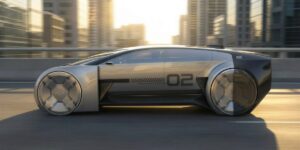





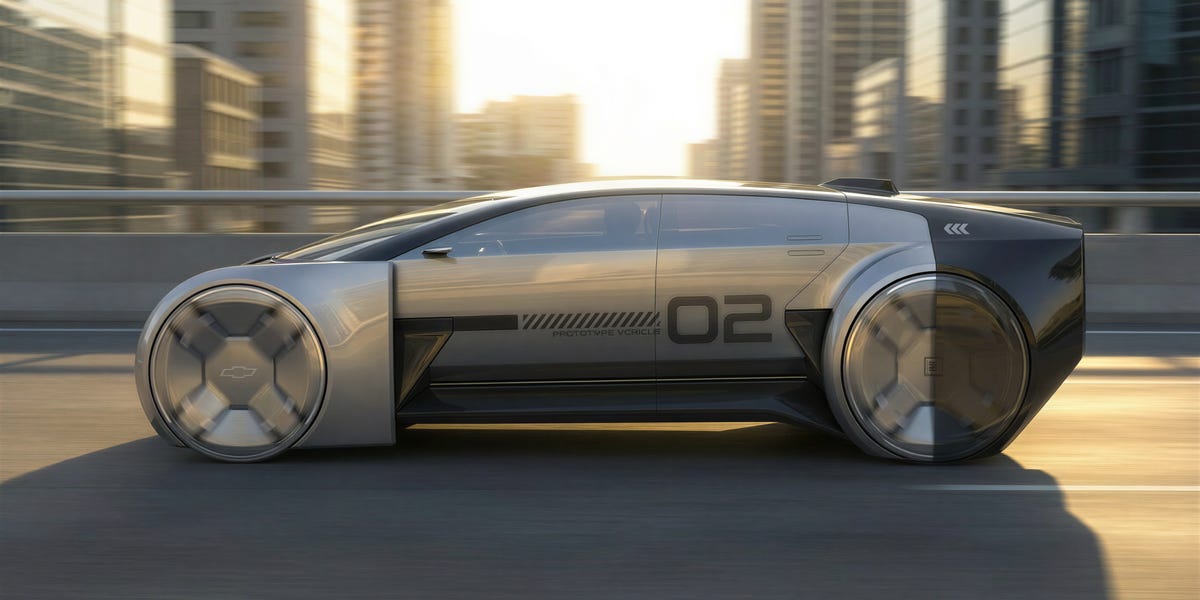
General Motors is pushing artificial intelligence into a part of the car business that has traditionally been deeply human: design.
For years, automakers have focused AI efforts on manufacturing efficiency, product reliability, and supply chain analysis. Now, GM says its generative AI tools are embedded throughout the creative process.
The systems can transform early hand-drawn sketches into concept videos, suggest design changes, and even run early-stage aerodynamic testing. The result, executives say, is a dramatic compression of the design timeline.
That’s increasingly important in an industry where developing a new vehicle typically takes five to seven years — and that has faced massive headwinds from supply chain shortages and tariffs to upstart Chinese EV rivals and shifting federal policy incentives.
And GM says that, even as it launches quick-acting AI tools, it’s keeping designers in the driver’s seat.
“Human creativity sets the vision,” Dan Shapiro, a creative designer at General Motors, told Business Insider. “AI helps us see it sooner.”
From sketch to simulation in minutes
The first step in designing a car at GM still starts with a human and a sketchpad. AI helps bring that vision to life faster, GM said.
Through a partnership with AI startup Discom, GM has developed software that takes hand-drawn sketches from multiple angles and builds a full 360-degree model of the car.
The tools can generate multiple visual variations, simulate camera movements, and create short animations showing how a vehicle might look in motion.
That significantly accelerates the design process.
“Traditionally, going from design sketch to high-quality animation would have taken multiple teams multiple months of work,” Shapiro said. “Now, this can all be done in less than a day.”
Managing air flow — and a car gets new hips?
GM is also applying AI to one of the most time-intensive parts of vehicle development: aerodynamic testing.
Engineers typically rely on computational fluid dynamics simulations to model airflow around a vehicle. These tests are accurate but slow, often requiring weeks of iteration between design and engineering teams.
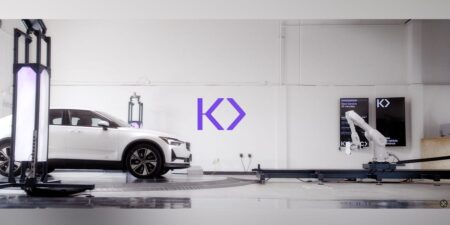
GM says it has developed an AI-powered “virtual wind tunnel” that can estimate aerodynamic drag in near real time.
“It used to take about two weeks for us to do a full cycle of this design and engineering iteration,” Rene Strauss, GM’s director of virtual integration engineering, said. “Now, what we’re looking at is instant. You can have an aerodynamicist and a creative designer sit in front of the same screen and change things live.”
For example, GM said it can digitally adjust a windshield angle and generate updated drag estimates in just over a minute.
Strauss said the technology is also influencing components inside the vehicle. In one case, a machine-learning optimization tool proposed a new structural reinforcement design to reduce cabin vibrations.
“It really did look like a hip bone,” she said. “It was so interesting, because your body is something that is optimized over time. It was so cool to watch that happen in your vehicle.”
She added that GM’s use of additive manufacturing allows the company to quickly produce and test such designs.
AI as collaborator, not decision-maker
Despite AI’s expanding role, GM is positioning the technology as a tool rather than a replacement for designers.
“It really is about getting to a holistic, integrated, AI-enabled workflow from beginning to end,” Brian Styles, GM’s global director of design innovation and technology operations, said. “What we’re finding is that the biggest multiplier is reducing the handoffs between steps.”
GM’s designers say AI is helping move ideas out of the concept phase and closer to production faster.
The company has set internal targets for reducing development timelines, though executives declined to share specifics.
Still, they say the stakes are clear — if not existential.
“We’ve been super focused on how we can most effectively ride this coming wave of AI,” Styles said. “It’s coming so fast that if we don’t really have a shared philosophy and strategy for how to leverage AI, we’ll simply be inundated by the wave and left behind. Either way, that wave is coming.”
Read the full article here