









During the Cold War, the U.S. and the Soviet Union competed across nearly every arena, including space.
The rivalry shifted dramatically on Oct. 4, 1957, when the U.S.S.R. launched Sputnik, the world’s first artificial satellite, officially ushering in the Space Age. Nearly 70 years later, the U.S. is facing a new technological race over fusion energy, and one CEO is warning Washington could be headed for another “Sputnik moment” as China accelerates.
“Fusion is at an inflection point,” Commonwealth Fusion Systems (CFS) CEO Bob Mumgaard told FOX Business. “We’ve got foreign governments that are investing big, and we can start to see what the future fusion industry looks like, and it’s going to be an important industry in the world, especially in the intersection with AI.”
“The U.S. government, long a proponent of fusion, is not currently structured to be able to take advantage of the moment and really lead to energy dominance,” he added.
THIS DEAL IS ABOUT ENERGY OF THE FUTURE, EXPERT REVEALS
Mumgaard sees China as the U.S.’s main competitor as Beijing ramps up investment and coordination around fusion energy.
In July, People’s Daily Online, the Chinese Communist Party’s (CCP) official newspaper, reported that Beijing had launched the China Fusion Energy Co. Ltd (CFEC), a subsidiary of the China National Nuclear Corporation (CNNC). The outlet said that the company had a registered capital of 15 billion yuan, or about $2.1 billion.
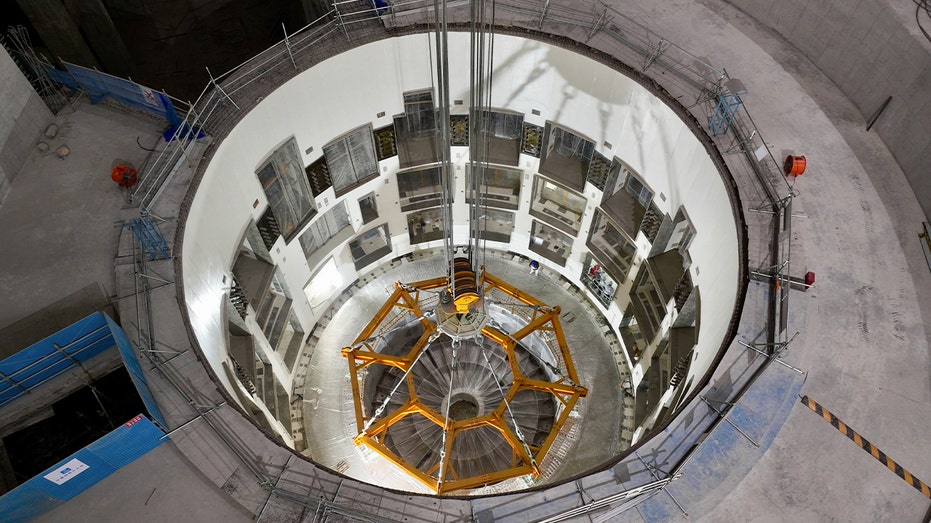
The International Atomic Energy Agency (IAEA) noted in October that fusion energy development had “entered a decisive new phase,” emphasizing global activity in the industry. The agency referenced the work of 33 countries and thousands of engineers and scientists who are working together to build a tokamak, a doughnut-shaped magnetic fusion device. The collaboration is aimed at showing “the feasibility of fusion as a large-scale, carbon-free source of energy.”
Mumgaard acknowledges that the possible impacts of China winning the fusion energy race are difficult to measure, as the technology is unlike anything that has ever existed.
“We’ve never had an energy source quite like fusion before,” Mumgaard said. He emphasized that fusion, unlike other energy sources, did not require large amounts of land or underground infrastructure, making it revolutionary.
“It’s hard to know exactly how this will play out, but it is a big technological shift. And China, like every other country that would have fusion, would want to use it to power their economy,” the CEO added.

TRUMP MEDIA STRIKES MAJOR $6B FUSION DEAL TO POWER FUTURE DATA CENTERS
Mumgaard warned that while China has moved aggressively to push fusion development forward, the U.S.’ own infrastructure has remained largely unchanged.
“You look at China, and estimates are that China has put $6 billion to $12 billion to work in fusion in just the last couple of years building large-scale test stands, facilities, organizing universities and national labs and private companies to solve the remaining challenges and to build demonstration power plants,” he said. “And the U.S. hasn’t yet done any of that. We have a fusion program that looks like it did when it was in the 90s, and so we need to modernize that.”
Mumgaard argues that if the U.S. were to modernize its fusion program, it could lead to an industry revolution.
In order to bring the U.S. fusion program up to speed, Mumgaard suggests that the government look to its past collaborations with the private sector to push scientific advancements, such as work with SpaceX or Operation Warp Speed.
“We think there [are] some good models here that could be applied to fusion that take advantage of the private capital, and now there’s over $10 billion of private capital in fusion companies, but also the expertise and the acceleration that the government has shown,” Mumgaard told FOX Business.
GROUND BREAKING FOR FIRST COMMERCIAL-SCALE ADVANCED NUCLEAR REACTOR IN DECADES BEGINS IN IDAHO
Despite warning that the U.S. fusion program remains outdated, Mumgaard said American companies are already working to advance the technology.
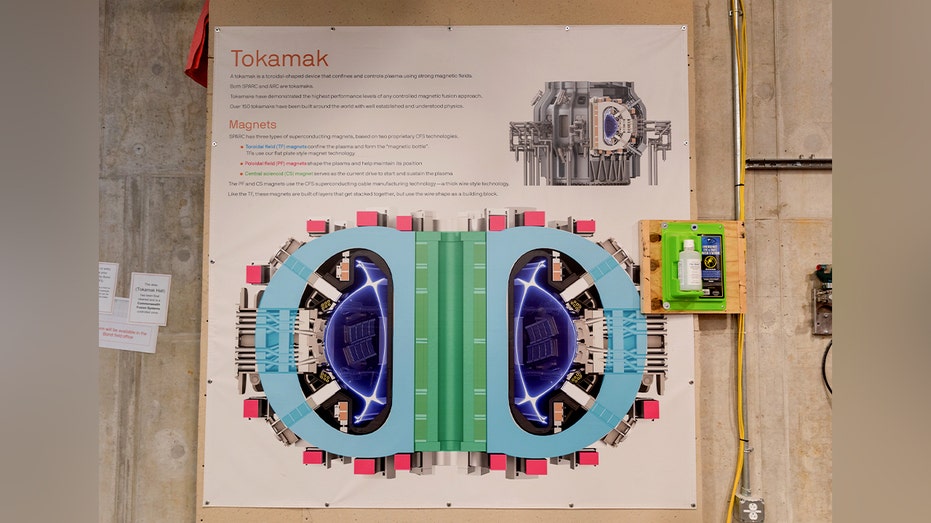
Mumgaard spoke to FOX Business from Devens, Mass., where Commonwealth Fusion Systems is building the Soonest Possible Advanced Reactor Compact (SPARC), a machine designed to produce more power than it consumes.
Last year, CFS announced plans to independently finance, build, own and operate a grid-scale fusion power plant in Chesterfield County, Va.
“This is a historic moment,” Mumgaard said in a 2024 statement announcing the project. “In the early 2030s, all eyes will be on the Richmond region, and more specifically Chesterfield County, Virginia, as the birthplace of commercial fusion energy.”
Mumgaard reiterated that early-2030s timeline when speaking to FOX Business.
For Mumgaard, the clearest sign of whether the U.S. is gaining ground in the race for fusion energy will be tangible results, not merely rhetoric.
“The biggest indicator is, ‘are we starting to build things?’” he said. “‘Are things we’re building turning on? Are they working?'”

Transformative technologies like fusion often appear distant until progress accelerates, Mumgaard said, pushing back on the idea that long development timelines mean breakthroughs are still far off.
Mumgaard compared the work toward fusion to past conversations regarding AI, noting that after years of talk, ChatGPT suddenly became mainstream.
“Fusion is kind of like one of those where, unless you’re really paying attention to the progress at the detailed level, it feels like it’s impossible. And then all of a sudden it feels inevitable. And that switch can happen very fast if you’re just cursory looking at it,” he said.
Read the full article here


