



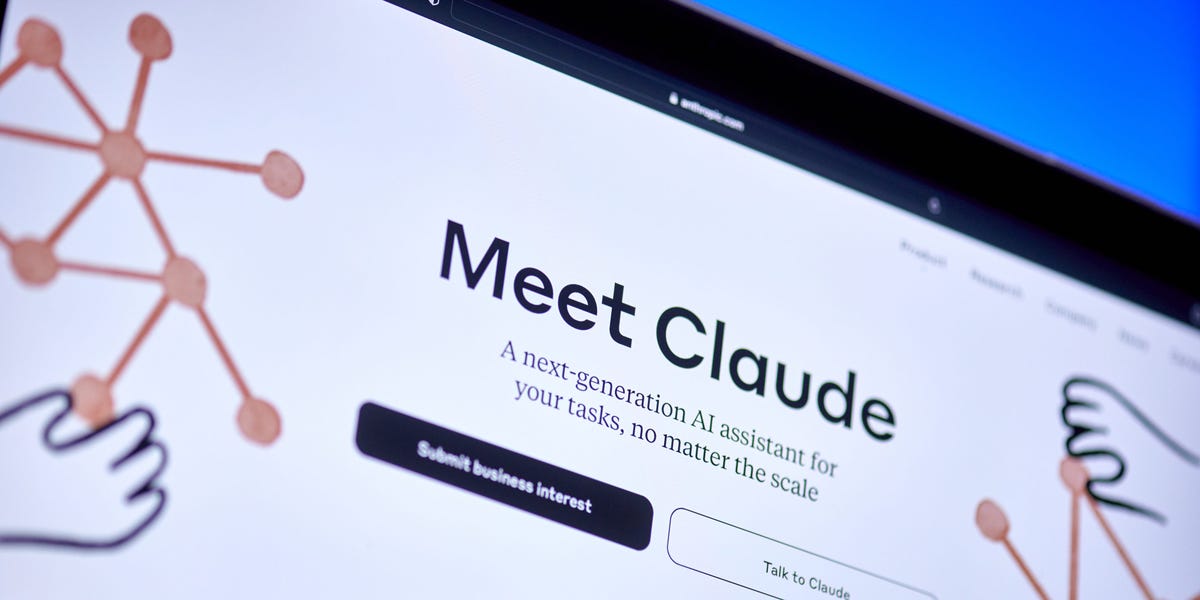
When a segment of the source code for Anthropic’s celebrated AI agent, Claude Code, ended up on GitHub on Tuesday, it was a ravenous free-for-all.
Engineers of all stripes soaked it up as quickly as they could, hoping to learn from it and perhaps use it to improve their own projects.
If using stolen information to improve intelligence sounds familiar, that’s because it’s exactly what the big AI companies have been dabbling in for years as they compete to train their large-language models — Anthropic included.
So it was not without a hint of irony that, to prevent engineers from accessing the leaked code, Anthropic swiftly issued a copyright takedown notice to the GitHub repository hosting it.
“We issued a DMCA takedown against one repository hosting leaked Claude Code source code and its forks,” an Anthropic spokesperson said, referring to the Digital Millennium Copyright Act.
Anthropic, OpenAI, and Google have all faced lawsuits over their use of copyrighted material — including published books, articles, scientific journals, and other content found online — without explicit permission. In response, authors, artists, and publishers have used copyright law to seek accountability and, often, payment.
In September, a court ordered Anthropic to pay $1.5 billion in damages in a class-action lawsuit brought by authors and publishers — including lead plaintiffs Andrea Bartz, Charles Graeber, and Kirk Wallace Johnson — over allegations it used pirated books and shadow libraries to train Claude.
Reddit sued Anthropic last June for scraping volumes of user-generated content to train its models without authorization or compensating users.
And, last month, Universal Music Group, Concord, and ABKCO filed a suit against Anthropic for illegally downloading over 20,000 copyrighted songs, also for training its models.
Now the tables have turned, and Anthropic is leaning on copyright laws to protect its own creations. “We’re rolling out measures to prevent this from happening again,” a spokesperson for Anthropic said.
Fortunately for the company, the leak may not be as bad as some thought.
Paul Price, a cybersecurity specialist and founder of the ethical hacking firm Code Wall — which recently uncovered vulnerabilities in McKinsey’s internal chatbot, Lilli — said the Anthropic leak didn’t expose anything critical.
“It’s more embarrassing than detrimental. Most of the real juicy stuff is in their internal source models and that wasn’t leaked,” he told Business Insider.
He said the company inadvertently exposed its “harness” — a software infrastructure typically used to connect large language models to the broader context in which they’re used.
“Claude Code is one of the best-designed agent harnesses out there, and now we can see how they approach the hard problems,” Price added, noting that it could also prove useful intel for competitors.
The leak also highlighted a paradox of the AI hype cycle: the same tools that make it faster than ever to build and ship products also make it easier for information — sensitive or not — to leak, replicate, and spread instantly.
Read the full article here