





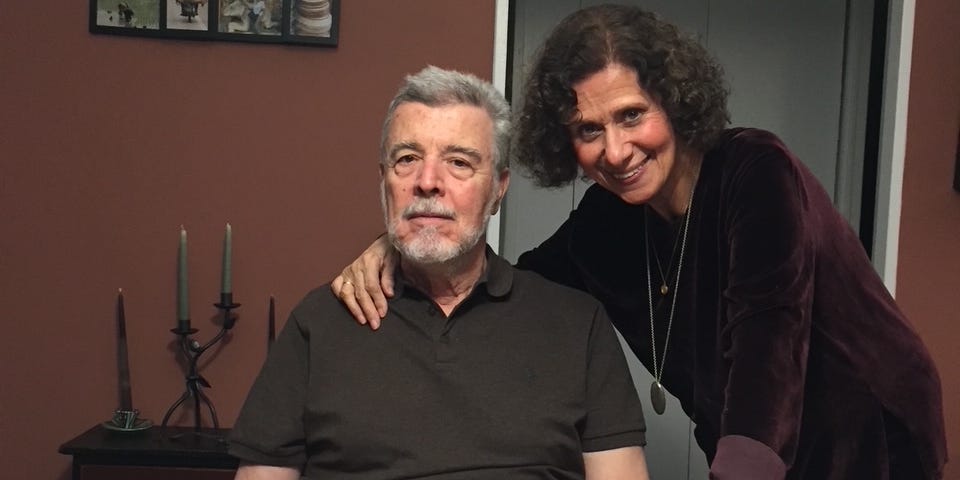
George Chryssanthou and his partner of 25 years, Electra Friedman, were hoping to move to Greece when Friedman retired after a long career as an art educator.
Eighty-year-old Chryssanthou spent his teenage years in the country, while 83-year-old Friedman was born there. The plan was to use Chryssanthou’s nest egg to buy a home on an idyllic island in the Aegean.
However, the former network technician was scammed out of his savings — nearly $285,000 — after fraudsters hacked his computer and emptied his account.
The couple’s dream of returning to Europe was shattered, and they are now worried about how they will cope financially.
The pair filed a claim with FINRA
“It is tragic,” Friedman told Business Insider, speaking on behalf of Chryssanthou. He has experienced medical issues since having a stroke in 1995 that paralysed his right side and affected his speech.
“This horrible incident cost George his mental health,” she added.
He has now filed a claim against Charles Schwab, the investment firm where he invested his money, for failing to identify and prevent the fraud.
The complaint, lodged with the Financial Industry Regulatory Authority (FINRA), seeks full compensation for the stolen funds by the brokerage.
In a statement to Business Insider, a spokesperson for Schwab said:
“We sympathize with Mr. Chryssanthou, whose experience is an unfortunate example of growing impostor fraud.
“According to the Federal Trade Commission, these scams are among the most prevalent and show no signs of slowing.
“Criminals impersonate legitimate companies, tricking victims into sharing personal financial information, which is then used to transfer funds to another account, and then promptly stolen by the criminals.
“The best defense to these bad actors is prevention, which is why we advise our clients to be cautious, stay vigilant, protect their personal information, and approach financial transactions with skepticism.”
The senior’s computer was accessed remotely
FINRA said it had no comment.
The scam began on January 17, 2025, when Chryssanthou, who lives in New York, received a cellphone call from a man posing as “Microsoft tech support.”
He told him there was a software issue with his computer. The octogenarian turned it on to find that another person had taken control of the screen remotely.
The impersonator said the senior’s finances had been hacked and that someone was transferring funds from his account.
Chryssanthou tried to log into his Schwab account, but was locked out and could see only a page showing it was empty.
The fraudsters said that “Microsoft” could stop the illicit transfers and help him regain access to his computer and accounts. They then asked the victim to provide a list of codes sent by email.
“They kept calling George, constantly reminding him to give the codes,” Friedman said.
Chryssanthou’s faith in the scammers enabled them to make illicit wire transfers over consecutive days to an account named Coinbase Inc at Cross River Bank in New Jersey. The amounts ranged from $18,000 to $90,000, totaling $284,650.
The money was converted into cryptocurrency, making it easy for the criminals to steal.
The shock triggered a medical relapse
Chryssanthou realized he had been defrauded on January 29, 2025, when he logged in to his computer, this time without the scammers’ instructions. His Schwab balance was zero.
He called the brokerage, but, according to the FINRA claim, was “led through a revolving door of customer service representatives, each only being able to say that Schwab was investigating.”
Friedman said her partner was so bewildered, shocked, and angry that he could hardly speak. He relapsed to the time soon after his stroke, when he found it almost impossible to verbalize.
“It undid 10 years of speech therapy for him to be understood again,” Friedman said.
The couple filed a police report on February 4, 2025.
The NYPD report was sent to the FBI. An agent later told the couple that it was unlikely the criminals would be traced or that Chryssanthou’s savings would be recovered.
“They tricked me,” Chryssanthou, who said he couldn’t speak for two weeks after the incident, told Business Insider in a faltering voice. “I thought, ‘I’m a computer guy. How could this happen to me?”
Friedman said her partner had “not been the same person since the scam” and struggled to eat properly and walk.
Financial scams have become increasingly sophisticated
In September 2025, they hired attorney Adam Gana, of Gana Weinstein in Manhattan, who specializes in these increasingly common cases.
He drafted Chryssanthou’s complaint to FINRA, the Government body that investigates potential financial misconduct and can take disciplinary action against banking institutions.
Speaking to Business Insider, Gana said broker-dealers decide what goes in and out of people’s accounts and should detect fraud, especially when it involves the elderly.
“It is their responsibility, morally, ethically, and legally, to make sure the money that leaves the account does so in a way that’s responsible for local investors,” the lawyer, who said financial scams have become increasingly sophisticated, added.
The FINRA claim accuses Schwab of failure “to supervise its platform,” leading to Chryssanthou’s losses.
It is not yet known whether they will be assessed by the IRS on the amount, as withdrawals are considered income.
The claim against Schwab alleges that standard procedures were ignored, such as questioning the client about how the third-party account information was provided and about their relationship with the recipient.
The claim also said that, in Chryssanthou’s case, the brokerage allowed the connection to the bank in New Jersey, and the account involved was “suspiciously” named “Coinbase Inc.”
The couple is speaking out to warn others
“The wire transfers to that account were not typical for Mr. Chryssanthou, happening at a greater frequency than normal to an account never used before,” it said.
“The transfers were conducted in a suspicious pattern and in rapid succession, without any apparent need for such funds.”
As for Chryssanthou and Friedman, they hope their ordeal ends and their investments are restored.
“We are speaking out because we don’t want anyone else to experience the same thing as us,” Friedman said.
“George and I very much want to return to Greece and lead a quiet lifestyle. We deserve this happiness together.”
Read the full article here