





I happened to be on the toilet both times everything changed.
The first was March 11, 2020, the day America’s eyes were opened to COVID.
More than 4,000 people around the world had died before that date, but in the US, we were still ever so young and naive. It was a time when multiple media outlets were admonishing Andreessen Horowitz, not for extolling the virtues of “retardmaxxing” as the venture firm does these days, but for banning handshakes in its office to prevent the spread of the virus.
That all changed on Wednesday, March 11. That day, the World Health Organization declared COVID-19 a pandemic, the Dow Jones officially entered a bear market, Tom Hanks and Rita Wilson announced they had COVID, Donald Trump issued a travel ban on people traveling from Europe, and the NBA suspended its season after star center Rudy Gobert tested positive for the virus. I will never forget the queasy, giddy, horrifying shiver of realization I felt that evening — knowing that the world I knew had ended, and a new, unmooring and unmapped world had begun. March 11 was, as Wired later called it, “the moment that everything in American life changed — launching us into an uncertain future of unknown duration.”
The second time I had that feeling was this past Wednesday. If the release of ChatGPT in November 2022 was akin to the first confirmed case of COVID in the US, in the full course of history, May 20, 2026, may be AI’s “everything changed” moment.
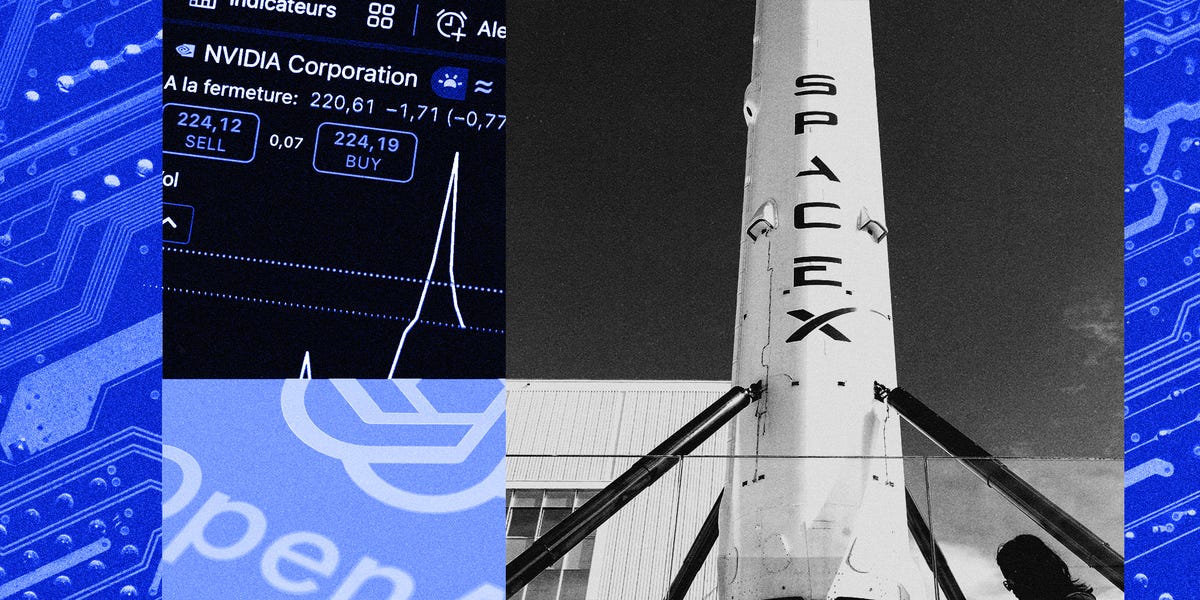
It started with numbers so stupid big they seemed unreal. Chips giant Nvidia posted a record quarterly revenue of $81.6 billion, more than 26 times its revenue in the first quarter of 2020. The Wall Street Journal reported that Anthropic, which didn’t even exist in 2020, was projecting its revenue to reach $10.9 billion next quarter, more than double the quarter before — a rate of growth faster than Zoom’s in the pandemic.
Then there was the double whammy of OpenAI news. The Journal reported that the company, fresh off its legal victory against Elon Musk, is preparing to go public within weeks. While that broke, OpenAI said that one of its models had solved a famous geometry problem that had vexed mathematicians for 80 years. In the weepy announcement video, multiple OpenAI researchers and mathematicians look thunderstruck as they talk about losing sleep over the implications of what the bot had achieved.
The torrent continued that morning, when SpaceX filed to go public. Not only do its SEC filings reveal the path for Musk to become the world’s first trillionaire, they also lay bare how much the rocket company aspires to be a world-dominating AI company. Anthropic is paying $15 billion a year to access SpaceX’s cloud computing infrastructure, the S-1 shows. One widely shared, and questioned, slide shows that SpaceX thinks the total addressable market for its space business is paltry $370 billion, while the prospects for its AI business are $26.5 trillion — $6 trillion more than the GDP of China.
Amid these world-historic numbers going up and hubbub over the biggest IPO season in the history of money, Meta began to free up room for more investments in AI by laying off 8,000 employees. They joined thousands more recently laid off employees from Amazon, Atlassian, Block, Cloudflare, Coinbase, Intuit, LinkedIn, Oracle, Workday, and elsewhere who had been flung into a meat grinder of a job market.
Wednesday’s Anthropic-OpenAI-Meta-SpaceX tsunami also comes immediately after waves of AI news this past week: a stadium full of undergraduates jeering former Google CEO Eric Schmidt every time he brought up AI; Google ruining the internet with its new AI search feature; and Citadel CEO Ken Griffin, who in January dismissed AI as “all garbage,” admitting onstage that he felt “fairly depressed” after witnessing AI agents being able to perform “extraordinarily high skilled jobs” at his hedge fund. “You could see this is going to have such a dramatic impact on society,” he said.
All of Wednesday’s news broke by the time the sun had risen over Silicon Valley, all of it confirming — if there were any doubters left — that the sun had set on the old world, and we had been launched into another uncertain future for an unknown duration.
Zak Jason is the executive editor of Business Insider’s Discourse team.
Business Insider’s Discourse stories provide perspectives on the day’s most pressing issues, informed by analysis, reporting, and expertise.
Read the full article here