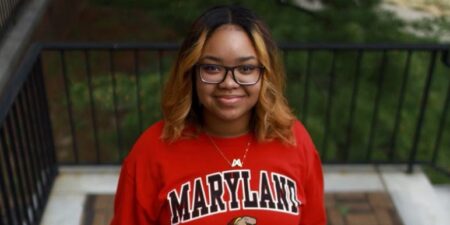






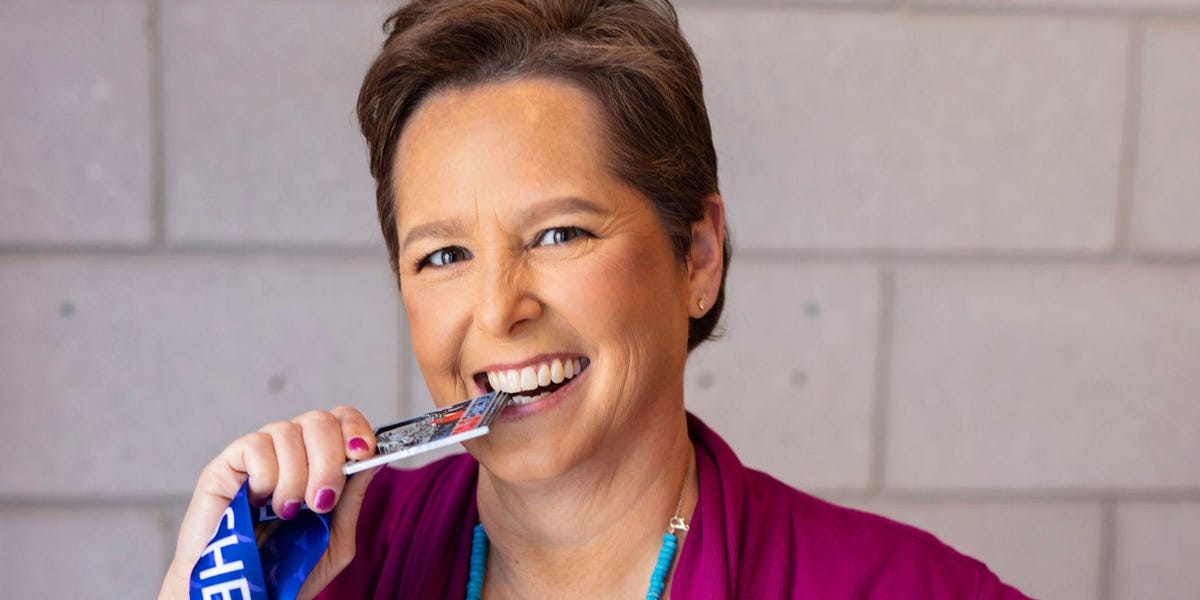
At 38, Cassandra Burke was diagnosed with stage 1 breast cancer after she felt a shooting pain in her right breast.
She’d caught it early, but it was no easy ride. She underwent a grueling treatment protocol: a lumpectomy, a year of chemotherapy, 33 days of radiation, skin grafting (to fix dead tissue from her lumpectomy), and a precautionary hysterectomy (her aunt was diagnosed with stage 4 ovarian cancer).
“My treatment was pretty aggressive, so it really did take a toll on me,” Burke, 54, told Business Insider. “It was pretty brutal to move my body.”
But she had one goal: to finish her first triathlon. She set her sights on Iron Girl: A 0.62-mile swim, a 16-mile bike ride, and a 3.4-mile run in her home state of Maryland. After finishing it, she did another Iron Girl two weeks later in Syracuse, New York. She was hooked.
It also drove her to learn more about her body and the role nutrition plays in optimizing performance. She got personal training and triathlon coach certifications along with her registered dietitian’s licensure. Now, while still running a forensic science laboratory, she coaches local athletes from ages 6 to 18 as well as virtual adult and high school clients. She also provides nutrition guidance to cancer patients from her oncology center.
These days, she organizes her nutrition around the workout, which sometimes means two workout sessions in one day or a few hours of running or biking on the weekends.
Burke shared how she fuels for her training and follows a balanced diet to maximize her nutrient intake.
She sticks to quick carbs before workouts
Now 15 years cancer-free, Burke has since completed nearly 80 running events, including 27 triathlons and 18 half marathons.
Burke usually works out in the morning before work — usually doing a combination of swimming, biking, running, or strength training, depending on the day.
For a quick energy boost, she focuses on carbs and simple sugar. She might eat a few waffles, a sports gel like Gu or UCAN, or a high-carb powder like Skratch Labs.
“I’ll eat carb-heavy,” she said. “I just want that simple sugar, so I’m not depleting my own glycogen as much as possible.” She also incorporates gels and electrolytes, like Liquid IV, throughout her training sessions as well.
Breaking the ‘American breakfast’ rules
Burke’s first real meal of the day is usually the breakfast she has after training. To speed up her body’s muscle repair and replenish glycogen, she aims for about 20 to 30 grams of protein and about 60 grams of carbohydrates in that first big meal.
She’ll eat whichever meal hits those goals, whether or not it feels like a typical American breakfast. Sometimes it’s a bibimbap made with leftover rice, eggs, vegetables, and a homemade gochujang sauce. Other times, it’s a turkey sandwich, or cottage cheese with banana and mandarin oranges.
“That’s what I teach my athletes — performance nutrition is based on what the macro is, not what the food is,” she said. “So enjoy the foods that you like and the combinations that help your performance, and don’t worry that it’s not your typical egg-and-toast or breakfast cereal.”
A cottage cheese twist on a Starbucks classic
Burke more or less follows the Mediterranean diet, focusing on lean protein sources (like chicken, fish, and eggs), whole grains, fruits, and vegetables.
After her breakfast, she tries to calculate the nutrients she feels she’s missing. “Throughout the rest of the day, I just put in what I know I need through snacks and meals,” she said.
She sneaks protein-rich food sources into her snacks, such as making high-fiber parfaits with Greek yogurt, granola, and fresh fruit, or creating her own version of Starbucks’ bacon and Gruyere egg bites by blending cottage cheese into the mix.
Other meals, like her homemade Mexican- or Asian-style rice bowls, feature a range of vegetables for extra fiber and nutrients. “I’m big on ‘eat the rainbow’ with my clients,” she said. ” Practicing what I preach, I try to make sure I’m getting different colors and varieties of fruits and vegetables throughout the week.”
Read the full article here