



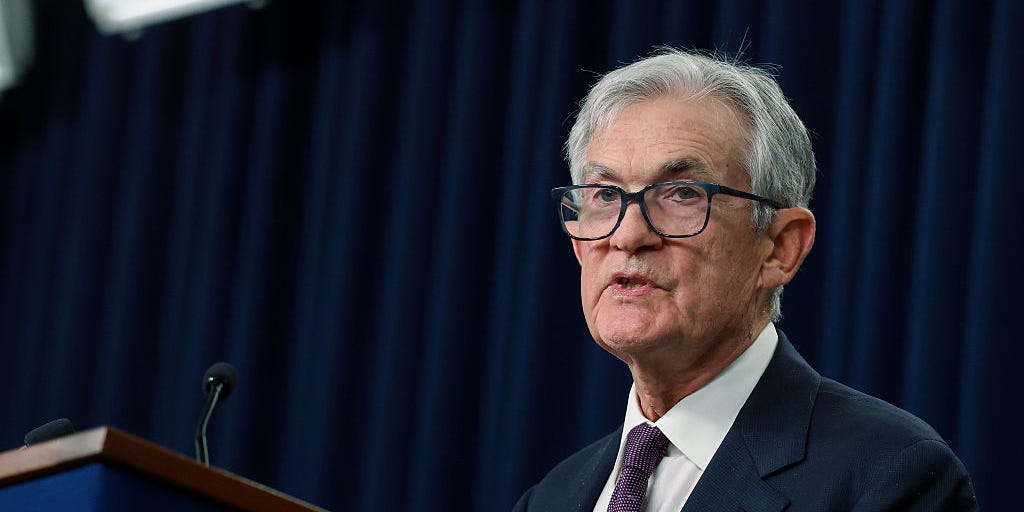
Fed Chair Jerome Powell isn’t saying his farewells yet.
The Federal Reserve opted to hold rates steady at its second meeting of 2026, and the central bank chair signaled a potential return to the committee after he leaves the post. From the job market to oil prices, here are Business Insider’s biggest takeaways from the meeting.
Inflation is the headline
The Fed is tasked with balancing maximum employment and stable prices — a dual mandate goal that has become increasingly challenging due to the ongoing US-Israel war on Iran.
Powell said the FOMC is closely monitoring the impact of both tariffs and the war on inflation rates, especially as inflation remains above the Fed’s 2% goal. The Middle East conflict has sent global energy prices soaring, with oil reaching over $100 a barrel. Gas prices are north of $3 a gallon. Powell said tariffs are working their way through the economy, too, though the Supreme Court’s ruling against Trump’s 2025 levies could provide some relief.
What’s not clear is how long these elevated prices will last — and how it will shape America’s long-term economic health. Either way, a rate cut isn’t something the Fed would take lightly.
“Progress should come” later this year, Powell said. “If we don’t see that progress, you won’t see a rate cut.”
The job market is shaky
While overall economic growth is strong, the employment situation is tenuous. Low hire and quit rates, limited vacancies, and dwindling labor force participation could continue, especially if interest rates stay high. Powell said the central bank is in a tough position: cutting rates could help juice the job market, at the risk of worsening inflation.
The unemployment rate is still historically low, but the Bureau of Labor Statistics reported a loss of 92,000 jobs in February. Job seekers are increasingly frustrated by sweeping layoffs and a cutthroat white-collar job market. And while the Fed was feeling optimistic about jobs at its January meeting, its March view was more cautious.
Productivity gains are a bright spot — though Powell said AI and data center supply may be slow to catch up with demand.
“Higher productivity is the thing that allows incomes to rise over time,” he said. “So it’s a great thing.”
Powell might stay
President Donald Trump has nominated ex-Wall Street executive and former Fed governor Kevin Warsh as Powell’s successor, though his confirmation isn’t a sure thing. Congressional leaders across the aisle are hesitant to confirm any of Trump’s picks following the Department of Justice investigation into Powell, and Warsh’s confirmation hearings have not yet been scheduled.
Though his term as chair is set to end on May 15, Powell said he may make a surprise return to the committee. If Warsh isn’t confirmed in time, Powell said he will remain as chair — at least until the DOJ probe is resolved. After that, he said, “I have not made that decision yet, and I will make that decision based on what I think is best for the institution and for the people we serve.” It’s rare for chairs to return to the FOMC after their tenure, but Powell is eligible to serve as a governor through January 2028.
As for the April rate decision, Powell said his colleagues are closely monitoring inflation, jobs, and breaking news. He made no promises about a cut — though the central bank projects at least one this year.
“We’ll just have to wait-and-see,” Powell said.
Read the full article here